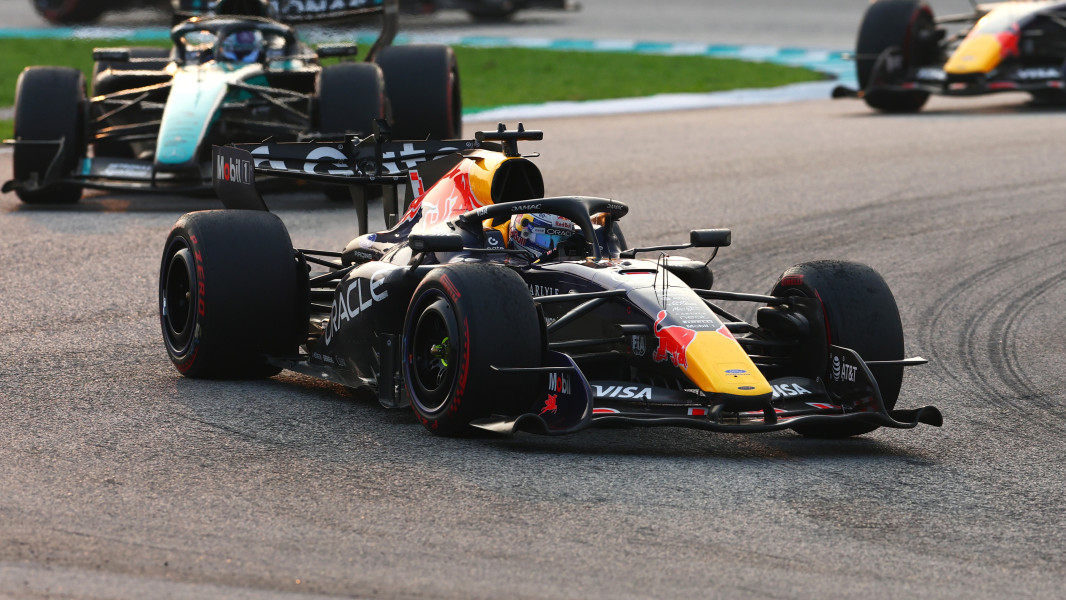
Formula 1 • New
Gerhard Berger won the 1986 Formula 1 Grand Prix in Mexico City in spectacular fashion. The Austrian recalls the wild ride in the Benetton-BMW that led to his first GP victory.
This article is an automatically generated English version. The

Anyone who manages to catch Gerhard Berger on the phone these days (weeks, months…) will usually get the reply: “I’m at a go-kart track with Johan at the moment.” Yes, his son has been the centre of attention for the 67-year-old for quite some time now. There’s hardly any time left for reminiscing. But this weekend, Formula 1 is racing at the Brothers Rodriguez Circuit in Mexico City. And something did happen there 40 years ago…
That’s how long ago it was that the Tyrolean won his first Grand Prix. With a tyre advantage, as he always maintained.
His second full season in the top flight was undoubtedly Berger’s breakthrough: from an increasingly recognised talent to a top driver. It had taken a long time for him to secure the second Benetton-BMW alongside Teo Fabi. However, it took just three races that season – up to Imola – before the Tyrolean (then 26) was able to step onto the podium for the first time in third place (alongside Prost and Piquet) at the post-race ceremony. “Imola 1986 was the decisive race that brought me to Ferrari’s attention. I was behind Ferrari driver Stefan Johansson, overtook him with two wheels of my Benetton-BMW on the grass and finished third ahead of him. After that, Enzo Ferrari instructed racing director Marco Piccinini to contact me,” Berger recounted much later. Benetton’s owner’s representative Davide Paolini and team manager Peter Collins wanted to keep Berger, but Michele Alboreto had already predicted to him in Detroit: “You’ll be my team-mate at Ferrari in 1987.”
Berger’s ‘run’ continued, albeit with more prestige-driven successes – such as second places on the grid at Spa and the Österreichring – than actual podium finishes.
Looking back from today’s perspective, Berger reflects on the fact that he was already 27 years old when he claimed the first of his ten Formula 1 victories in Mexico on 12 October 1986: “You mustn’t forget that – even though I’d driven a touring car race in 1979 – I didn’t really get into motor racing until 1981. Winning a Grand Prix five years later was actually quite a feat.” It was the Tyrolean’s 35th Formula 1 start.
Topic of the week
The 20-year-old Italian Kimi Antonelli had the chance to secure the 2026 World Championship title at the US Grand Prix. He did everything right: victory in Texas. The title celebrations have nevertheless been postponed. Until Mexico.
After finishing third at Imola, Berger “could well have won at Hockenheim, the Österreichring and Monza – on those super-fast circuits – with the BMW turbo engine. In Austria, it was a minor fault when the battery failed whilst I was in the lead. I have to admit, I’d already started speculating about a win quite soon after the start of the season. But I stayed completely relaxed and didn’t let it get to me.”
The Mexican Grand Prix weekend got off to a disastrous start for Berger: on top of the difficult adjustment to the high altitude (he later wrote in his autobiography: ‘... as if an oil boiler had burst’), he came down with the flu. The Circuito Hermanos Rodríguez was back on the calendar for the first time since 1970 and had been redesigned. After setting the fastest time on Friday, Berger qualified fourth on Saturday, securing a place on the second row. “At first, nobody thought it would be possible to finish without a pit stop. There was still a discussion about tyres on the starting grid. We almost changed them, but in the end stuck with the harder Pirelli compound. That was the key to victory, because I was able to complete the race without a pit stop, whilst the others had to pit,” recalls Gerhard. By the time the discussion was over, it was too late for a tyre change. The strategists at Benetton back then: technical director Rory Byrne and chief engineer Pat Symonds. They were to go on to make many more headlines and celebrate victories.
Berger was leading the race; at the halfway point, he thought to himself for the first time: “Actually, I can win this.” With ten laps to go in the 68-lap race, the then two-time world champion Alain Prost in the McLaren-TAG was half a minute behind, whilst Ayrton Senna in the Lotus-Renault was a lap down. So Berger would still have had time for a tyre stop. “Just don’t make a mistake – that’s what I was thinking. There was no problem with the fuel, and the car was handling well. I found out afterwards: everyone in the pits was going crazy; Collins thought I wouldn’t make it back from that lap, and Luciano Benetton stood there as if frozen.” The celebrations began as early as the last hundred metres; “I threw my hands in the air, as far as I could in the cramped cockpit.”
Afterwards, Berger recalls, there was a huge celebration. And it was forgotten that, following his bad luck at the Österreichring, he’d stopped thinking he could win in the Benetton. He’d secured his first victory in his second full GP season. He then celebrated extensively with a few friends who’d travelled over from Austria; by then, he’d long since got over the flu, “which I hadn’t felt in the cockpit any more – you’re completely focused on driving, after all. But when I got out of the car, I could hardly even hold onto my water bottle.”
In 1986, Berger also competed sporadically as a BMW works driver for Schnitzer in touring cars (635 CSi), securing victories with Roberto Ravaglia at Misano and Nogaro. On 12 October, the Freilassing-based team won the penultimate European Championship round at Jarama with Ravaglia/Pirro. Team boss Herbert Schnitzer, who passed away this June, would often recount the story: “When news of his victory in Mexico reached us here, we tried to get hold of Gerhard by phone. Somehow we managed it. And just as we were about to congratulate him, he cut us off and asked straight away: ‘Hey, how did your race go?’ Yes, that’s the sort of team player he was, Gerhard.”
Looking back on the ‘old days’, Berger said: ‘The big difference compared to today was the carefree attitude, at least in my case. I didn’t set myself any specific goals; I just wanted to have fun. I didn’t really think things through or overanalyse them. I had a great job, but I had plenty of fun doing it.’
Even later, with his team-mate Senna. Although things did get a lot more serious then…
Don't miss out on any highlights: The Speedweek newsletter, sent out twice a week, delivers the latest news, exclusive commentary and all the important dates from the world of motorsports - directly into your inbox
26. Okt. | 50:14 Min
25. Okt. | 3:18 Min
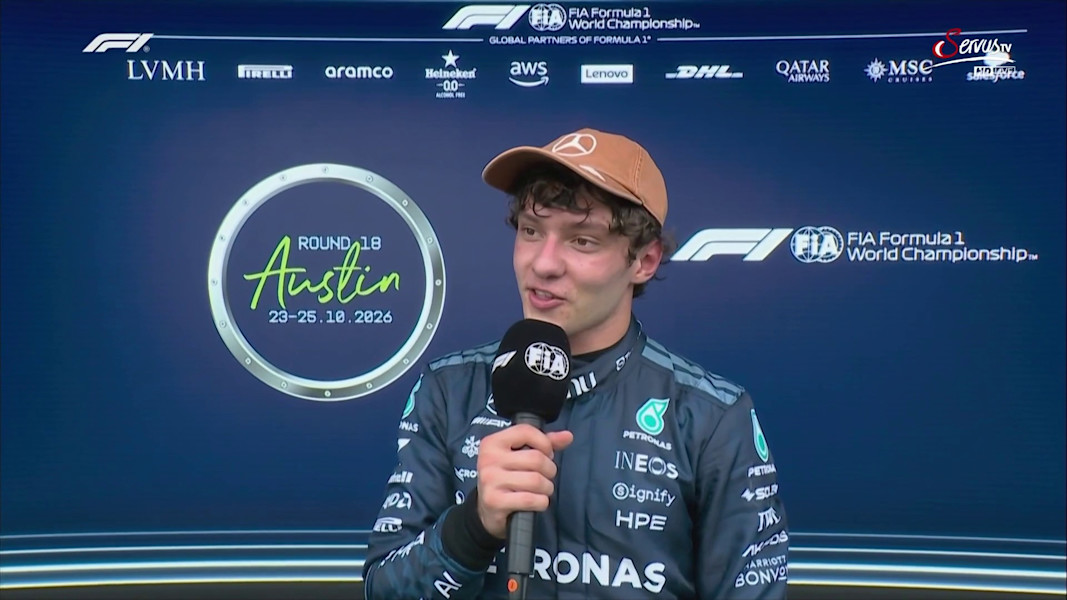
Kimi Antonelli: „Das Ergebnis, das wir brauchten“
25. Okt. | 2:48 Min
Trotz Sieg in Austin: WM-Entscheidung vertagt
25. Okt. | 2:51 Min
Wie die Formel 1 die USA eroberte
25. Okt. | 3:25 Min
Wie Mercedes-Jungstar Antonelli die F1 erobert
25. Okt. | 3:00 Min
25. Okt. | 33:10 Min
25. Okt. | 3:04 Min


The latest news around the clock, analyzed and commented on by experts, with exclusive behind-the-scenes insights. Here, fans write for fans.