A lengthy process: this problem will keep McLaren occupied for a long time to come
The McLaren team celebrated their first win of the season at the Hungaroring with Lando Norris. Team principal Andrea Stella reveals how the turnaround came about – and what will keep his team on their toes for a long time to come.
This article is an automatically generated English version. The
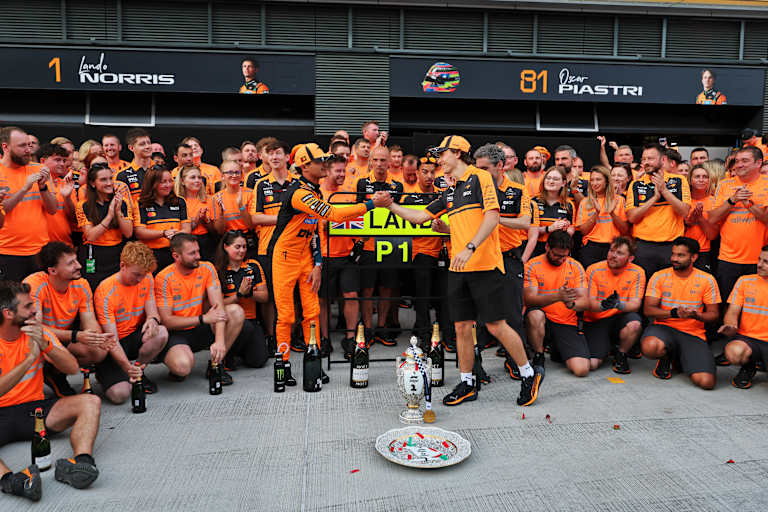
Das Ergebnis der harten Arbeit von McLaren: Norris siegte im Ungarn-GP
Foto: Moy / XPB Images
Das Ergebnis der harten Arbeit von McLaren: Norris siegte im Ungarn-GP
© Moy / XPB Images


After the McLaren team secured both world championship titles last year, expectations for 2026 were high. The Woking-based team knew, of course, that the cards had been reshuffled thanks to the sweeping rule changes. Nevertheless, they were disappointed when the start of the season proved more difficult than expected.
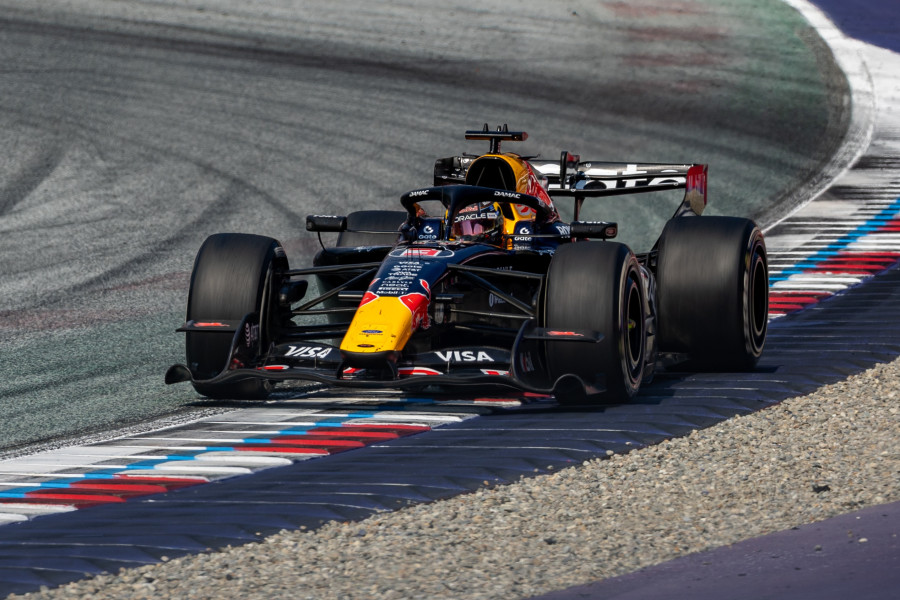
The first bitter blow came at the start in Melbourne: for local hero Oscar Piastri, the race was over before it had even begun, as he went off the track on his way to the starting grid. At least champion Lando Norris secured the team’s first ten World Championship points by finishing fifth. However, the start already left them trailing their main rivals by a considerable margin: Mercedes bagged an impressive 43 points with first and second places, whilst Ferrari picked up 27 points with third and fourth.
A Grand Prix without a world champion team
The next showdown proved even worse. Two separate battery issues meant that neither of the two Papaya cars was able to compete in the Grand Prix. It was not until Japan that Piastri and Norris, finishing second and fifth respectively, managed to score more than 20 World Championship points in a single race for the first time this season.
Recommendations
Mentioned in this article
After that, Formula 1 went into a enforced one-month break, as the races in Bahrain and Saudi Arabia could not take place in April as planned. The teams used the break not only to adapt to the regulations, but also to step up their efforts on their own GP cars. And that was crucial, as Andrea Stella emphasises.
“There wasn’t one specific event that brought about the change of course,” says the Italian in a team interview. “Rather, it was a growing understanding of the scale of the challenge we face and of the adjustments we needed to make.”
Summertime, holiday season, the silly season: these are the weeks when the most outrageous driver changes are usually discussed. The big news for the 2027 season is yet to materialise.
TV program
A productive enforced break
“Paradoxically, the enforced break in April probably enabled us to focus entirely on analysing the MCL40’s performance and to fully understand that we needed to refocus or intensify its development in certain areas of the car,” Stella goes on to reveal.
And the change of direction in development paid off as early as the next race: in Miami, both McLaren drivers stood on the podium for the first time. Although victory went to Mercedes high-flyer Kimi Antonelli, who leads the World Championship, Norris took second place ahead of his team-mate Piastri.
A complex challenge until the end of the season
Work wasn’t limited to the car, as Stella emphasises: “In addition, over the past few months we’ve had the opportunity to deepen our understanding of the new power unit supplied by Mercedes HPP and, together with our technical partners, to work out how best to utilise it. It was a lengthy process with its ups and downs, but it is now beginning to bear fruit. Nevertheless, I expect that optimising the engine will remain a complex challenge throughout the 2026 season.”
All these efforts finally paid off at the recent race in Hungary, with Norris securing the Papaya team’s first Grand Prix victory of the season. Stella explains proudly: “As far as the car’s performance is concerned, it’s clear that the weekend in Budapest, which marked the end of the first half of the season, was the highlight – not only because of the result, but above all because the aerodynamic package we put on the track at the Hungaroring is the result of this reorientation in development and has enabled us to be significantly more competitive.”
Seen already?
Don't miss out on any highlights: The Speedweek newsletter, sent out twice a week, delivers the latest news, exclusive commentary and all the important dates from the world of motorsports - directly into your inbox
Results
Full standingsPos
Driver
Driver
Team
Start No.
Rounds
Time
Fastest Lap
Points
01

McLaren Formula 1 Team
1
70
1:39:56,180
1:22,491
25
02

Oracle Red Bull Racing
3
70
+15,080
1:23,433
18
03

Mercedes-AMG Petronas Formula One Team
12
70
+18,728
1:22,415
15
04

Scuderia Ferrari HP
16
70
+23,840
1:22,000
12
05

Scuderia Ferrari HP
44
70
+24,540
1:22,300
10
06

Oracle Red Bull Racing
6
70
+55,488
1:23,218
8
07

Mercedes-AMG Petronas Formula One Team
63
70
+57,503
1:22,589
6
08

Visa Cash App Racing Bulls Formula One Team
30
69
+1 round
1:23,900
4
09

Audi Revolut F1 Team
27
69
+1 round
1:23,964
2
10

Visa Cash App Racing Bulls Formula One Team
41
69
+1 round
1:25,931
1
Highlight videos
ServusTV media library
Übt Norris Weltmeister-Druck auf McLaren aus?
27. Juli | 1:16 Min
F1-Geschichtsstunde mit Andi Gröbl
19. Juli | 7:53 Min
Belohnung nach dem Qualifying!
18. Juli | 7:00 Min
Wrap-Up: Exklusive Einblicke ins Fahrerlager!
17. Juli | 9:28 Min
17. Juli | 5:50 Min
60 Grad, Trinkflasche hin: Russells Ruhe-Geheimnis
29. Juni | 1:07 Min
28. Juni | 7:46 Min
Win2Day & Allwyn: Innovation im Wetten
27. Juni | 0:51 Min
Events
All Formula 1 eventsPast Belgian Grand Prix
 17.–19.07.2026
Past Hungarian Grand Prix
 24.–26.07.2026
Next up Dutch Grand Prix
 21.–23.08.2026
Italian Grand Prix
 04.–06.09.2026
Spanish Grand Prix
 11.–13.09.2026
Past Belgian Grand Prix
Past Hungarian Grand Prix
Next up Dutch Grand Prix
Italian Grand Prix
Spanish Grand Prix
Formula Racing News
All news
Newest articles
All articlesNew New