
David Coulthard agrees with Max Verstappen: “2026 regulations are like a steamroller”
Max Verstappen warned years ago that the 2026 regulations would lead to significant problems with energy management. David Coulthard calls the FIA to account.
This article is an automatically generated English version. The

David Coulthard
Foto: Red Bull Content Pool
David Coulthard
© Red Bull Content Pool


Four-time Formula 1 world champion Max Verstappen reiterated at the Hungaroring: “When the 2026 engine generation was being discussed years ago, I warned early on that it would lead to significant difficulties in terms of energy management.” The Dutchman believes his warnings fell on deaf ears.
Verstappen elaborated: “The complex energy management means that, for example, at Spa we’re driving around with an engine output that’s simply not worthy of Formula 1. When these new rules were being discussed years ago, I warned precisely about such scenarios – namely that the cars would run out of juice in certain sections of the circuit.”
“When I repeated my criticism during the first part of the World Championship, people were soon saying – ‘Oh, he’s always just moaning, and only because his car isn’t fast; he should just shut up.’ But I can sense that more and more people are coming round to my way of thinking, and slowly but surely people are realising that I didn’t speak out because I’m no longer winning, but because Formula 1 as a product is genuinely important to me.”
Recommendations
Formula 1 • New
Max isn’t alone in his view. Long-serving Formula 1 driver David Coulthard says in the ‘Up to Speed’ podcast: “What I find a bit disappointing is that the new rules came at us like a steamroller, and there was virtually no reaction to them.”
“It reminds me of a scene from a slapstick film, where the steamroller rolls towards you, a man is standing in its path and says: ‘Oh, I’m going to be run over.’ And then, in the next scene, he looks at his watch and says: ‘Oh, I’m going to be run over.’”
Topic of the week
Spanish Grand Prix at the new Madring: track – hit or miss?
The people of Madrid had set their sights high for their city’s first Formula 1 World Championship race since 1981. But have the high expectations for the new Madring mixed-circuit track really been met?
TV Program
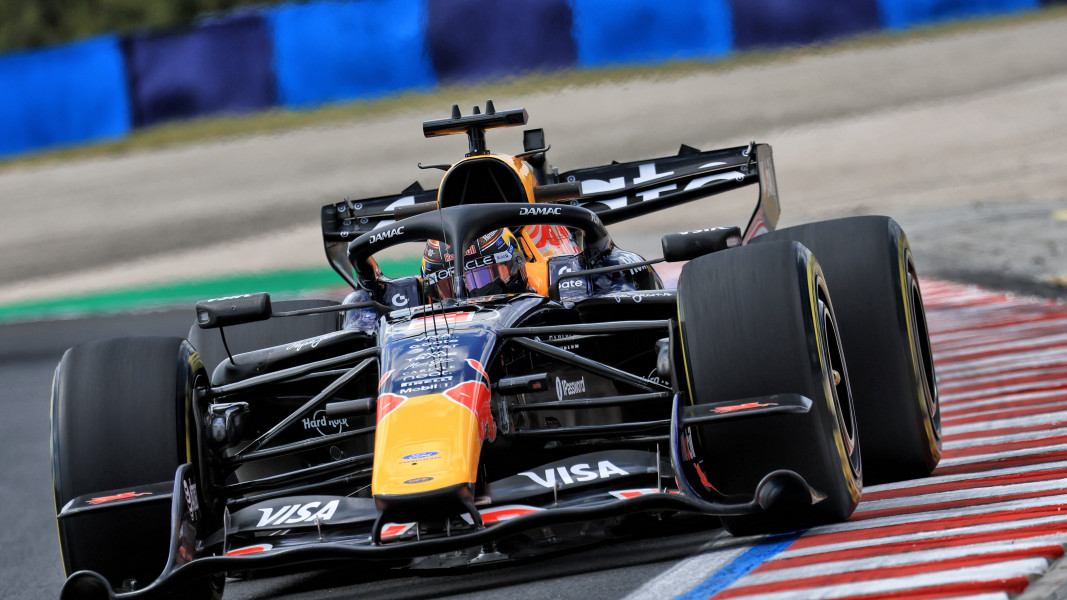
“So the rules were looming, and at the same time drivers and engineers were warning: ‘Listen, this isn’t going to end well.’ But there was virtually no response from the others. Then we travelled to Melbourne in 2026 and realised: ‘Oh, the cars are slowing down as they approach certain corners.’ ‘Yes, of course, because the drivers had to conserve energy.’
“I get the feeling here that we saw all this coming, but nobody really listened, and the fact that we then had to react to reality – in a sport that simulates absolutely everything to excess – I found that a bit disappointing, and that really has to be put down to the FIA.”
‘I know the FIA will be sensitive about this and retort: “Well, we’re just a small group of people and the F1 teams have hundreds of engineers.” That’s true, of course, but all the evidence was there to show that a 50:50 split between electric power and the internal combustion engine would prove tricky.”
“Action has now been taken; next year we’ll have a higher proportion of power from the internal combustion engine, and a little more again in 2028. But to see the obvious and then react so sluggishly is a bit disappointing.”
Seen already?
Don't miss out on any highlights: The Speedweek newsletter, sent out twice a week, delivers the latest news, exclusive commentary and all the important dates from the world of motorsports - directly into your inbox
Highlight Videos
ServusTV Media Library„Der GRÖSSTE Bock von Hamilton"!
22. Sept. | 1:53 Min
50-Meter-Drama von WM-Maschine eiskalt ausgenutzt!
14. Sept. | 1:36 Min
Mercedes in Monza: Funk verrät Stimmung
7. Sept. | 1:15 Min

4. Sept. | 4:58 Min
Hat Hamilton Mercedes-Heimweh?
24. Aug. | 1:54 Min
Liam Lawson: Markantes Style-Detail!
23. Aug. | 7:14 Min
Paddock-Tour: Weite Wege in Zandvoort
22. Aug. | 7:08 Min
Keine Bitterballen für Andrea & Christian
21. Aug. | 6:00 Min
Formula Cars News
All News


Newest Articles
All ArticlesNew New New New New New New New New


