Jo Siffert: 55 years ago, the Swiss Grand Prix star died at Brands Hatch
The Swiss driver Jo Siffert was fast on both two and four wheels and had worked his way up from rag-and-bone man to Formula 1 star. One of the finest drivers of his era died on 24 October 1971.
This article is an automatically generated English version. The


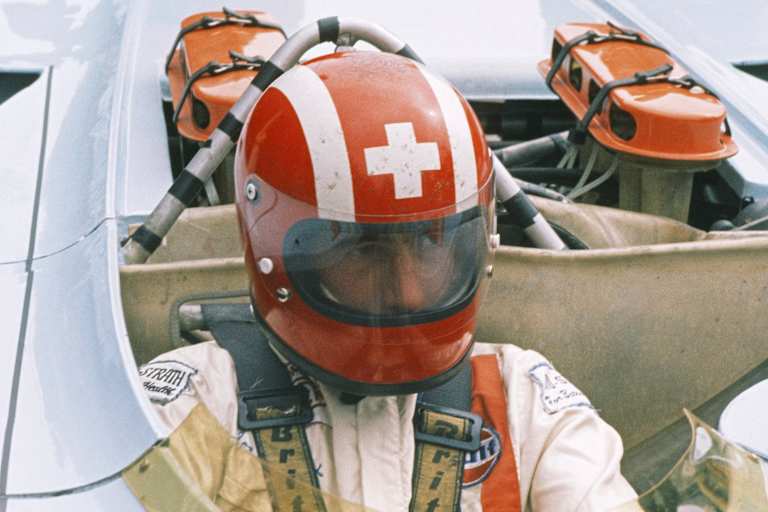
Der Schweizer Jo Siffert mit seinem legendären Helm-Design im Porsche
Foto: Porsche
Der Schweizer Jo Siffert mit seinem legendären Helm-Design im Porsche
© Porsche
The Rothmans World Championship Victory Race at Brands Hatch: Although this race on the undulating circuit in the county of Kent, south of London, did not count towards the World Championship, Jo Siffert had given it his all in his BRM P160: on 24 October 1971, he was on pole position and had set a new circuit record.
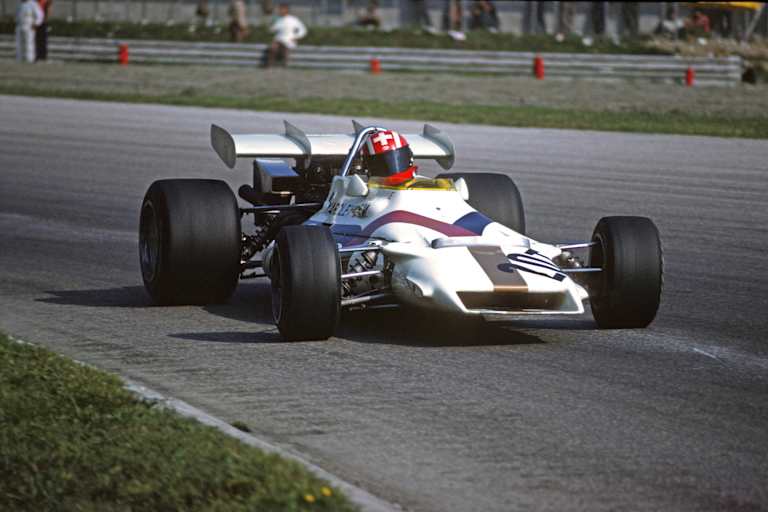
Siffert 1971 mit seinem BRM beim Italien-GP in Monza
Foto: Grand Prix Photo
Siffert 1971 mit seinem BRM beim Italien-GP in Monza
© Grand Prix Photo
But when the chequered flag dropped, the speedy Swiss driver didn’t get off to a great start – his British team-mate Peter Gethin, the Brazilian Emerson Fittibaldi in a Lotus and the Scot Jackie Stewart in a Tyrrell-Ford had got off to a better start and pulled away.
Recommendations
Mentioned in this article
That didn’t faze the Fribourg-born driver, however; his fighting spirit drove him through the field, and by lap 16 he was already right behind Stewart in third place.
Then, at exactly 2.18 pm, it happened: his BRM skidded off the track at the Mike Hawthorn bend, caught fire and exploded instantly; Siffert had no chance of survival in the inferno.
Topic of the week
Topic of the week: MotoGP’s new schedule proved highly controversial
In 2027, MotoGP will also enter the 850cc era with a new schedule. It was not so much the changes themselves as the way the decisions were reached that caused a stir. A prime example of: ‘Talking helps’.
TV Program
The race was immediately halted and witnesses were interviewed. Allegedly – though opinions differed on this – Siffert had been racing towards that corner at over 220 km/h and was apparently experiencing gearbox problems. His car then spun, grazing a track barrier in the process, before rolling over. Others claimed to have seen Siffert’s car sustain chassis damage following a minor collision with Ronnie Peterson’s March.
Even though many myths often surround racing drivers who have died in accidents, Jo Siffert was regarded, thanks to his talent, as someone who could be fast in any car. His courage and his effortless style – as many of his contemporaries described it – had defined his driving.
His passion, however, was not confined to Formula 1, where he won two Grand Prix races over the course of ten years: in 1968 at the British Grand Prix (Brands Hatch) and, shortly before his death in 1971, at the Österreichring.
During this time, he had driven various Lotus models, the Brabham BT11, the Cooper-Maserati, the March 701 for a year, and finally the Yardley team’s BRM, competing 96 times in the top class.
But the lanky racing driver, with his trademark red helmet and the Swiss cross, was also drawn to the fast sports cars of his day, particularly those from Porsche.
Together with Gérard Larrousse, Brian Redman, Kurt Ahrens and Hans Herrmann, he drove the notoriously difficult-to-handle Porsche 917 for the works team to no fewer than three world championship titles. Yet Siffert came from a very humble background and had made great sacrifices to reach the pinnacle of his sport, as he did not have the same financial resources as other racing drivers.
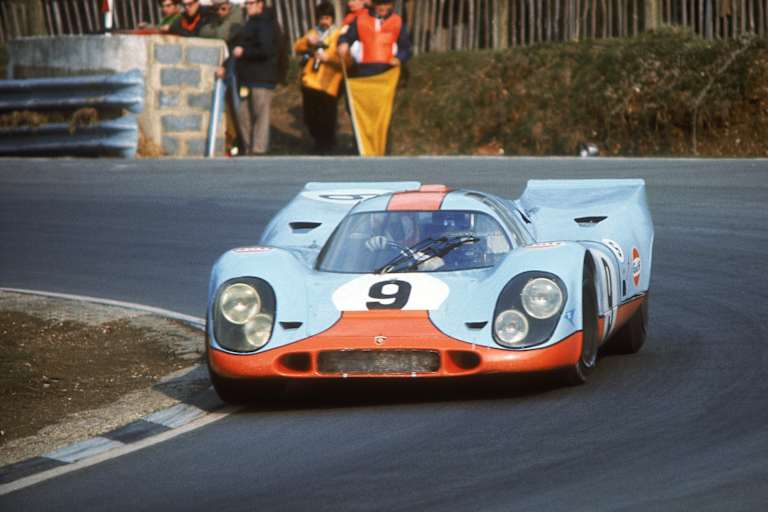
Siffert im Porsche 917
Foto: Porsche
Siffert im Porsche 917
© Porsche
Moreover, he always remained modest, as his long-standing mechanic Heini Mader once described him: ‘He was a role model to many, not just in his native Switzerland.’
Is it any wonder, then, that on 29 October 1971, some 50,000 people attended his funeral? His death was felt in Switzerland much in the same way as that of Ayrton Senna in Brazil; Siffert was a national hero.
As a young boy, Jo had attended motor racing events in Switzerland with his father and wanted to become a racing driver. However, the family only ran a small dairy shop, so Siffert – the only boy growing up with three sisters – earned money whilst still at school by collecting scrap metal and rags.
He began an apprenticeship as a panel beater and traded in second-hand cars, whilst also competing in his first races on a motorbike. It was not until 1960 that he switched to cars, buying a second-hand Stanguellini Monoposto, competing in slaloms and hill climbs, and later switching to a Lotus Formula Junior.
In 1962, he was given the chance to drive a Lotus Climax in Formula 1 for the Swiss Ecurie Filipinetti, and later founded his own team. He also competed in Formula 2 and became a BMW works driver.
In 1965 he joined Rob Walker’s team; in 1970 he moved to March, and finally joined BRM in 1971. Driven by his passion for sports cars, he also drove various Porsche racing cars from 1966 to 1971, securing numerous class and overall victories in German racing cars – Le Mans, the Nürburgring, Monza, the Österreichring, Spa-Francorchamps and the Targa Florio.
Porsche’s sporting director, Peter Falk, described Jo Siffert as ‘arguably the best all-round driver of his generation’. The Swiss driver was only 35 years old.
Seen already?
Don't miss out on any highlights: The Speedweek newsletter, sent out twice a week, delivers the latest news, exclusive commentary and all the important dates from the world of motorsports - directly into your inbox
Championship Standings
Full Standingsorg-location for [2026] 2026
2026
2025
2024
2023
Pos
Driver
Team
Points
1


340
2

238
3


229
4


221
5

215
6


201
7

138
8

97
9


75
10


41
Highlight Videos
ServusTV Media Library
Klien erklärt: Cadillacs Texas-Design
23. Okt. | 4:24 Min
Der Schweige-Code von Singapur!
12. Okt. | 3:27 Min
Peinlicher Software-Fehler & Schleich-Modus!
5. Okt. | 3:05 Min
„Alonso hat noch eine Rechnung offen!“
2. Okt. | 16:27 Min
Neu: Neongelbe Audi-Abdeckungen! | Klien erklärt
2. Okt. | 4:30 Min
Trotz Verstappen-Befehl: Hadjar macht Druck!
27. Sept. | 1:44 Min
Irrsinnige Fehler: Steht sich Ferrari im Weg?
24. Sept. | 15:41 Min
Racing Bulls: Neue Teile, große Wirkung?
24. Sept. | 5:01 Min
Events
All Formula 1 Events


Formula Cars News
All News
Newest Articles
All ArticlesNew New New