
Max Verstappen ‘in a stranglehold’: 2026 cars are lifeless, V8 engines much better
Four-time world champion Max Verstappen longs for lighter, more agile racing cars, with the right naturally aspirated engine sound. As a racing driver, he feels restricted by this generation of cars.
This article is an automatically generated English version. The

Max Verstappen
Foto: XPB
Max Verstappen
© XPB


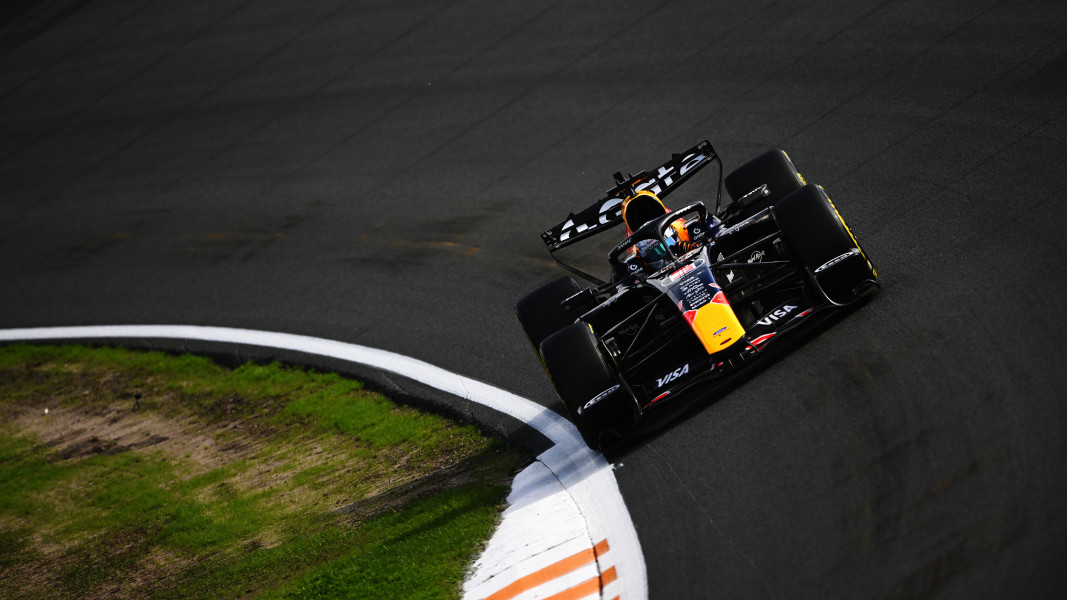
Max Verstappen doesn’t mince his words; he speaks openly and honestly about what he thinks, even if it ruffles a few feathers. This was certainly the case in a recent conversation with my colleague Andrew Benson from the BBC. Among other things, they discussed the contentious topic of the 2026 race cars.
Ever since the first race of the season, the 28-year-old Dutchman has been highly critical of the new generation of cars. So why has he nevertheless signed a new contract running until the end of 2030? Max: “Because I hope things will get better again in the future. I still love the sport, even if I don’t find the driving particularly thrilling at the moment.”
“If we look at the history of the sport, it’s always been like that – the driver who gives it their all, who brakes the latest, who gets back on the throttle the earliest, who takes a leap of faith in the fast corners, they were rewarded, because that’s how you could gain time in the corners.”
Recommendations
“But these days, all you’re constantly thinking is: ‘In this corner I need to hold back a bit, I need to brake later, I need to get back on the throttle later, I need to lift off – that’s the only way I’ll have enough power for top speed on the straight later on.’ That’s the sort of thing you’re thinking about. That’s just not natural for a racer. It shouldn’t be like that.”
“I don’t want to sound disrespectful, and I really hope what I’m about to say isn’t taken the wrong way. But look at how Yuki Tsunoda stepped in for the Racing Bulls at Zandvoort. He’d never driven the car before. And he was up to speed straight away. Look at Liam Lawson, switching from the Racing Bulls to our car at Red Bull Racing – competitive straight away. That’s simply because these cars are perfectly suited to what the driver can bring to the table.”
The 2027 MotoGP grid will feature five new regular riders, with at least three of those dropped set to move to the World Superbike Championship. The ones to suffer as a result are Alvaro Bautista and Danilo Petrucci.
TV program
“Of course you still have to be fast. Of course you still have to give it your all. At the end of the day, the fastest drivers will always be right up there at the front. But it’s all rather limited; as a driver, you feel like you’re in a stranglehold. You feel held back.”
And then there’s the sound. Max continues: “We need to go back to the naturally aspirated V8, and not just for the drivability. When you sit in an older car, it absolutely blows you away just how huge the difference is – how responsive the naturally aspirated engine is to the throttle, how easy such an engine is to drive. A V8 is so much better, so free, so light. Our cars today are far too heavy. I’m not saying we should do away with electric power altogether, but it simply shouldn’t have the massive influence it does today. Why not have electric power just in the form of a button that lets you call up a boost of electric power for overtaking?”
“A V8, or going back even further, the V10 and V12 – that really stirs the emotions! Those are the engines I loved as a child. Just hearing an engine like that gives you goosebumps. OK, maybe years ago they only reached, in inverted commas, 300 km/h. Now we’re doing 350 or 360, but that doesn’t matter, because the sound today doesn’t stir any emotions. Those old engines – what a roar they made! And you could feel every vibration. I want to feel that again in a Formula 1 racing car.”
Seen already?
Don't miss out on any highlights: The Speedweek newsletter, sent out twice a week, delivers the latest news, exclusive commentary and all the important dates from the world of motorsports - directly into your inbox
Highlight videos
ServusTV media library
Mercedes in Monza: Funk verrät Stimmung
7. Sept. | 1:15 Min
6. Sept. | 34:42 Min
6. Sept. | 1:13 Min
Antonelli: „Ein Traum ist für mich wahr geworden“
6. Sept. | 5:15 Min
6. Sept. | 2:51 Min
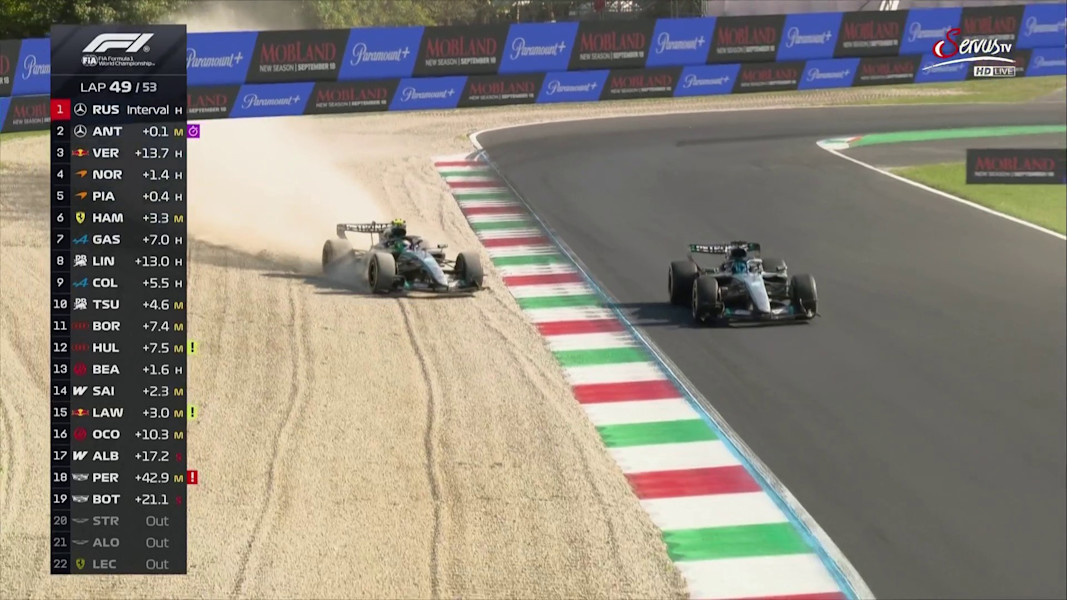
Zweikampf endet mit Kiesbett-Ausflug
6. Sept. | 1:47 Min
Colapinto versenkt Topplatzierung im Kiesbett
6. Sept. | 1:10 Min
6. Sept. | 3:43 Min
Formula Cars News
All News


Newest Articles
All ArticlesNew New New New


