
McLaren swivel wing: Why development is progressing so slowly
The McLaren team has taken its time with the first track deployment of the ‘Macarena’ rear wing. Team principal Andrea Stella explains why his team is taking so long with the development.
This article is an automatically generated English version. The

Leonardo Fornaroli durfte den Drehflügel im ersten Ungarn-Training testen
Foto: Rew / XPB Images
Leonardo Fornaroli durfte den Drehflügel im ersten Ungarn-Training testen
© Rew / XPB Images


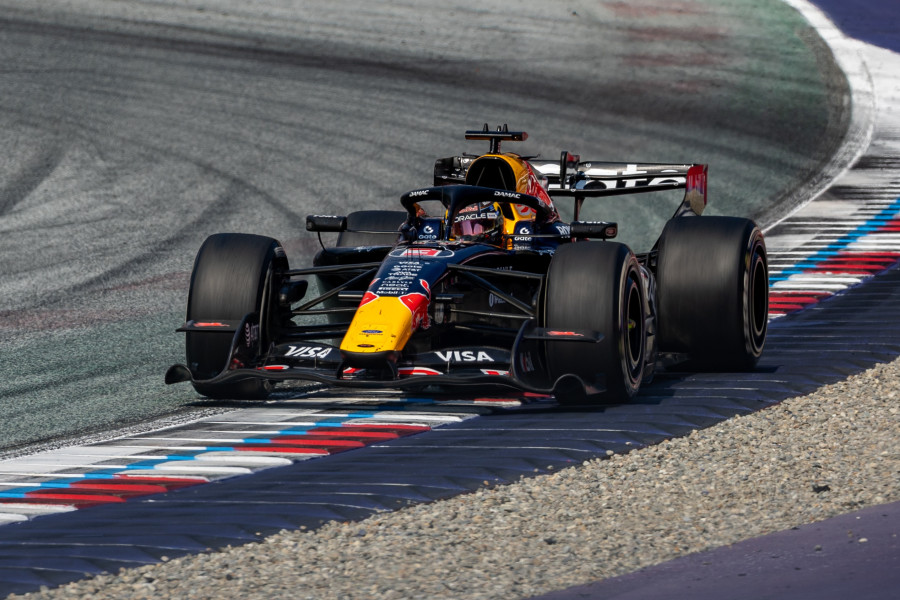
When Ferrari showcased the rotating wing during pre-season testing, rivals and F1 observers alike reacted with raised eyebrows. After all, the idea of allowing a wing element to rotate half a turn around its own axis in straight-line mode was a compelling one. Red Bull Racing, too, had a similar design in the pipeline during the winter break, which was continuously refined and also caused quite a bit of trouble.
Max Verstappen spun off the track at both the Red Bull Ring and the Silverstone Circuit because the wing made his car unstable as it folded back. The Milton Keynes-based team subsequently decided to temporarily stop using the swivelling wing in order to examine the component’s effects more closely and make further adjustments if necessary.
A complex project
The swivel wing is also causing McLaren a few headaches. The world champion team had already wanted to put its version of it on the track at Spielberg, but held off on using it on the circuit until the race weekend in Budapest. At the Hungaroring, Leonardo Fornaroli was allowed to test it in the first practice session, after which the rear wing disappeared from the car again.
Team principal Andrea Stella commented: “It’s been a complicated project so far.” This came as no surprise, he added, given that they’d seen how the competition had struggled with it. “So we knew it would be complex, and I have to say that our design department has implemented this project in such a way that it works well as far as the wing is concerned – that is, the mechanical actuation and the actuation times. Because there are a number of restrictions imposed by the regulations, not just from an aerodynamic point of view.”
Track testing is essential
This concerns the aerodynamics of the entire car, not just the rear wing, explained the Italian engineer. “It’s about how long it takes for downforce to be re-established when the wing retracts. After all, there aren’t just aerodynamic constraints, but also those stemming from the regulations,” emphasised Stella.
Summertime, holiday season, the silly season: these are the weeks when the most outrageous driver changes are usually discussed. The big news for the 2027 season is yet to materialise.
TV program
Expectations have been met, and the swivelling wing will now be tested on the track during further World Championship rounds. Stella made it clear that these tests are essential: “I don’t think the wind tunnel is a major factor here. Other tools can be used for this, and the most important of these, in such a complex project, is of course track testing. That’s why it was important for us to collect the relevant data. With a project like this, you can’t rely solely on the wind tunnel.”
Seen already?
Don't miss out on any highlights: The Speedweek newsletter, sent out twice a week, delivers the latest news, exclusive commentary and all the important dates from the world of motorsports - directly into your inbox
Highlight videos
ServusTV media library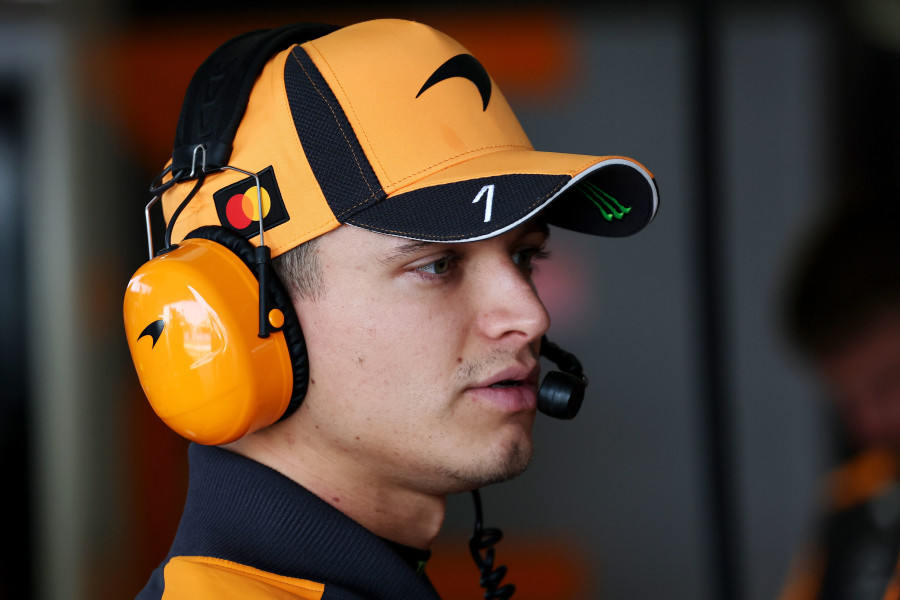
Übt Norris Weltmeister-Druck auf McLaren aus?
27. Juli | 1:16 Min
F1-Geschichtsstunde mit Andi Gröbl
19. Juli | 7:53 Min
Belohnung nach dem Qualifying!
18. Juli | 7:00 Min
Wrap-Up: Exklusive Einblicke ins Fahrerlager!
17. Juli | 9:28 Min
17. Juli | 5:50 Min
60 Grad, Trinkflasche hin: Russells Ruhe-Geheimnis
29. Juni | 1:07 Min
28. Juni | 7:46 Min
Hülkenberg zeigt sein Lenkrad
27. Juni | 3:55 Min
Formula Racing News
All news


Newest articles
All articlesNew New New


