
100 Years of Maico: The German motorbike manufacturer’s successes in Grand Prix racing
In 1926, Ulrich Maisch founded the company Maico, which initially manufactured bicycle spare parts and later sewing machines. The Swabian company achieved its greatest renown with its motorcycles.
This article is an automatically generated English version. The

Börje Jansson auf einer Maico, Sachsenring 1972
Foto: Günter Geyler/motoarchive.com
Börje Jansson auf einer Maico, Sachsenring 1972
© Günter Geyler/motoarchive.com


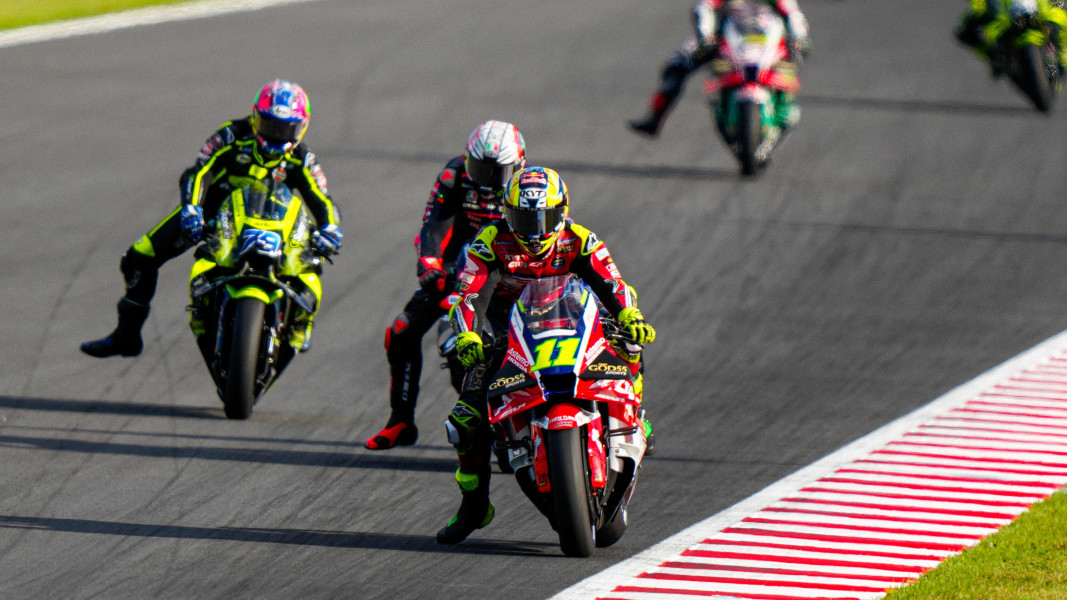
29 August marked the tenth anniversary of Kent Andersson’s death. Riding for Yamaha, the Swede was crowned World Champion in the 125cc class twice (in 1973 and 1974). This year also marked the 100th anniversary of Maico’s founding. After producing bicycle spare parts and sewing machines, the Swabian company added motorbike production to its portfolio in 1934.
Following on from, or alongside, motocross and off-road racing (now known as enduro), Maico entered Grand Prix road racing as a factory team in 1969. It was Kent Andersson who, in the very first race of the season at Jarama in Spain, secured second place in the 125cc race, thereby earning Maico its first World Championship points and its first World Championship podium finish.
Maico’s history thus began in 1926, when, in the small Swabian village of Poltringen near Pfäffingen (close to Tübingen), Ulrich Maisch founded a company specialising in bicycle spare parts under the name Maico (derived from Maisch und Co.).
The product range was soon expanded to include sewing machines, motorbike clothing, record players and the company’s own bicycle frames. After Ulrich Maisch handed over his company to his sons Otto and Wilhelm in 1931, they entered the motorbike manufacturing sector in 1934, initially using engines from Ilo and Sachs.
After the Second World War, during which the company kept its head above water by manufacturing aircraft parts, it began producing complete motorbikes. The company’s first forays into motorsport began in the mid-1950s with motocross, and later extended to off-road racing.
Topic of the week
Topic of the week: MotoGP’s new schedule proved highly controversial
In 2027, MotoGP will also enter the 850cc era with a new schedule. It was not so much the changes themselves as the way the decisions were reached that caused a stir. A prime example of: ‘Talking helps’.
TV Program
Road racing, on the other hand, was viewed by Maico with scepticism or even hostility for a long time. It was only with the arrival of the new technical director, Günter Schier, that things began to change, culminating in the launch of a competitive motorcycle – the 125cc rotary-valve Maico RS2 – by the end of the 1960s.
In 1969, Maico put together a works team featuring the Swedes Kent Andersson and Börje Jansson and entered the Motorcycle World Championship. As already mentioned, Kent Andersson took second place in the very first race of the season at Jarama in Spain. However, he subsequently left Maico and moved to Yamaha. Riding one of these Japanese racers, he finished fourth in the World Championship at the end of the season.
From 1970 onwards, it was Börje Jansson on whom Maico’s hopes were pinned. At the second race of the season at Le Mans in France, he finished second behind the eventual world champion, Dieter Braun. He achieved the same result at the Isle of Man Tourist Trophy, which at the time counted towards the World Championship. With third-place finishes at Spa-Francorchamps in Belgium, the Sachsenring and the Montjuïc circuit in Barcelona, he finished the season in third place in the World Championship. The same was true in 1971, after he had finished on the podium in five of the eleven races that season. Among other results, he again came third at the Sachsenring.
It was there, on 9 July 1972, that Börje Jansson also secured Maico’s first Grand Prix victory by finishing ahead of the Yamaha riders Chas Mortimer and the aforementioned Kent Andersson. Despite another victory at the very next World Championship round in Brno, Czech Republic, as well as three further podium finishes and four fourth places, he could only manage fourth place in the final standings.
Börje Jansson repeated this feat in 1973, securing another Grand Prix triumph at his home race in Anderstorp. At the end of the year, Börje Jansson hung up his helmet; Maico subsequently failed to sign a suitable replacement.
The Maico racing motorbikes available for purchase, as well as the pure single-cylinder two-stroke engines with a displacement of 124 ccm and an output of 28 PS, were also highly sought after by privateers. One of the most significant successes was achieved by the Italian Eugenio Lazzarini at the Dutch Grand Prix in Assen, where he won the race on a Piovaticci-Maico ahead of the German Rolf Minhoff on a purebred Maico.
Another outright Maico Grand Prix victory was also recorded, namely in 1974 at the Nürburgring. However, this race was boycotted by the top international riders due to safety concerns, meaning that the German Fritz Reitmeier took the win. Second to fourth places also went to Maico riders – Wolfgang Rubel, Hans Dittberner and the Austrian Rudolf Weiss – with eight of the nine finishers out of twelve starters riding a Maico.
In 1975, Maico officially ended all involvement in road racing, but remained active and successful in off-road racing for several more years. Nevertheless, 1976 saw a final Maico podium finish and, at the same time, the last World Championship points. At the German World Championship round at the Nürburgring, Walter Koschine finished second on a Seel-Maico behind Anton Mang on a Morbidelli. It was the Bavarian’s first Grand Prix victory, which was followed by a further 41. With his five World Championship titles, Mang became the most successful German road racing motorcyclist.
German riders who scored World Championship points on Maico machines before the brand’s withdrawal included Toni Gruber, Klaus Huber, Dieter Braun, Gert Bender, Günther Fischer, Rolf Minhoff, Horst Seel, Paul Eickelberg, Gottlob Schweikardt, Fritz Reitmaier, Wolfgang Rubel, Hans-Joachim Dittberner, Peter Rüttjeroth, Arnulf Teuchert, Peter Frohnmeyer and Rolf Thiele. In addition, there were 27 international riders (including the aforementioned Eugenio Lazzarini and Rudolf Weiss) who scored World Championship points on a Maico or a Maico-powered machine.
In the quarter-litre class, Maico had a brief spell in 1972, which began promisingly with a second place for Dieter Braun at Hockenheim. He then finished ninth on the points in Clermont-Ferrand, France, and came close to the podium once more at Spa-Francorchamps, finishing fourth. In the final World Championship standings, however, he could only manage 12th place amidst the overwhelmingly dominant Yamaha factory bikes and production racers. Gert Bender and Börje Jansson also managed to score points twice and once respectively on the 250cc Maico.
Following the initiation of insolvency proceedings in 1983, a protracted mudslinging battle ensued due to opaque ownership structures, involving delays in the insolvency process, liquidation, rescue companies, as well as unenforced arrest warrants and suspended sentences. By the end of 1986, Maico had disappeared from the market for good. The conclusion of the final bankruptcy proceedings dragged on until 1994.
Seen already?
Don't miss out on any highlights: The Speedweek newsletter, sent out twice a week, delivers the latest news, exclusive commentary and all the important dates from the world of motorsports - directly into your inbox
Highlight Videos
ServusTV Media Library
Phillip Island: Analyse Sprint
24. Okt. | 14:42 Min
Phillip Island: Analyse Qualing
24. Okt. | 11:19 Min
Dieses Duell nimmt ein bitteres Ende
24. Okt. | 2:31 Min
Erst harter Fight, dann Schreckmoment!
24. Okt. | 7:54 Min
Letzter Tanz auf Phillip Island
24. Okt. | 3:39 Min
Senna Agius 1on1: So tickt der Moto2-Star
23. Okt. | 2:59 Min
Freitags-Update: Die heißesten Themen der MotoGP
23. Okt. | 7:47 Min

KTM zwischen Palmen und Vollgas!
20. Okt. | 10:42 Min
Events
All Moto3 EventsPast Japanese Grand Prix Twin Ring Motegi, Japan 02.–04.10.2026Past Indonesia Grand Prix Mandalika International Street Circuit, Indonesien 09.–11.10.2026Live
Australian Grand Prix Phillip Island Grand Prix Circuit, Australien 23.–25.10.2026Next up Malaysian Grand Prix Sepang International Circuit, Malaysia 30.10. – 01.11.2026Next up Grand Prix of Qatar Losail International Circuit, Katar 06.–08.11.2026

Past Japanese Grand Prix Twin Ring Motegi, Japan 02.–04.10.2026Past Indonesia Grand Prix Mandalika International Street Circuit, Indonesien 09.–11.10.2026Live
Australian Grand Prix Phillip Island Grand Prix Circuit, Australien 23.–25.10.2026Next up Malaysian Grand Prix Sepang International Circuit, Malaysia 30.10. – 01.11.2026Next up Grand Prix of Qatar Losail International Circuit, Katar 06.–08.11.2026
MotoGP News
All News


Newest Articles
All ArticlesNew New


