
Nicolo Bulega reveals: This is how close the Ducati 850 is already to the 1000
Ducati’s MotoGP prototype for 2027 is still in an early stage of development. Test rider Nicolo Bulega reveals just how close the 850cc bike already is to the 1000cc model, despite its significantly lower power output.
This article is an automatically generated English version. The

Nicolo Bulega kann die 850er mit der 1000er vergleichen
Foto: Gold & Goose
Nicolo Bulega kann die 850er mit der 1000er vergleichen
© Gold & Goose


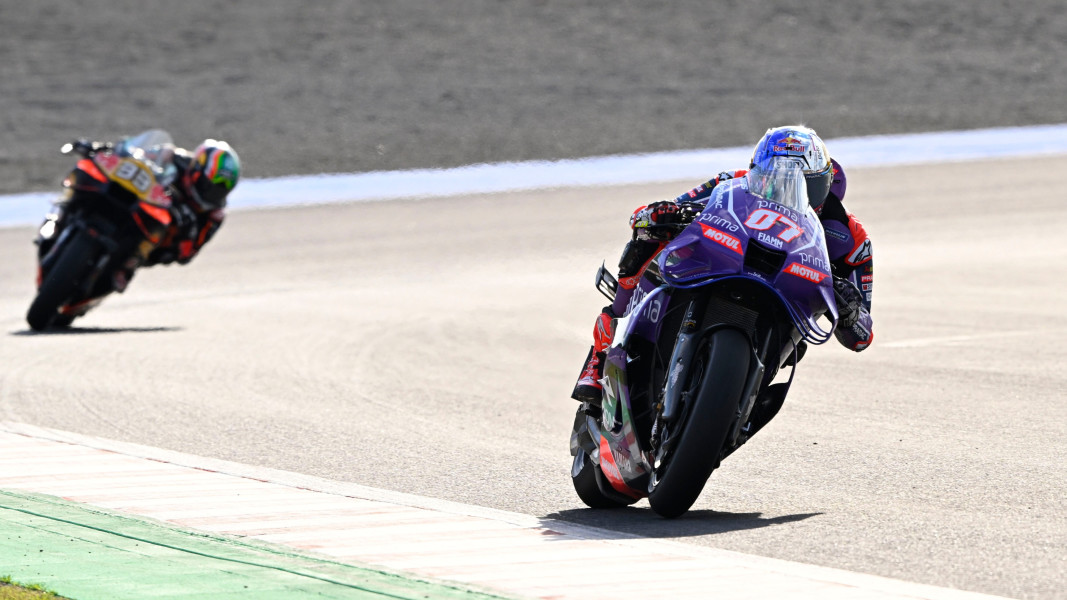
A new era will begin in MotoGP with the 2027 season. Engine capacity will be reduced from 1,000 to 850 cc, whilst Pirelli will replace long-standing sole tyre supplier Michelin. Like the other manufacturers, Ducati has been working intensively on the new bike for months. One of the key riders involved in its development is Superbike series winner Nicolo Bulega.
The current Superbike World Championship leader and Ducati MotoGP test rider has already spent several days on the 850-cc prototype. Although the project is still in its early stages, Bulega is satisfied with the current progress. During the Superbike race weekend at Magny-Cours, the Italian spoke about the work on the new Desmosedici.
Bulega sees “considerable potential” in the development
“The project has only been running for a few months,” said Bulega. Accordingly, he still sees considerable potential – both in the bike and in himself. “I’ve ridden the bike for a few days, but I think I’ll be faster at the next test because I’ll have more experience with this bike by then.”
At the same time, Ducati is gathering important insights into the new Pirelli tyres. Their characteristics differ significantly from the current Michelin tyres and are therefore also influencing the development of the bike. “Ducati is gaining a better and better understanding of how the bike needs to be improved to work with the Pirelli tyres, as they differ greatly from the Michelins,” explained Bulega. “The whole package needs to improve – the bike and I together.”
Lap times ‘not far’ off the 1000s
The 26-year-old already views the starting position positively. He is particularly surprised by the lap times, given the lower engine power. “I think the base is very good. With the new tyres, the lap times aren’t that far off even now, considering that the bike is significantly slower on the straights and when accelerating.”
Topic of the week
Topic of the week: MotoGP’s new schedule proved highly controversial
In 2027, MotoGP will also enter the 850cc era with a new schedule. It was not so much the changes themselves as the way the decisions were reached that caused a stir. A prime example of: ‘Talking helps’.
TV Program
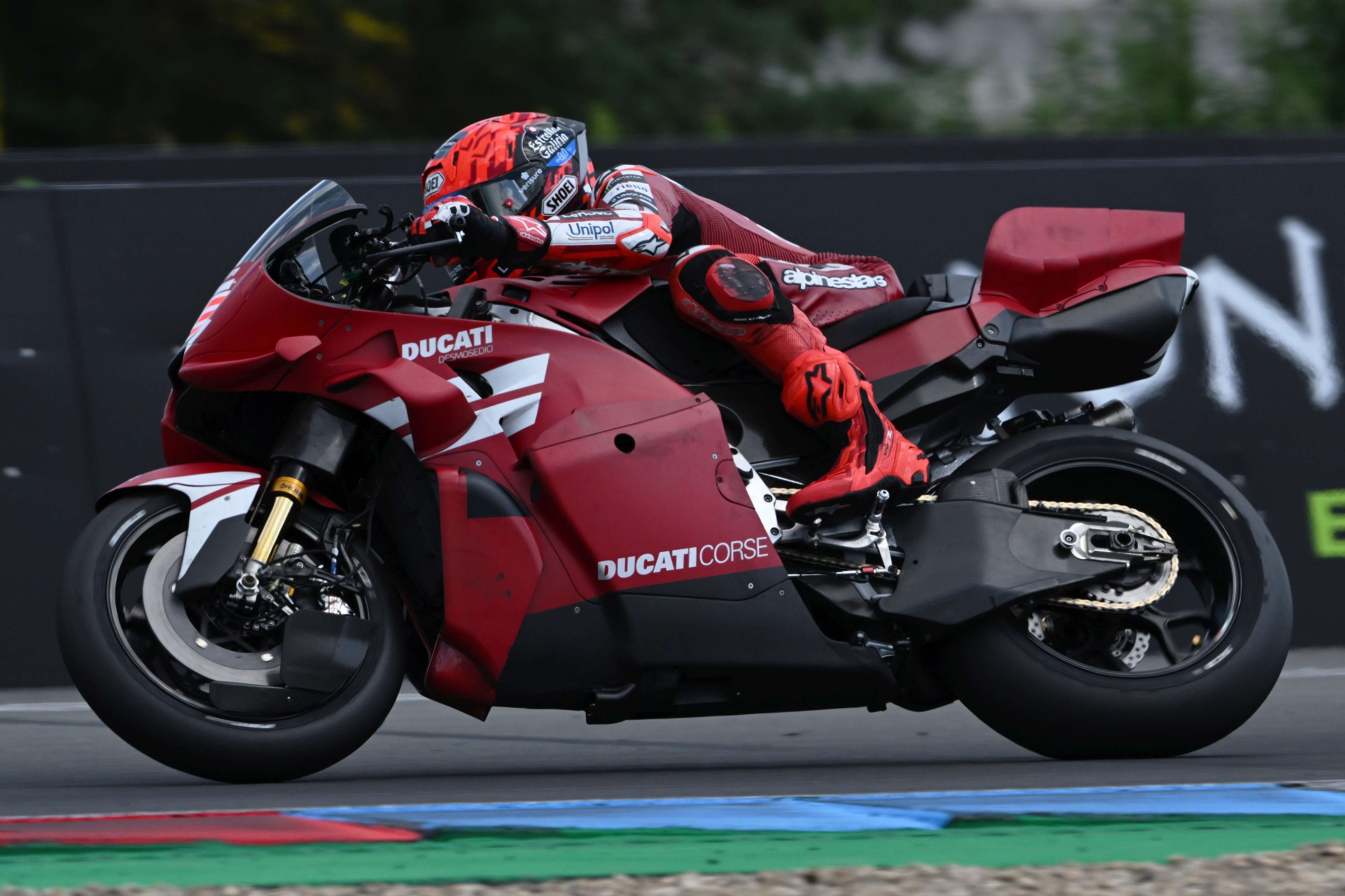
Marc Marquez mit der 850er-Ducati beim Brünn-Test
Foto: David Ulrich
Marc Marquez mit der 850er-Ducati beim Brünn-Test
© David Ulrich
However, Bulega cannot yet predict when the new generation will reach the level of the current 1000cc MotoGP bikes. He does not, however, expect a massive difference in performance: “I can’t say when the bike will be as fast as the 1000s. But the leap isn’t that dramatic.”
The DNA of the MotoGP bikes remains unchanged
Visually and ergonomically, too, the new Ducati will not be a revolution. According to Bulega, the chassis and aerodynamics essentially follow the current design. “The chassis, the bike and the aero are more or less very similar. Everything tends to be a bit smaller because the engine is smaller too.”
For the regular riders, therefore, getting used to the new machine should remain manageable. “The way you sit on the bike is very similar to the current 1,000cc MotoGP Ducati. I think the riding position is the same for them,” explained Bulega. He sees the tyres as presenting a much bigger change.
Some regular MotoGP riders were already able to try out the new 850cc prototypes at the Pirelli test following the race weekend in Brno. According to Bulega, Ducati has not made any fundamental changes to the prototype since then. When asked whether the motorbike had changed significantly since then, he replied: “No, it was more or less very similar.”

Bulega auf der 1000er-MotoGP-Ducati in Valencia
Foto: Gold and Goose
Bulega auf der 1000er-MotoGP-Ducati in Valencia
© Gold and Goose
However, there is still plenty of time for development before the start of the new era. Bulega points out that the MotoGP riders will complete several days of testing with the new package before the start of the season. Following the test day in Spielberg, there will be further opportunities in Valencia, Sepang and Buriram. “They’ll have four, five or six days of testing before the season starts next year. That’ll be enough,” the future VR46-Ducati rider is convinced.
Nevertheless, Bulega can clearly feel that the 850 is slower. Whilst the current MotoGP bikes reach speeds of around 350 km/h on fast circuits, the new bike is currently still below that mark. However, it certainly doesn’t feel slow. “Yes, it’s slower,” confirmed Bulega. “But 335 km/h is still not bad. It’s a bit less than now, but they’re not Moto3 bikes.”
Seen already?
Don't miss out on any highlights: The Speedweek newsletter, sent out twice a week, delivers the latest news, exclusive commentary and all the important dates from the world of motorsports - directly into your inbox
Highlight Videos
ServusTV Media Library
KTM zwischen Palmen und Vollgas!
20. Okt. | 10:42 Min
Japan läuft nicht nach Plan für KTM!
17. Okt. | 10:33 Min
17. Okt. | 13:26 Min
Aufwärtstrend bei KTM bestätigt!
17. Okt. | 11:57 Min
Nach Durststrecke: KTM ist zurück am Podium!
17. Okt. | 15:23 Min
Erfreuliches Wochenende für KTM in England!
17. Okt. | 17:26 Min
In Deutschland heißt es Links herum!
17. Okt. | 15:41 Min
Es läuft nicht nach Plan in den Niederlanden!
17. Okt. | 14:21 Min
MotoGP News
All News


Newest Articles
All ArticlesNew New New New New New New


