
More cities, less tradition? MotoGP at a crossroads
Liberty Media wants to see MotoGP continue to grow. There’s nothing wrong with that. However, it will be crucial that the premier class does not lose its own identity in the process.
This article is an automatically generated English version. The

Die MotoGP befindet sich im Umbruch
Foto: Gold & Goose
Die MotoGP befindet sich im Umbruch
© Gold & Goose

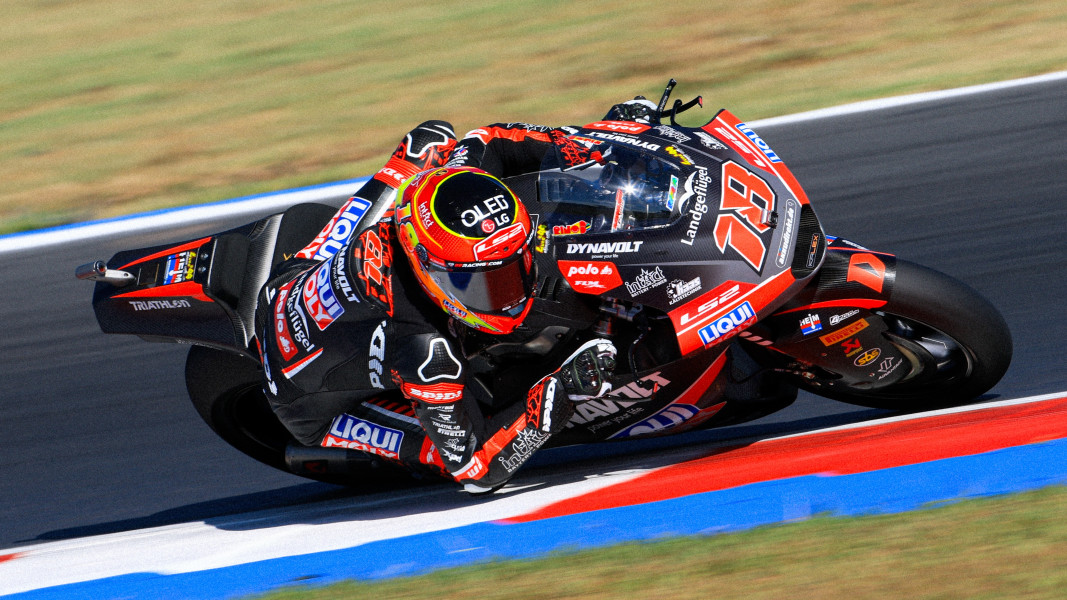
On Friday lunchtime, during the Czech Grand Prix, the
Reading between the lines, however, it became clear where the journey is headed. MotoGP is set to grow. Become more commercial. Tap into new target audiences. Reach more fans. There is nothing fundamentally wrong with that. The only question is: at what cost?
MotoGP aims to tap into urban areas
If one is to believe the statements made by those in charge, events held near major cities will become increasingly important in future. That sounds logical at first. More people mean potentially more spectators, greater reach and higher revenue. But this is precisely where my unease begins.
Recommendations
Harley-Davidson World Cup
Strategy shift at Harley – greater focus on the Bagger World Cup
Harley-Davidson World Cup
Strategy shift at Harley-Davidson – full focus on the Bagger World Cup
MotoGP is not Formula 1. It never was and it never will be.
The charm of the World Motorcycle Championship did not arise amongst skyscrapers and event venues, but on legendary race circuits. On tracks such as Phillip Island, Mugello, Assen or the Sachsenring. On circuits that have made history and where the racing itself takes centre stage.
Topic of the week
Nicolo Bulega: Toprak’s successor will not fail in MotoGP
The Italian Nicolo Bulega is the first rider to have won the world title in both the Supersport and Superbike classes; from 2027, he will be racing in MotoGP. His performances this season are second to none.
TV Program
The fact that Phillip Island is already on the brink of closure should therefore serve as a warning sign. Of course, the circuit has played its part in the current situation. Necessary investments in infrastructure were neglected for years. Nevertheless, it is remarkable that one of motorcycling’s most legendary circuits, of all places, should have to fight for its future.
Who will be next?
The planned street race in Adelaide need not necessarily be a problem in terms of sporting integrity or safety. From what we know so far, the safety standards and run-off areas are said to be of the highest calibre. Nor do I fundamentally question the sporting value of such an event.
Growth more important to Liberty Media than tradition
The real question is rather: what role should traditional race tracks continue to play in the future? It’s one thing when new street races and city-centre events emerge. It only becomes problematic when the circuits that have shaped the character of MotoGP for decades have to make way for them. Growth is important. But growth should be a complement – not a replacement.
The situation becomes particularly curious when one looks to Germany. Due to FIM regulations, the EuroMoto (formerly IDM) is no longer permitted to race in Schleiz. Races on public roads have recently been banned outright. At the same time, there is discussion about new street races to be held on specially adapted public roads. Of course, these involve completely different concepts and safety standards. Nevertheless, a certain contradiction remains: whilst traditional road races are disappearing, the door is opening for new urban motorsport projects.
Of course, MotoGP must continue to evolve. Of course, the sport needs new spectators and new markets. But growth alone is not a strategy. Anyone who views MotoGP merely as yet another entertainment product runs the risk of damaging precisely what has made it unique for decades.
Modern Formula 1 fails to resonate with motorsport traditionalists
Formula 1 serves as a model of success for Liberty Media. Yet not every motorsport fan shares this view. Whilst reach, turnover and media presence are on the rise, many long-standing supporters have lost their connection to the premier class on four wheels. I count myself among them. MotoGP would do well to keep a close eye on this development.
The coming years will show whether Liberty Media understands this. In any case, there is a danger that they might want to turn MotoGP into a Formula 1 on two wheels. And that is precisely what it should never become.
Seen already?
Don't miss out on any highlights: The Speedweek newsletter, sent out twice a week, delivers the latest news, exclusive commentary and all the important dates from the world of motorsports - directly into your inbox
Highlight Videos
ServusTV Media Library
26. Sept. | 12:31 Min
22. Sept. | 3:57 Min
„Haben gezittert bis zur letzten Kurve"
20. Sept. | 4:01 Min
20. Sept. | 41:28 Min
Pedro Acosta: „Danke an alle Fans“
20. Sept. | 5:36 Min
20. Sept. | 3:52 Min
Quiles: „Es war toll, in Österreich zu fahren“
20. Sept. | 3:15 Min
Holgado & Alonso beantworten eure Fragen!
20. Sept. | 4:01 Min
Events
All MotoGP EventsPast Gran Premio di San Marino Misano World Circuit Marco Simoncelli, Italien 11.–13.09.2026Past Motorrad Grand Prix von Österreich Red Bull Ring, Österreich 18.–20.09.2026Live
Grand Prix of Japan Twin Ring Motegi, Japan 02.–04.10.2026Next up Pertamina Grand Prix of Indonesia Mandalika International Street Circuit, Indonesien 09.–11.10.2026Australian Motorcycle Grand Prix Phillip Island Grand Prix Circuit, Australien 23.–25.10.2026

Past Gran Premio di San Marino Misano World Circuit Marco Simoncelli, Italien 11.–13.09.2026Past Motorrad Grand Prix von Österreich Red Bull Ring, Österreich 18.–20.09.2026Live
Grand Prix of Japan Twin Ring Motegi, Japan 02.–04.10.2026Next up Pertamina Grand Prix of Indonesia Mandalika International Street Circuit, Indonesien 09.–11.10.2026Australian Motorcycle Grand Prix Phillip Island Grand Prix Circuit, Australien 23.–25.10.2026
MotoGP News
All News


Newest Articles
All ArticlesNew


