Faster, higher, further: Rally Estonia – a spectacular gravel event
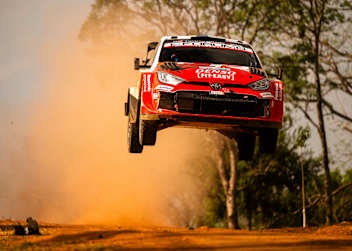
Rally Estonia will take place from 16 to 19 July 2026 as the ninth round of the World Rally Championship. The event is regarded as one of the fastest gravel rallies and is characterised by spectacular jumps.
This article is an automatically generated English version. The
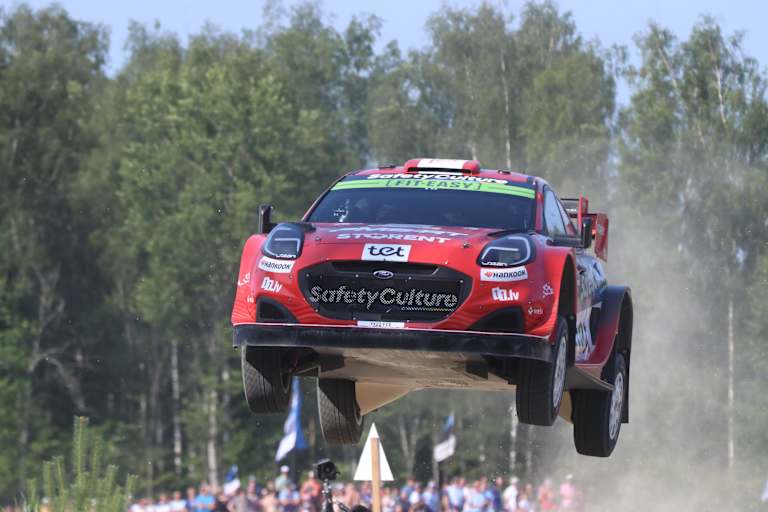
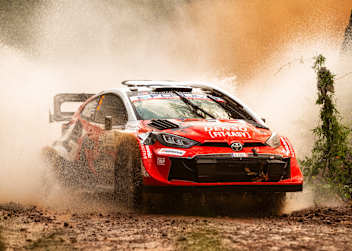
Martins Sesks bei der Rallye Estland 2025
Foto: XPB
Martins Sesks bei der Rallye Estland 2025
© XPB


The centre of the event is in Tartu. This former Hanseatic city is situated in the south-east of the country and is the second-largest city – after the capital, Tallinn – in a country with a population of 1.3 million.
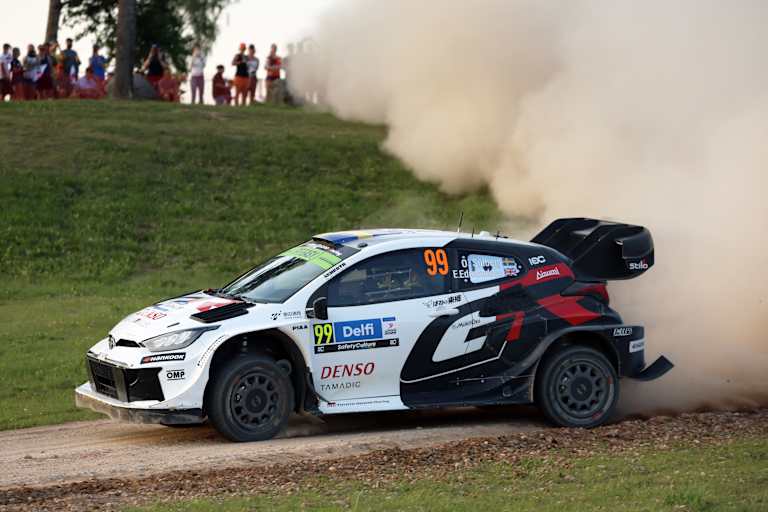
Oliver Solberg gewann 2025 die Rallye Estland
Foto: XPB
Oliver Solberg gewann 2025 die Rallye Estland
© XPB
The rally offers drivers a mix of wide, fast forest roads and narrower, technically demanding sections through hilly countryside. The stages are mostly on flat terrain and some run along man-made gravel tracks.
Precision and courage go hand in hand here, with full-throttle crests and fast compression zones keeping the drivers on their toes from start to finish.
The rally was added to the World Championship calendar in 2020. Thanks to its smooth organisation, huge crowds and fast stages, the event quickly gained a reputation among fans as something truly special. Last year, Oliver Solberg celebrated his spectacular debut victory in the World Rally Championship with Toyota.
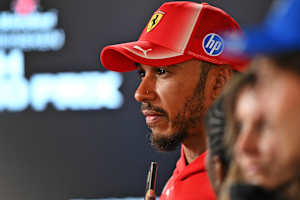
Ferrari came away empty-handed at the Dutch Grand Prix: Lewis Hamilton finished fourth, Charles Leclerc fifth. Afterwards, both drivers were angry, and team principal Fred Vasseur found himself having to explain the situation.
TV program
The Rally Estonia may be super-fast, but it is anything but easy. Speeds are extremely high and regularly break the 120-kilometre-per-hour mark. The event takes place on extremely fast and, in some places, artificially constructed gravel tracks. Changing road surfaces and constant bumps leave no time to relax.
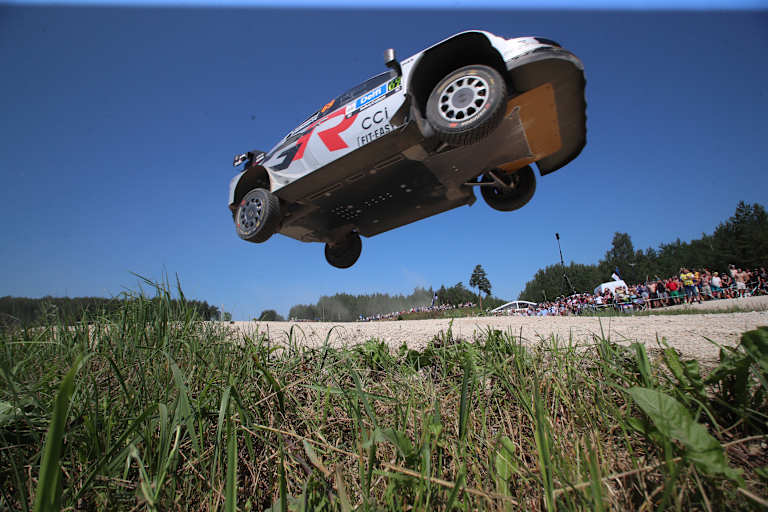
Olympischer Gedanke: Schneller, höher, weiter - hier Kalle Rovanperä
Foto: XBP
Olympischer Gedanke: Schneller, höher, weiter - hier Kalle Rovanperä
© XBP
Tight time margins are expected at the Rally Estonia. There is no room for error.
Precise driving notes are absolutely essential. The faster you drive, the more severely even the slightest misjudgement will come back to haunt you.
The special stages are usually flat on the first run, but by the second run they may be rutted with deep tracks, making them treacherous.
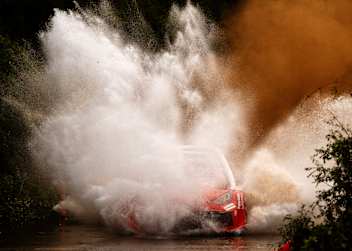
Whilst the weather is mostly dry and warm, sudden rain showers can transform the high-speed challenge into a slippery battle for survival in the blink of an eye.
Drivers need determination, rhythm and confidence – both in the car and in their co-driver. Anyone who loses momentum here is out of the running for the top positions.
The rally comprises 18 special stages totalling 301.80 kilometres. The centre and service park are located on the grounds of the Estonian National Museum (ERM) in the university city of Tartu. The special stages stretch across several municipalities in southern Estonia around Lake Peipus
The ceremonial start will take place on Town Hall Square on Thursday, 16 July. This will be combined with a demo run by the Rally1 cars.
This year, the shakedown will not take place until Friday morning, shortly before the first special stage. The final, including the concluding Power Stage, will be held on Sunday, 19 July 2026, at the Kääriku Sports Centre.
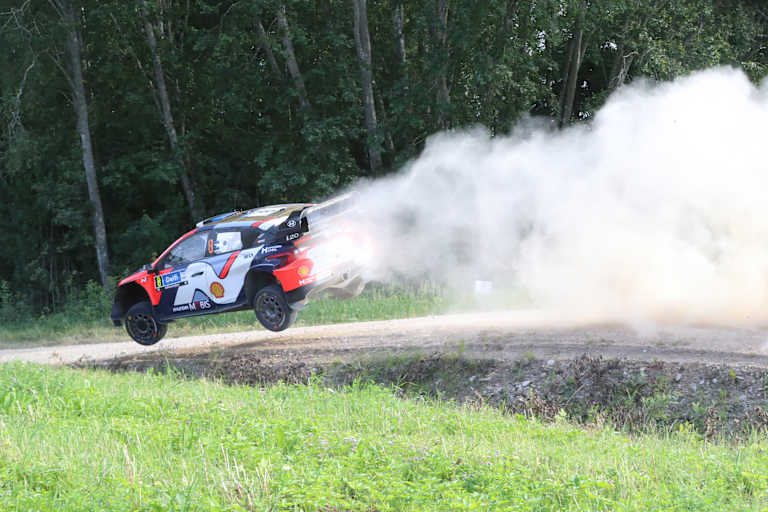
Ott Tänak beim Weitspringen bei der Rallye Estland 2025
Foto: XPB
Ott Tänak beim Weitspringen bei der Rallye Estland 2025
© XPB
The field comprises 53 entered cars. A total of eleven Rally1 cars will compete in the top category. Toyota will field five cars, with World Championship leader Elfyn Evans, World Champion Sébastien Ogier, Oliver Solberg, Takamoto Katsuta and Sami Pajari all named in the line-up. Hyundai is fielding the trio of Thierry Neuville, Adrian Fourmaux and Esapekka Lappi. M-Sport Ford has also entered three teams, fielding Jon Armstrong, Joshua McErlean and Martins Sesks.
The top drivers in Estonia in the WRC2 category are Roope Korhonen (Toyota), Teemu Suninen (Toyota), Robert Virves (Škoda), Fabrizio Zaldivar (Škoda), Emil Lindholm (Škoda) and Gus Greensmith (Toyota). There are no Lancia teams on the entry list.
Seen already?
Don't miss out on any highlights: The Speedweek newsletter, sent out twice a week, delivers the latest news, exclusive commentary and all the important dates from the world of motorsports - directly into your inbox
Championship Standings
Full standings2026
2026
2025
2024
2023
Pos
Driver
Team
Points
1


201
2

171
3

160
4

156
5

139
6


129
7

125
8

-
25
9
-
21
10


21
Highlight videos
ServusTV media library
3. Aug. | 52:10 Min
Events
All WRC eventsPast Delfi Rally Estonia
 16.–19.07.2026
Past Secto Rally Finland
 30.07. – 02.08.2026
Live
ueno Rally del Paraguay
 27.–30.08.2026
Next up Rally Chile Bio Bio
 10.–13.09.2026
Rally Italia Sardegna
 01.–04.10.2026
Past Delfi Rally Estonia
Past Secto Rally Finland
Live
ueno Rally del Paraguay
Next up Rally Chile Bio Bio
Rally Italia Sardegna
Rallysport News
All news
Newest articles
All articlesNew New New New New New New New New New