
Bahrain Grand Prix in Sepang, Malaysia: Rain and chaos on the horizon
Formula 1 is currently travelling on from Azerbaijan to the Bahrain Grand Prix, held at the Sepang International Circuit in Malaysia. The drivers are in for a rough ride there.
This article is an automatically generated English version. The

Tribünendach am Sepang International Circuit von Malaysia
Foto: XPB
Tribünendach am Sepang International Circuit von Malaysia
© XPB


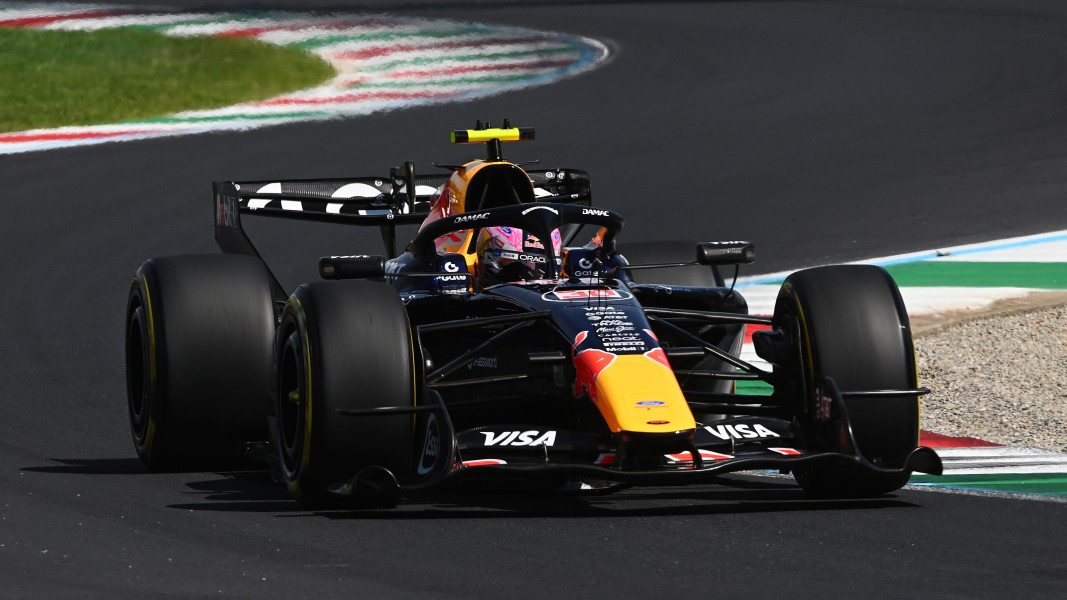
The premier class is set for a Formula 1 oddity: the Bahrain Grand Prix is being rescheduled, but not in the Sakhir desert, rather in the cramped atmosphere of the Sepang International Circuit outside Kuala Lumpur (Malaysia).
Sepang has hosted a Formula 1 World Championship round since 1999, and we have seen on numerous occasions what the GP stars can expect this coming weekend – rain, lots of rain.
With temperatures of at least 32 degrees, we’ll have a 60 per cent chance of rain from Friday (2 October) onwards, and when it does rain in Malaysia, it pours.
So, with the weather sorted (unpredictable), we’re happy to provide a few more questions and answers here.
Why is the Malaysian circuit actually called Sepang? Because the circuit is geographically located in the south of the Malaysian state of Selangor and the district in question is called Sepang.
Topic of the week
Spanish Grand Prix at the new Madring: track – hit or miss?
The people of Madrid had set their sights high for their city’s first Formula 1 World Championship race since 1981. But have the high expectations for the new Madring mixed-circuit track really been met?
TV Program
There’s also a small town by that name. According to the Malaysians, the meaning of the word has been lost over time.
What used to be in the place where racing cars now whizz round the circuit? Palm oil plantations. Whilst the Sepang International Circuit was being built, 5,000 new palm trees were planted elsewhere.
How many Malaysians have competed in their home Grand Prix? Just onein the Grand Prix itself – Alex Yoong in 2002 in a Minardi (he retired). In the first free practice session for the 2010 Grand Prix, Fairuz Fauzy drove a Lotus.
Did the first Malaysian Grand Prix really take place in 1999? Strictly speaking, no. As part of the Formula 1 World Championship? Yes. But the Asians called a street race in Singapore in 1965 the ‘Malaysian Grand Prix’. The race was held on the infamous Thomson Road Grand Prix Circuit.
What makes the circuit unique in terms of its layout? The two long, consecutive straights, separated by a gorge of grandstands. Circuit architect Hermann Tilke drew inspiration for the roof’s shape from Malaysia’s national flower – the hibiscus.
Why did Formula 1 actually leave Malaysia? From 1999 to 2017, Formula 1 had visited Kuala Lumpur no fewer than 19 times in a row. The state-owned Sepang International Circuit terminated its Formula 1 contract after the 2017 season, because the then F1 promoter Bernie Ecclestone had scheduled the 2016 Grand Prix two weeks after the popular night race in Singapore, meaning spectator interest in Malaysia remained modest.
The rivalry between the two South-East Asian countries over Formula 1 was immense. The then Malaysian Prime Minister, Dato’ Sri Haji Mohammad Najib bin Tun Haji Abdul Razak, known simply as Najib Razak, was no longer willing to put up with the millions in losses from the Formula 1 business, even though Petronas – as the main sponsor of Mercedes and as Malaysia’s state-owned oil company – deeply regretted this withdrawal.
Razak’s successor, Mahathir Mohamad, struggled with slowing economic growth, the collapse of the ringgit and the mountain of debt that Razak had left behind.
Seen already?
Don't miss out on any highlights: The Speedweek newsletter, sent out twice a week, delivers the latest news, exclusive commentary and all the important dates from the world of motorsports - directly into your inbox
Highlight Videos
ServusTV Media Library
Trotz Verstappen-Befehl: Hadjar macht Druck!
27. Sept. | 1:44 Min
26. Sept. | 51:43 Min
26. Sept. | 1:21 Min
Bilderbuch-Start von Verstappen
26. Sept. | 1:29 Min
26. Sept. | 1:29 Min
Nächste Aufholjagd von Antonelli?
26. Sept. | 2:53 Min
Baku: Wer schnappt sich die Pole?
26. Sept. | 2:22 Min
Lando Norris: Zurück im Spiel
26. Sept. | 3:12 Min
Formula Cars News
All News


Newest Articles
All ArticlesNew New New New


