BMW legend Paul Rosche: On the tenth anniversary of the death of ‘Nocken-Paul’
15 November 2026 marks the tenth anniversary of the death of the great BMW racing engine designer Paul Rosche. Memories of an extraordinary, deeply emotional man.
This article is an automatically generated English version. The


Die BMW-Legende Paul Rosche
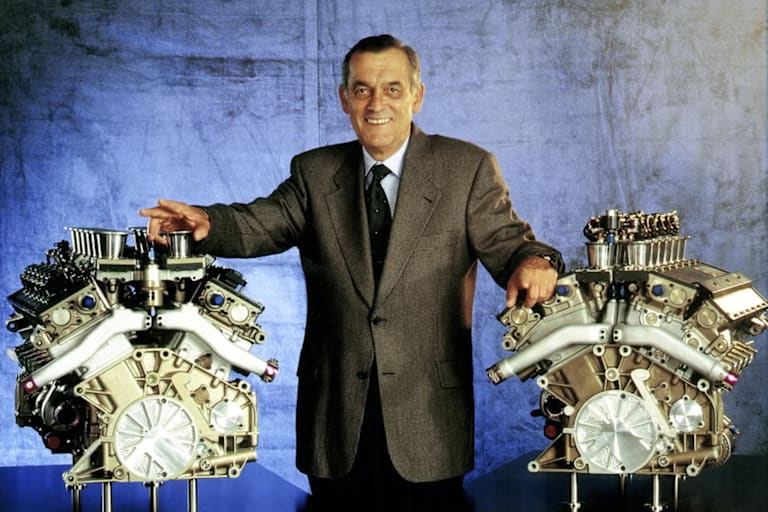
Foto: BMW
Die BMW-Legende Paul Rosche
© BMW
Paul Rosche. So many successes, personal achievements and endearing, curious anecdotes are associated with this engineer – as gifted as he was passionate – that even ten years after his passing, I am still not quite sure where to begin.
Paul Rosche’s character encompassed so many indescribable facets, and yet some very straightforward-seeming thoughts. For example: ‘I never actually had any intention of leaving BMW. Perhaps that’s because I’m a Munich native; I like it in Bavaria; I’ve got my little hut up in the mountains there. I don’t know – I didn’t really want to leave. And on the other hand, I always had interesting tasks. I don’t know if I’d have been given such interesting ones at another company.”
We can already see that Paul Rosche – for all his professionalism and outstanding achievements – has always been, first and foremost, a man of deep emotion.
We needn’t say much about Rosche’s great body of work during his more than 40 years at BMW. His major achievements – to name just the most spectacular ones – include the turbo engine for Formula 1, the Formula 2 engine that secured five European Championship titles, the Le Mans-winning twelve-cylinder, the M3 four-cylinder and a more recent Formula 1 engine – all of which have made motorsport history.
To put it another way: over the decades, Rosche has laid the foundations for his employer’s sporting image. Or as Eberhard v. Kuenheim, BMW’s CEO at the time, once put it: ‘You personally can be proud; after all, everything BMW has achieved in motor racing over the many years is largely down to you.’
Topic of the week
Crazy MotoGP hero? Jorge Martin as 2026 World Champion in Psychology
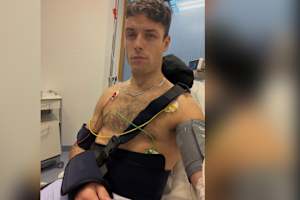
Many shook their heads – whether out of bewilderment, admiration or disapproval – when a badly injured Jorge Martin opened the throttle at Sepang and Losail. Martin’s message has got through.
TV Program
At his funeral at Munich’s Nordfriedhof, everyone of note in the world of motorsport paid their last respects, deeply moved also by the heartfelt words of his kindred spirit and colleague Gordon Murray: “Paul was a good friend, a gentleman and a genius. His legacy of innovation and his work at BMW will always be an important part of motoring history. But we will remember Paul even more for his humour and his friendship.”
However epoch-making Rosche’s achievements may have been – and however much they forged genuine friendships with the greats of international motorsport – he remained firmly grounded in his love of racing and the people who saw this sport as their calling. This included the cream of the driving elite as well as many an amateur driver. Countless amateur drivers would turn to Rosche time and again with a technical concern – and return to the track with sound advice and success.
Even off the track, Paul Rosche was always on hand to offer sound advice. For instance, many, many years ago in a beer garden, whilst we were having a chat over a wheat beer, my two-year-old daughter Anika started fussing on my lap (and there was already a noticeable smell), and he muttered: ‘Now I’d better hand her over to my wife.’
That’s how simple some things were for the developer of sophisticated camshafts and highly complex twelve-cylinder racing engines – ‘Camshaft Paul’.
In his inimitable way, Paul Rosche once told a story about how some of the racing mechanics from his inner circle of die-hards wanted to drive an endurance race themselves for a change. Rosche: “One day, Dippelhofer-Rainer and Walter Weitzel turned up in my office and told me, ‘We’re racing at the Nürburgring; we’ve got a car, everything’s sorted – we just need a decent engine. I was still wondering where on earth I was going to get one from when they were already well into their preparations. Well, we managed to scrape together an engine somehow.”
But that wasn’t the end of it. A few days later, the lads were back at Rosche’s desk. “We’ve got everything sorted now, boss, except for the tyres. Couldn’t you give Dupasquier a ring…?”
He was the top man at Michelin; they knew him from their Formula 1 campaigns.
Rosche: “I explained the situation to him, and then a whole lorryload of the very best racing tyres arrived at the Nürburgring. Those were probably the best tyres available on the market for touring cars at the time.”
During the race, there was the thickest fog that even the most seasoned Eifel experts could imagine. Weitzel drove the first stint. When that ended, Dippelhofer took over. Rosche: “But he came back into the pits after just two minutes. Weitzel rushed excitedly to the driver’s door and asked what was wrong. Dippelhofer replied that he’d got lost in the fog.”
In his excitement, the good man had missed the turn into Hatzenbach, entered the concrete loop and promptly ended up back in the pit lane. Rosche continued: “Weitzel took over again and disappeared into the fog.” What happened next: unknown.
But the story says so much about a man who achieved great things in top-flight motor racing and yet always retained a soft spot for grassroots sport and a caring affection for his loved ones.
Seen already?
Don't miss out on any highlights: The Speedweek newsletter, sent out twice a week, delivers the latest news, exclusive commentary and all the important dates from the world of motorsports - directly into your inbox
Championship Standings
Full Standingsorg-location for [2026] 2026
2026
2025
2024
2023
Pos
Driver
Team
Points
1


390
2


279
3

262
4


261
5

249
6


246
7

152
8

122
9


89
10


42
Highlight Videos
ServusTV Media Library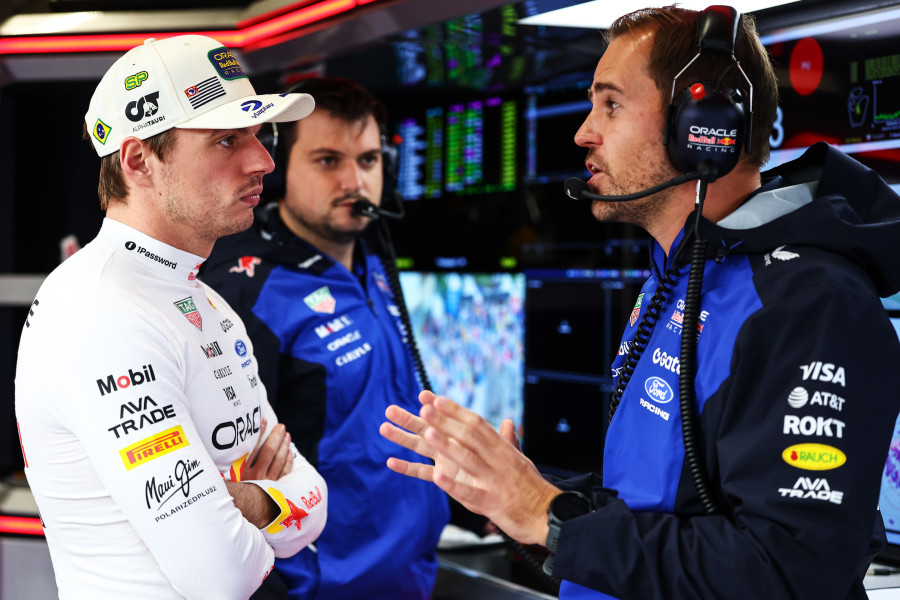
Verstappen gegen alle Widerstände!
10. Nov. | 4:00 Min
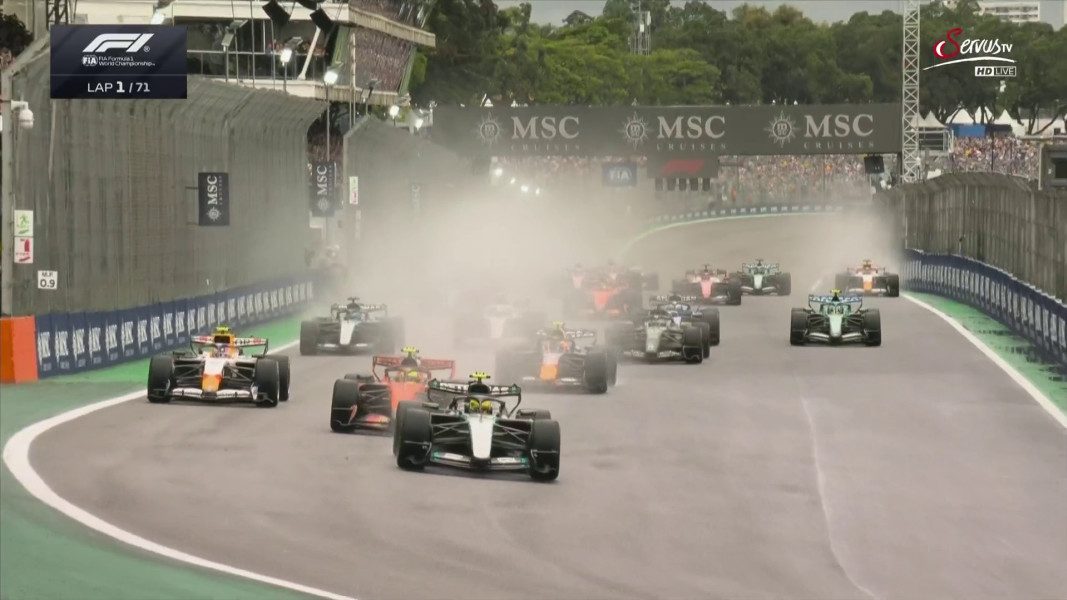
8. Nov. | 1:31 Min
„Aufholjagd ist Standard für Max“
8. Nov. | 1:53 Min
8. Nov. | 1:34 Min
8. Nov. | 52:58 Min
„Extrem schwieriges und forderndes Rennen"
8. Nov. | 2:25 Min
„Von 21 auf 2 ist ein gutes Ergebnis“
8. Nov. | 3:37 Min
Fulminante Aufholjagd im Regen!
8. Nov. | 3:01 Min
Events
All Formula 1 Events


Formula Cars News
All News