
Charles Leclerc: “Ferrari must change that in the second half of the season”
Charles Leclerc’s mixed record at Zandvoort: third in 2022 and 2024, but two retirements in the last three Grands Prix. The Monegasque says: “We know exactly how we can improve.”
This article is an automatically generated English version. The

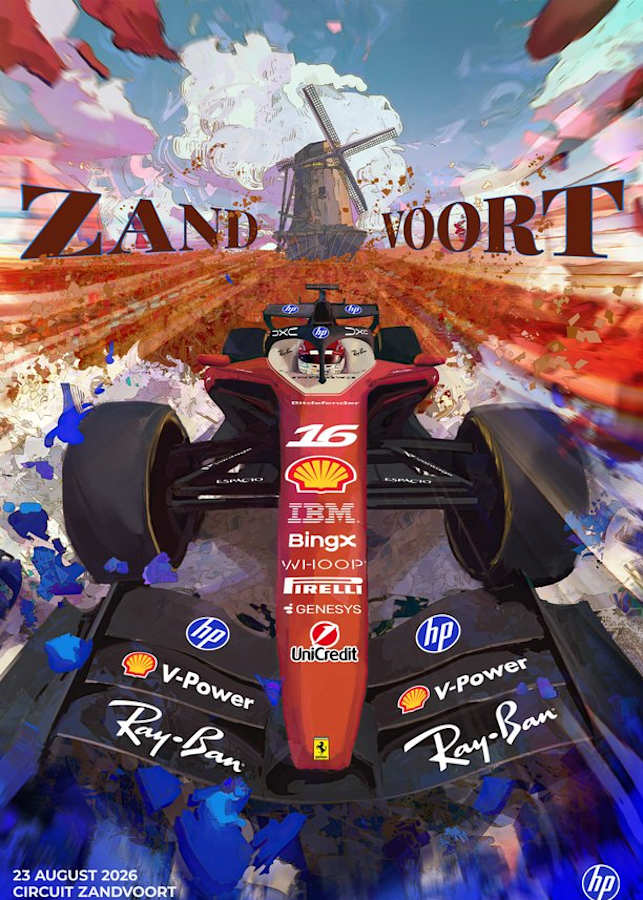
Aus der Ferrari-Vorschau für den Niederlande-GP in Zandvoort
Foto: Ferrari
Aus der Ferrari-Vorschau für den Niederlande-GP in Zandvoort
© Ferrari


Charles Leclerc has started from pole position in a Grand Prix 27 times; in the all-time rankings, this means: Ten world champions lie ahead of the Monegasque driver (Hamilton, Schumacher, Senna, Vettel, Verstappen, Clark, Porst, Mansell, Rosberg, Fangio), whilst five further champions lie behind him (Häkkinen, Lauda, Piquet, Alonso and Damon Hill).
Whilst Leclerc is likely to continue chasing his lifelong goal of a world championship title without success in 2026 (best finish: second behind Verstappen in 2022), he has not secured any of his pole positions at Zandvoort.
In the last three Dutch Grands Prix, Leclerc failed to see the chequered flag: a damaged underbody in 2023 following a collision with McLaren driver Oscar Piastri, and another collision in 2025, this time with the current World Championship leader, Kimi Antonelli.
Recommendations
Formula 1 • New
Leclerc says of the upcoming Grand Prix weekend: “In recent years, Zandvoort hasn’t been a circuit where we’ve particularly shone. However, the 2026 cars are so vastly different that the usual pecking order here could be shaken up a little.”
“The Zandvoort circuit is quite technical; normally, those are the sort of tracks where we’re quite in our element. So I’m cautiously optimistic for 2026.”
Four weeks ago, Aprilia headed into the summer break from Germany with a badly injured Marco Bezzecchi. The response came from the heart of British motor racing: ‘Together we are strong!’
TV program
“Then, of course, there are always races that don’t go quite as perfectly as one would like. 2026 is a year in which it’s absolutely vital not to make any mistakes. And if we look at the first half of the season, many teams have dropped a lot of points for all sorts of reasons – and that goes for Ferrari too.”
“I can’t recall any of my Formula 1 years in which the teams have lost so many points – simply because these new cars are so incredibly complicated and all the teams have had to learn the hard way.”
“So, as far as the second half of the season is concerned, we have two main priorities: firstly, we must ensure that the race weekends run smoothly and perfectly; and secondly, development must continue along the same lines as before. We know exactly where we stand, and we know exactly where we need to make improvements.”
“I can’t go into detail about this, but we know in which areas we can improve, and that’s what we’re working on. On the one hand, there’s the engine, where we’re at a disadvantage compared to leaders Mercedes; on the other, there’s aerodynamics. In both areas, we’re on track to improve in the second half of the season.”
“One of the most positive aspects of 2026 is that we’re developing very intensively, and all the parts have delivered on the track exactly what we’d hoped for based on simulations and wind tunnel tests. Unfortunately, that wasn’t the case in 2025.”
“I’m also pleased to see that Ferrari is once again leading the way with a number of technical innovations. And we’re pushing ahead with an extremely aggressive development programme. We need to keep this up.”
It could be wet at Zandvoort in 2026. Charles says: “I’ve only driven this car in the wet during winter testing in Barcelona, but the race cars have changed significantly since then. It could get tricky here – a difficult circuit, rain, plus the stressful sprint format; that could be fun.”
Seen already?
Don't miss out on any highlights: The Speedweek newsletter, sent out twice a week, delivers the latest news, exclusive commentary and all the important dates from the world of motorsports - directly into your inbox
Highlight videos
ServusTV media library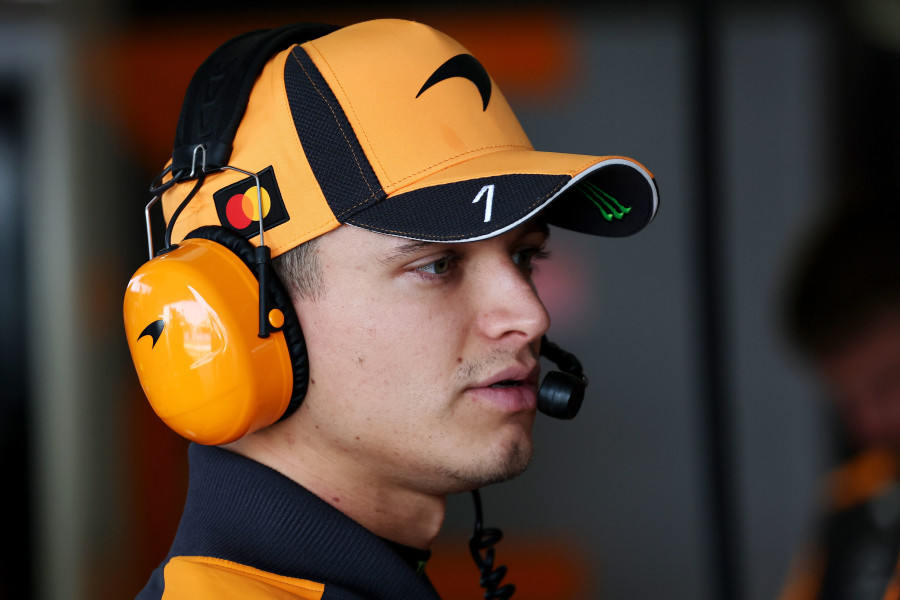
Übt Norris Weltmeister-Druck auf McLaren aus?
27. Juli | 1:16 Min
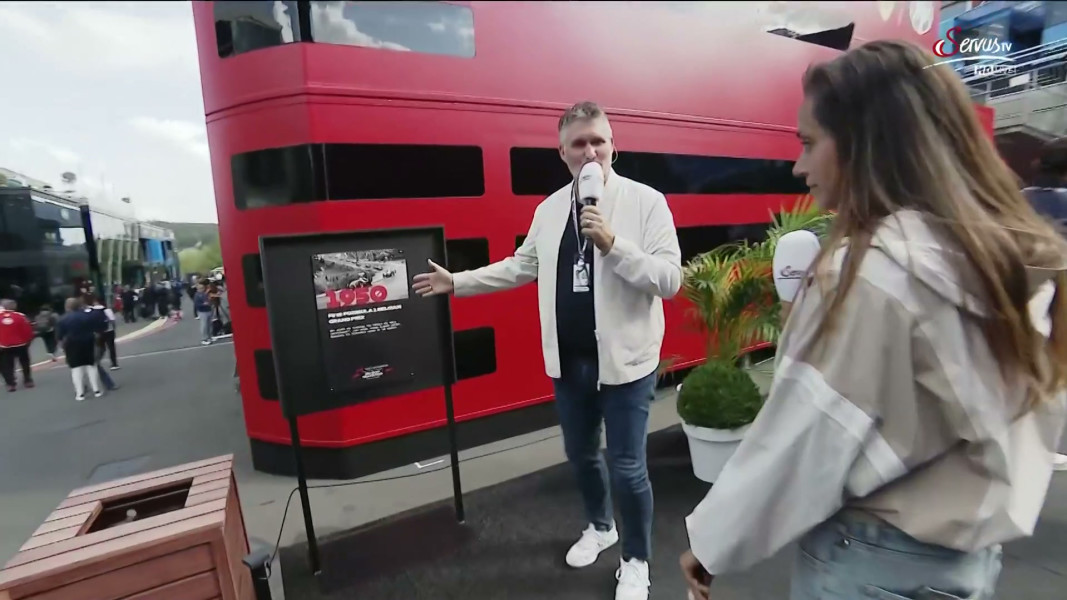
F1-Geschichtsstunde mit Andi Gröbl
19. Juli | 7:53 Min
Belohnung nach dem Qualifying!
18. Juli | 7:00 Min
Wrap-Up: Exklusive Einblicke ins Fahrerlager!
17. Juli | 9:28 Min
17. Juli | 5:50 Min
60 Grad, Trinkflasche hin: Russells Ruhe-Geheimnis
29. Juni | 1:07 Min
28. Juni | 7:46 Min
Win2Day & Allwyn: Innovation im Wetten
27. Juni | 0:51 Min
Formula Cars News
All news


Newest articles
All articlesNew New New New New New New New New


