Retired MotoGP aces: is the BWC an alternative to the World Superbike Championship?
After their MotoGP careers, riders often move on to the World Superbike Championship. Is the Harley-Davidson Bagger World Cup an attractive alternative to the production-based World Championship? The pros and cons.
This article is an automatically generated English version. The
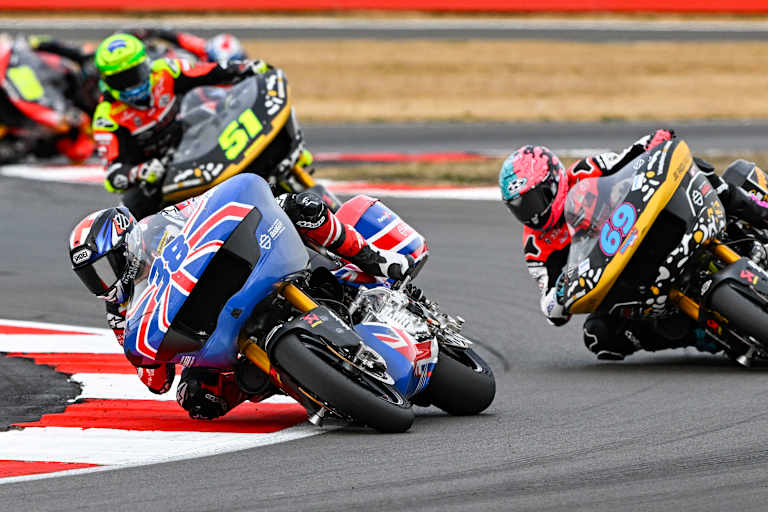
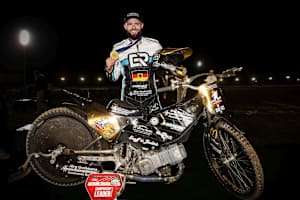
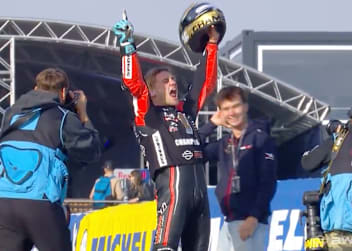
Ex-MotoGP-Pilot Bradley Smith siegte in Silverstone
Foto: Gold & Goose
Ex-MotoGP-Pilot Bradley Smith siegte in Silverstone
© Gold & Goose


As things stand at present, there will be no place left in MotoGP for Brad Binder, Jack Miller, Alex Rins, Franco Morbidelli and Maverick Viñales in 2027. They have all spent many years in the GP paddock and enjoyed success. However, given the high level of competition in the premier class, there will be a major shake-up after this season – seasoned riders who, for various reasons, are no longer competing for top positions will have to leave, and young riders from the Moto2 World Championship will move up.
Riders who can no longer find a team in MotoGP usually look to the Superbike World Championship – unless they are interested in a test rider role. They want to continue their careers in this production-based world championship and fight for victories and titles. This move is often successful, as prominent examples from the past demonstrate. Four-time 250cc World Champion Max Biaggi, for instance, went on to win two further titles in the World Superbike Championship following his MotoGP career.
But what other alternative to the World Superbike Championship would be available to retired MotoGP aces? The Harley-Davidson Bagger World Cup, perhaps? The new racing series is set to make its debut in 2026. SPEEDWEEK.com lists the pros and cons of the Bagger World Cup.
Recommendations
Mentioned in this article
Staying in the MotoGP paddock, fewer races and pure racing
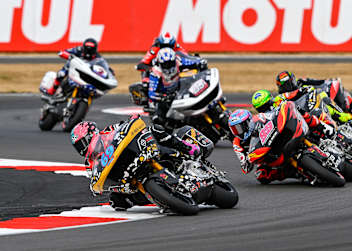
The Harley-Davidson Bagger World Cup (BWC) will be held as part of the MotoGP World Championship. For former riders from the premier class, it would therefore be an advantage that they could remain in the GP paddock. They would have a familiar environment, and they know the circuits inside out.
The MotoGP calendar, with 22 events and 44 races, is very demanding. For the riders and teams, this means a lot of stress, with hardly any time left for rest. In the Bagger World Cup, twelve races are currently held across six events, which means significantly less stress. Plans are in place to expand the calendar to eight events and 16 races next year, which would still be a ‘relaxed’ programme. In the Superbike World Championship, there are currently twelve events, albeit with 36 races – three races per weekend.
Topic of the week
A stuttering start to the Bahrain Grand Prix: the FIA narrowly avoids a fiasco like the one in Indianapolis in 2005
Fans could hardly believe their eyes at what they witnessed at the Bahrain Grand Prix: cars crawling along, racing cars that simply came to a standstill. The FIA narrowly avoided a fiasco like the one at Indy in 2005.
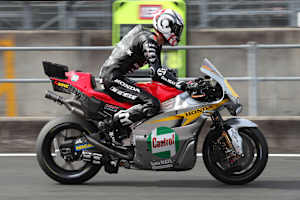
The racing Harleys are based on the Road Glide motorbikes from the Milwaukee-based manufacturer. The 2,152 ccm V2 engine delivers 200 PS and an incredible 220 Nm of torque. Added to this are an Akrapovic exhaust system, Öhlins suspension components and Brembo brakes, which are also used in the Superbike World Championship and Moto2. Particularly interesting: the 280-kg bikes have no traction control. For the riders, this means pure racing, where they can make the difference. Riding skill and control of the bike play a major role. In contrast, the MotoGP rockets and the Superbikes are packed with electronics.
Harley-Davidson is investing a huge amount of effort into the Bagger World Cup. The US manufacturer’s aim is to see the series grow over the coming years. The aim is to boost its profile step by step and attract new fans worldwide – the Bagger World Cup is therefore in an exciting phase of growth.
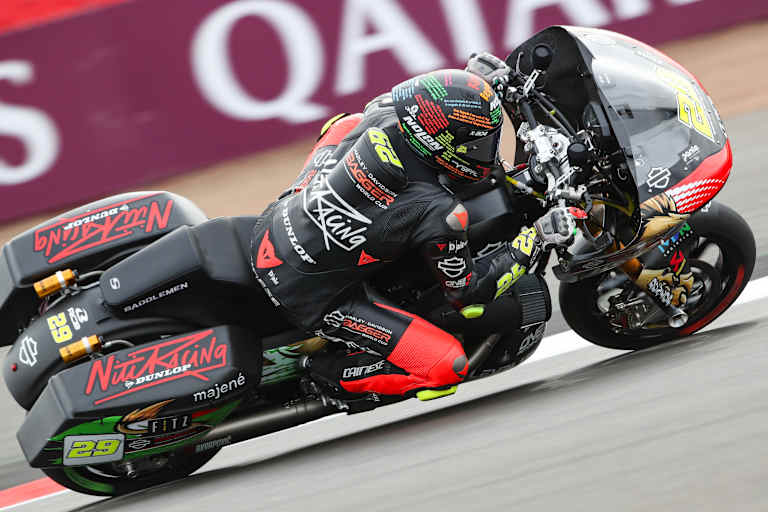
Andrea Iannone hat Spaß mit der Renn-Harley
Foto: Gold & Goose
Andrea Iannone hat Spaß mit der Renn-Harley
© Gold & Goose
Superbike World Championship: A prestigious championship, a higher standard
Alongside the advantages of the Bagger World Cup mentioned above, there are currently still a few critical points to note which affect the series’ appeal and where the Superbike World Championship has clear advantages.
The series will contest its first season in 2026 and therefore, naturally, does not have a long and glorious history to its name, as the prestigious Superbike World Championship does. Added to this is the fact that the production-based World Championship has a solid fan base, which the Bagger World Cup will first have to build up. And it remains to be seen whether Harley enthusiasts worldwide are also racing fans.
The Harley-Davidson Bagger World Cup is a manufacturer’s cup. Consequently, the starting grid features only motorcycles from a single manufacturer. Whilst the fact that everyone competes on the same bike is certainly appealing to the riders, there is a lack of competition between manufacturers – as seen in MotoGP or the World Superbike Championship.
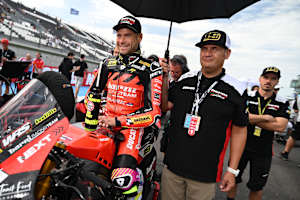
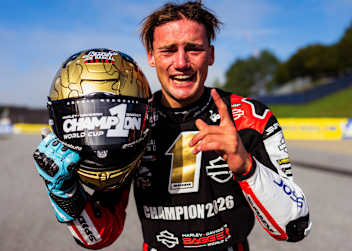
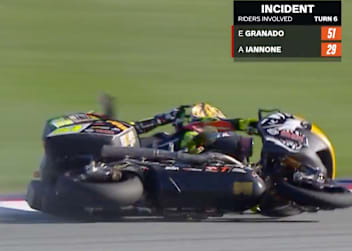
At the first race weekend of the Bagger World Cup in Austin, there were only nine riders on the starting grid. Although new names have gradually been added this season, the field is still relatively small. Furthermore, it currently consists primarily of riders who are relatively unknown. Former GP and MotoE riders such as Eric Granado and Oscar Gutierrez are familiar to some fans, but they are not particularly well known. Very few people are familiar with the young Australian Archie McDonald either – currently second in the championship. Then there are the American riders, such as Jake Lewis and Travis Wyman, who are little known in Europe and the rest of the world. Alongside them, the former MotoGP and Superbike rider Andrea Iannone is very well known. The Italian has been competing since his home race at Mugello. And at Silverstone, former MotoGP rider Bradley Smith took part on a wildcard – the Briton went on to win Race 1.
The fact is: at present, the overall standard of the riders in the Bagger World Cup is not on a par with that of the World Superbike Championship. According to Harley, the aim is to raise the standard in future. In terms of salary, too, the new racing series is not currently as attractive to former MotoGP riders as the World Superbike Championship – at least as far as the factory teams in the production-based world championship are concerned.
The races in the Harley-Davidson Bagger World Cup are exciting and closely contested. The sound of the big V2 bikes is spectacular. The series offers a potential rider almost everything needed to be considered. However, it may still take a few years to be on a par with the World Superbike Championship – assuming the Baggers are given that time. The contract with the MotoGP Sports Entertainment Group (formerly Dorna) has been signed for three years; only time will tell whether it will be extended.
Seen already?
Don't miss out on any highlights: The Speedweek newsletter, sent out twice a week, delivers the latest news, exclusive commentary and all the important dates from the world of motorsports - directly into your inbox
Championship Standings
Full Standingsorg-location for [2026] 2026
2026
Pos
Driver
Points
1

202
2

193
3

192
4

157
5

117
6

99
7
83
8

77
9
Maxwell Toth
62
10

60


MotoGP News
All News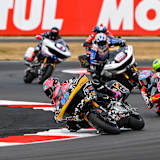
Newest Articles
All ArticlesNew New New