
FIA President wants refuelling stops back: a bad idea doesn’t get any better
FIA President Mohammed Bin Sulayem (64) wants to make Formula 1 less dependent on the engine manufacturers. That’s a good thing. He’s also toying with the idea of bringing back pit stops. That’s a bad thing.
This article is an automatically generated English version. The

Tankstopp bei BMW-Sauber 2008
Foto: XPB
Tankstopp bei BMW-Sauber 2008
© XPB


Formula 1 is set to bring back really loud naturally aspirated engines, which would delight many fans. The Arab FIA President, Mohammed Bin Sulayam, is talking about the return of naturally aspirated V8s by 2031 at the latest, powered by biofuel.
But these are not the only plans the Emirati from Dubai has for the premier class. Bin Sulayem wants to make Formula 1 less dependent on the whims of car manufacturers acting as F1 engine suppliers and suggests that there should once again be an independent engine manufacturer. The best example of this in the past was the legendary Cosworth V8.
Bin Sulayem also wants the cars to be lighter. The first step would be to introduce a naturally aspirated V8 engine, which would be considerably lighter than today’s turbo-hybrid engines.
But the FIA chief goes even further: “We’re also thinking about bringing back pit stops.” For him, this would be another way of making the cars lighter, as they would be fitted with a smaller fuel tank.
Less dependence on the whims of engine manufacturers, who – as F1 history has shown time and again – come and go as they please? That’s a good idea.
Topic of the week
Topic of the week: MotoGP’s new schedule proved highly controversial
In 2027, MotoGP will also enter the 850cc era with a new schedule. It was not so much the changes themselves as the way the decisions were reached that caused a stir. A prime example of: ‘Talking helps’.
TV Program
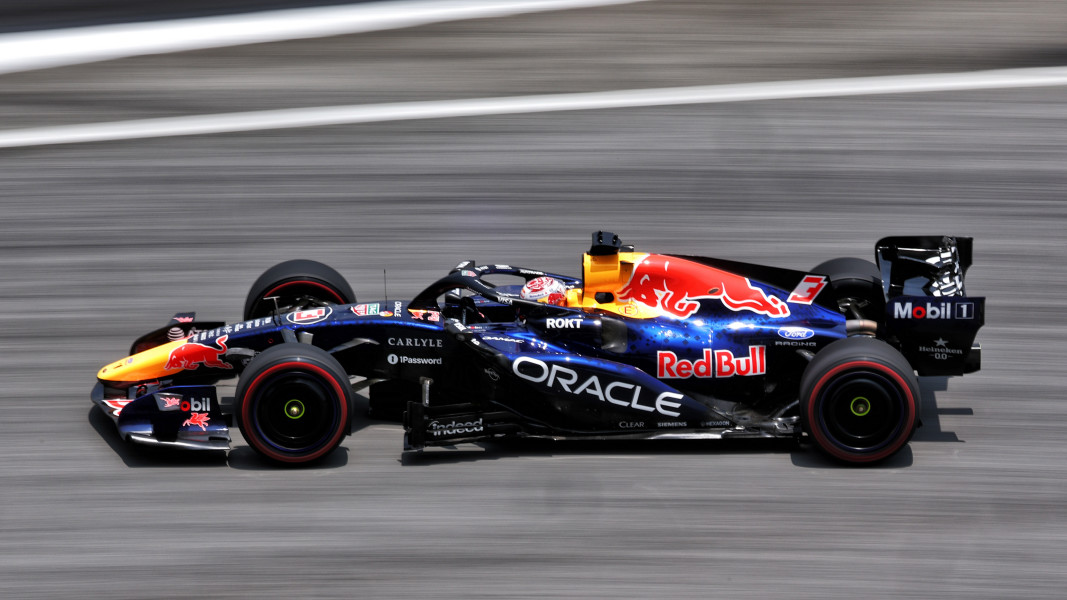
The return to refuelling stops has been under discussion for years, and this idea hasn’t got any better, as some insiders point out.
Three-time Grand Prix winner Johnny Herbert says: “Bringing refuelling back is a daft idea. Just take the 2008 season, for example: Felipe Massa had to drag half the refuelling kit through the pit lane in Singapore back then; ultimately, it cost him the world championship title. Is that really what we want? For a driver to lose the title because of refuelling? To me, it’s mad that this proposal is being brought up again.”
Damon Hill, winner of 22 Grand Prix races, backs Herbert: “I don’t think refuelling is a good idea because it takes us back to the past. There are, after all, good reasons why we moved away from it back then.”
Mercedes team principal Toto Wolff commented on this issue a few years ago: “We have repeatedly discussed in bodies such as the Strategy Group or the Technical and Sporting Working Group whether refuelling should be brought back to Formula 1. Our reaction to this idea was negative.”
The reasons for this are still obvious today. It has been calculated that a new refuelling system would cost each team more than 1.5 million euros. Given the focus on cost-cutting in Formula 1 and the tight budgets of many teams, that would be sheer madness.
To keep refuelling within the same timeframe as today’s tyre changes, refuelling would have to be carried out under pressure – which increases the safety risk.
Race strategists have also studied past races and are quick to conclude that refuelling stops have not made the races any more exciting.
Toto Wolff confirmed: “We consider it too expensive, we don’t consider it safe enough, and we see no reason why it would make the sport any more attractive. That is why the proposal was referred back to the strategy group at the time. My personal opinion? Refuelling should not make a comeback.”
Long-serving Sauber team manager Beat Zehnder shares this conviction. The Swiss explains: “Bringing refuelling back would be counterproductive. We didn’t ban refuelling back then just for financial reasons. We banned pit stops primarily because we had races that were nothing more than processions.”
“Many people seem to forget in this context that we used to have some terribly boring races. Today, at least, we have strategic options, such as a driver coming in for a tyre change earlier than his rival and thus trying to outmanoeuvre him. He can also play around with his choice of tyre compound. If fuel dictates when a pit stop has to be made, that results in a dull race. Pit stops do not make for better races, and that’s that.”
Seen already?
Don't miss out on any highlights: The Speedweek newsletter, sent out twice a week, delivers the latest news, exclusive commentary and all the important dates from the world of motorsports - directly into your inbox
Highlight Videos
ServusTV Media Library
Der Schweige-Code von Singapur!
12. Okt. | 3:27 Min
Peinlicher Software-Fehler & Schleich-Modus!
5. Okt. | 3:05 Min
„Alonso hat noch eine Rechnung offen!“
2. Okt. | 16:27 Min
Neu: Neongelbe Audi-Abdeckungen! | Klien erklärt
2. Okt. | 4:30 Min
Trotz Verstappen-Befehl: Hadjar macht Druck!
27. Sept. | 1:44 Min
Irrsinnige Fehler: Steht sich Ferrari im Weg?
24. Sept. | 15:41 Min
Racing Bulls: Neue Teile, große Wirkung?
24. Sept. | 5:01 Min
Madrid: Antonelli als eiskalte WM-Maschine!
14. Sept. | 1:36 Min
Formula Cars News
All News


Newest Articles
All ArticlesNew New New New New


