
Jules Bianchi: How the death of the Ferrari protégé changed Formula 1
Jules Bianchi died in 2015. The fate of the French Formula 1 driver, who had suffered serious head injuries in Japan in 2014, accelerated the introduction of the Halo head protection system.
This article is an automatically generated English version. The

Ferrari baute Jules Bianchi jahrelang auf
Foto: XPB
Ferrari baute Jules Bianchi jahrelang auf
© XPB


Jules Bianchi, from the south of France, died exactly eleven years ago today, on 17 July 2015, as a result of his serious crash at Suzuka in 2014. At the time, the racing community mourned the first fatality following a Grand Prix weekend since Ayrton Senna in 1994. The truth is: we had simply been lucky for twenty years.
Ever since Jules Bianchi’s horrific accident on 5 October 2014 at the Japanese Grand Prix in Suzuka, his family had been living through a seemingly endless nightmare.
Just the week before his son’s death, the racing driver’s father, Philippe Bianchi, spoke out. Just as the brave Frenchman had done time and again – it was his way of unburdening himself of some of his grief – which was admirable.
This rock of a man openly admitted that his optimism was crumbling: “If he were to wake up with a severe disability, that would certainly be something Jules would not have wanted. We’d discussed such possibilities. He told us – if he were to have an accident like Michael Schumacher’s, if he could no longer drive, then that would be almost unbearable for him, because that was his life.’
Then that life was snuffed out, and amidst all the grief of the racing community – which draws closer together at such moments, when success, money and power are, at least for a short while, no longer the main concerns – in that difficult hour I also felt a certain relief that the family could now find closure, that ‘this never-ending horror’, as Philippe Bianchi called it, was over.
Topic of the week
Topic of the week: MotoGP’s new schedule proved highly controversial
In 2027, MotoGP will also enter the 850cc era with a new schedule. It was not so much the changes themselves as the way the decisions were reached that caused a stir. A prime example of: ‘Talking helps’.
TV Program
For many, Jules Bianchi’s accident in October 2014 came as a bolt from the blue. A new generation of fans and journalists had come of age since the ‘black weekend’ at Imola in 1994, when we lost Roland Ratzenberger and Ayrton Senna; a generation that had never experienced death as a paddock guest; a generation that hadn’t sat stunned in front of the television in the spring of 1994, let alone witnessed it first-hand on site, as some of my colleagues and I did.
I have often heard even experts say: ‘Oh, nothing can happen in Formula 1 anymore.’ A deceptive, short-sighted, foolish statement. Because all it takes is for various factors to converge for us to have to mourn another Formula 1 fatality. Jules Bianchi’s accident in Japan was just such an accident.
The perfect storm
When various influences converge to form an indescribably powerful whirlwind, meteorologists – which I always find a bit odd – speak of the ‘perfect storm’, given that ‘perfection’ is supposed to stand for something positive. Jules Bianchi’s accident was the perfect storm in motorsport.
For years, drivers had been emphasising how uncomfortable they felt when driving past the scene of an accident where emergency vehicles were in action on or alongside the track, as was the case with Bianchi’s accident following a spin by Adrian Sutil.
But it was only after Jules’s accident that the so-called virtual safety car was introduced, which comes into effect when the race is neutralised and the drivers are required to drive at a consistently low speed.
Today, in such a scenario, the race would be red-flagged.
The organisers and the then Formula 1 promoter Bernie Ecclestone knew at Suzuka in 2014 that a typhoon would bring bad weather to the Suzuka region. But the sensible suggestion to bring the race forward to avoid rain and the onset of darkness was rejected for financial reasons.
There were fears that not all fans would make it to the circuit in time, and there were also practical constraints relating to booked satellite broadcast slots.
The weather conditions changed several times during the Japanese Grand Prix, and just when most drivers were out on worn intermediate tyres, it started to rain more heavily again.
No driver wants to be accused of voluntarily giving away seconds – numerous drivers drove far too fast past the scene of Sutil’s crash, including Jules Bianchi.
Following the accident involving Sauber driver Adrian Sutil, race control decided against deploying the safety car.

Bianchi mit seinem Marussia-Rennwagen in Japan 2014
Foto: XPB
Bianchi mit seinem Marussia-Rennwagen in Japan 2014
© XPB
Bianchi’s car – or, more precisely, its right-hand rear wheel – hit a puddle; he corrected instinctively, which caused the car to leave the track at an unusual angle. It can only be described as unbelievable bad luck that his car then collided with the rescue vehicle, which weighed several tonnes.
Had just one or two of these factors been different, the Frenchman might still be with us today.
Jules Bianchi, the man, the racer
According to Ferrari’s plans, Jules Bianchi was set to take the seat alongside Sebastian Vettel in 2016: After his apprenticeship at Marussia in 2014, Bianchi was due to drive a Sauber-Ferrari this year, thereby gaining further experience with a midfield team before moving to the works Ferrari in 2016, or 2017 at the latest.
What sort of person was the 25-year-old from Nice? Well-mannered, fun-loving, rather introverted, often with a smile on his face, underestimated. A man of down-to-earth upbringing and good character, never smug despite being fully aware of his own abilities.
A typical representative of the new generation, completely at home with social media, with the stunning Corsican Camille Marchetti by his side. When Bianchi was travelling the world for tests or races without his girlfriend, he could sometimes be found alone in a restaurant, lost in thought.
I always found him approachable; his answers were well-founded, without resorting to the streamlined waffle that other drivers tend to spout. Bianchi wasn’t afraid to speak his mind, but he did so without being hurtful. With his unassuming, open manner, Bianchi would have been a good fit alongside Sebastian Vettel.
The Frenchman’s accident led directly to the accelerated introduction of the titanium Halo head protection system. Many fans and drivers initially found the bar hideously ugly; today, we only notice it when it saves lives. And it does so time and time again
That is the most valuable legacy of a life cut far too short. That, too, is why people will never forget Jules Bianchi.
Seen already?
Don't miss out on any highlights: The Speedweek newsletter, sent out twice a week, delivers the latest news, exclusive commentary and all the important dates from the world of motorsports - directly into your inbox
Highlight Videos
ServusTV Media Library
Der Schweige-Code von Singapur!
12. Okt. | 3:27 Min
Peinlicher Software-Fehler & Schleich-Modus!
5. Okt. | 3:05 Min
„Alonso hat noch eine Rechnung offen!“
2. Okt. | 16:27 Min
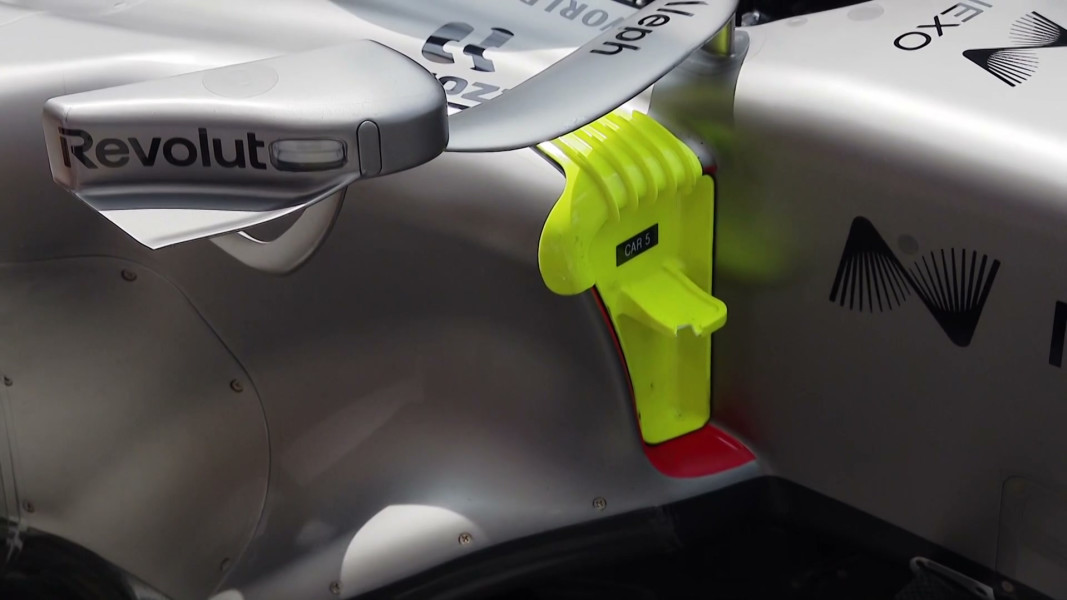
Neu: Neongelbe Audi-Abdeckungen! | Klien erklärt
2. Okt. | 4:30 Min
Trotz Verstappen-Befehl: Hadjar macht Druck!
27. Sept. | 1:44 Min
Irrsinnige Fehler: Steht sich Ferrari im Weg?
24. Sept. | 15:41 Min
Racing Bulls: Neue Teile, große Wirkung?
24. Sept. | 5:01 Min
Madrid: Antonelli als eiskalte WM-Maschine!
14. Sept. | 1:36 Min
Formula Cars News
All News


