Formula Cars • New
First visit to Europe in 20 years – IndyCar to race in Barcelona in 2027
The fact that Lewis Hamilton disregarded Ferrari’s instructions at the recent F1 Grand Prix in Singapore was still a talking point in Austin. The seven-time world champion explains why he acted as he did.
This article is an automatically generated English version. The

With his decision not to pit during a late virtual safety car period, Lewis Hamilton squandered what had seemed a certain podium finish at the Singapore Grand Prix. The seven-time world champion fell back in the closing stages of the race because he was on old tyres. He crossed the finish line in sixth place. His team-mate Charles Leclerc demonstrated what might have been by finishing second. Like Hamilton, the Monegasque driver had been instructed by the pit wall to pull in for a tyre change. And unlike his team-mate, he complied with this instruction.
When asked in the paddock at the Circuit of the Americas whether he would now be hesitant to defy instructions from the Ferrari team strategists, the record-holding Grand Prix winner responded with a detailed self-analysis. “First and foremost, I want to emphasise that you learn from these experiences. I rarely find myself in this position. Of course, the next few days didn’t feel so good, but you live to learn,” he began.
“When I took my position on the starting grid, I knew I’d probably finish third, but I always try to go for the win. I then want to take a different approach and I wanted a different strategy to Charles so I wouldn’t just have to follow him. The prediction was that Max would probably be too fast, and that we’d both finish in second and third place. And that’s simply not enough for me,” the 41-year-old Briton made clear.
Formula Cars • New
First visit to Europe in 20 years – IndyCar to race in Barcelona in 2027


“I wanted to have an option and see what might have been possible had the tyres not deteriorated. If the medium tyres had lasted longer, it would have been possible to run on them for longer. But that wasn’t the case, and I didn’t exactly feel great during the first stint. Then, after the pit stop, I came out onto the track behind Charles and lost a lot of time at the start because he was on the slower tyres. I, on the other hand, had good pace on the softs, and the scenario was similar to that at Zandvoort,” Hamilton explained.
“I was heading towards the pit lane and didn’t know that Charles was going to change tyres, because I thought he’d only just turned in for his stop. It was a decision made in a fraction of a second. Even as I was level with the pit lane, I realised it had probably been the wrong decision. But I took it on the chin, took responsibility for it, and then you look ahead again,” the 106-time Grand Prix winner added defiantly.”
Topic of the week
In 2027, MotoGP will also enter the 850cc era with a new schedule. It was not so much the changes themselves as the way the decisions were reached that caused a stir. A prime example of: ‘Talking helps’.
And Hamilton went on to explain: “We’ve had good discussions about how we can work together better and what we can improve. But I don’t think anything has changed in the way we work behind the scenes. I truly believe that my job is not always to follow every instruction straight away, but to challenge myself and the team. That’s how I’ve become the person I am today. That’s why I don’t want to give that up. Sometimes things don’t go so well, and that was the case here. But you just keep fighting, and we win and lose as a team. We bear the consequences together. Of course, it hurts when I drop points for the team. It doesn’t happen very often, but I’ll now be working twice as hard to make sure it doesn’t happen again.”
Don't miss out on any highlights: The Speedweek newsletter, sent out twice a week, delivers the latest news, exclusive commentary and all the important dates from the world of motorsports - directly into your inbox
2026
2025
2024
2023
1
340
2
238
3
229
4
221
5
215
6
201
7
138
8
97
9
75
10
41
Der Schweige-Code von Singapur!
12. Okt. | 3:27 Min
Peinlicher Software-Fehler & Schleich-Modus!
5. Okt. | 3:05 Min
„Alonso hat noch eine Rechnung offen!“
2. Okt. | 16:27 Min
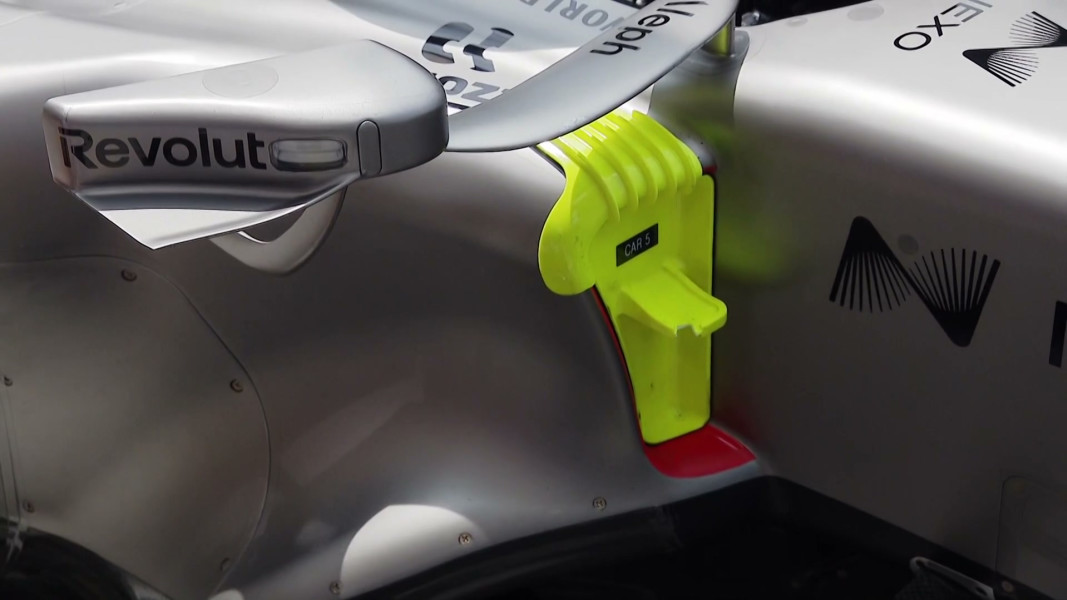
Neu: Neongelbe Audi-Abdeckungen! | Klien erklärt
2. Okt. | 4:30 Min
Trotz Verstappen-Befehl: Hadjar macht Druck!
27. Sept. | 1:44 Min
Irrsinnige Fehler: Steht sich Ferrari im Weg?
24. Sept. | 15:41 Min
Racing Bulls: Neue Teile, große Wirkung?
24. Sept. | 5:01 Min
Madrid: Antonelli als eiskalte WM-Maschine!
14. Sept. | 1:36 Min















The latest news around the clock, analyzed and commented on by experts, with exclusive behind-the-scenes insights. Here, fans write for fans.