
Our new puzzle: Racing Rarities – A classic in a completely different guise
In our new quiz, we see a true classic among Formula 1 teams, albeit in a completely different guise. Who is it? Where and when was the photo taken? Why not have a go yourself!
This article is an automatically generated English version. The


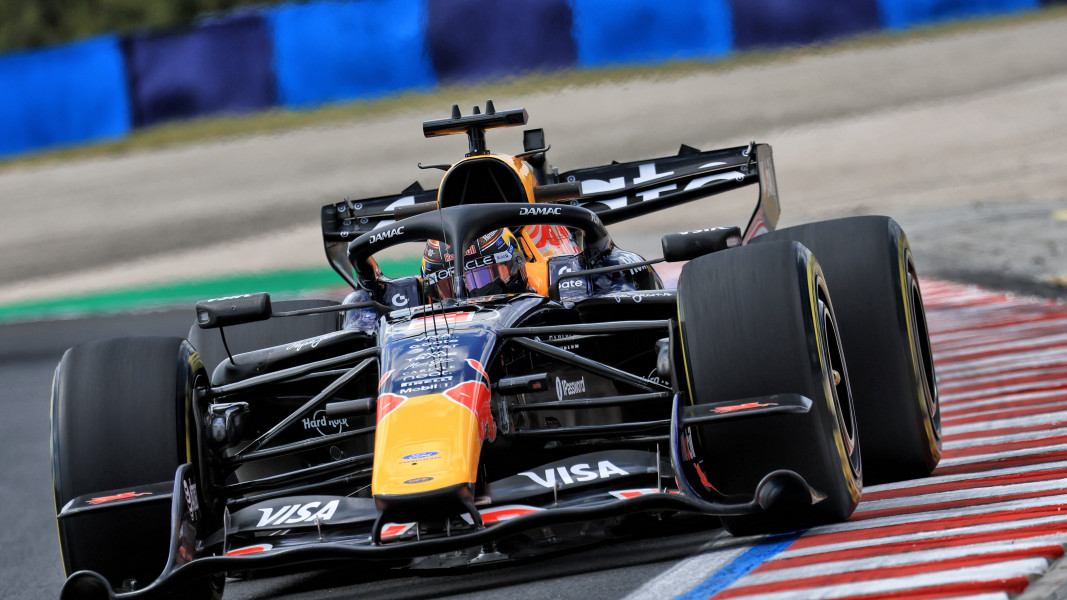

Wer wartet hier auf den Einsatz? Wo und wann ist das Foto entstanden?
Foto: Grand Prix Photo
Wer wartet hier auf den Einsatz? Wo und wann ist das Foto entstanden?
© Grand Prix Photo
Mostly from the archives of our photography partners XPB and Grand Prix Photo, every week from Tuesday we present a little piece of motorsport history. Tell us who you can recognise (Example: Jo Siffert, Monza, 1970) and join in the guessing game for the honour of it – there’s nothing to be won. Send your answer to: mathias.brunner@speedweek.com. The closing date for entries is midnight on Sunday of the current week.
Entry is free of charge. The competition is open to anyone aged 18 or over. Employees of the participating companies are excluded. The judges’ decision is final.
Any data submitted as part of the quiz will be used solely for the purposes of running the competition and will not be passed on to third parties. Further information can be found in our privacy policy.
For the new quiz: The racing team is a true Formula 1 classic, but the colours are rather unusual. Which driver is waiting to take to the track here? When and where was the photo taken?
Our clue for the final task was: This is one of those racing cars that never saw action. We wanted to know which car it was and when it was built.
Topic of the week
Spanish Grand Prix at the new Madring: track – hit or miss?
The people of Madrid had set their sights high for their city’s first Formula 1 World Championship race since 1981. But have the high expectations for the new Madring mixed-circuit track really been met?
TV Program
The picture showed a four-wheel-drive prototype designed by Robin Herd for the engine manufacturer Cosworth. The car was tested by Trevor Taylor, Mike Costin and Jackie Stewart and was even entered for the 1969 British Grand Prix, but the entry was withdrawn because there were massive problems with the car; ultimately, it never competed in a race. Every now and then (as in our photo) it can be seen at events featuring historic racing cars, such as at Goodwood.

Der Cosworth-F1 aus dem Jahre 1969, hier beim Goodwood Festival of Speed
Foto: Wikimedia/AndrewBasterfield
Der Cosworth-F1 aus dem Jahre 1969, hier beim Goodwood Festival of Speed
© Wikimedia/AndrewBasterfield
Life isn’t always fair, not even in the premier class: some ideas were ahead of their time, whilst others came too late; still others failed due to circumstances that the engineers could not have foreseen.
Every now and then, even in Formula 1, it takes quite a while for the penny to drop: British racing legend Stirling Moss triumphed at the 1961 Oulton Park (England) Gold Cup in the Ferguson P99. What was remarkable about this car was that it had four-wheel drive.
Nevertheless, we cannot claim that a revolution was set in motion, as was the case in the late 1950s with the shift from front-engined to rear-engined Grand Prix cars.
The Ferguson’s origins can be traced back to motorbike star Freddie Dixon. He wanted to challenge the world speed record with a four-wheel-drive car. Unfortunately, he was never able to finance his project.
Whilst seeking funding, he met Harry Ferguson, a tractor manufacturer. Together with another racing driver (Tony Rolt, the 1953 Le Mans winner), they founded a research company that, amongst other things, focused on four-wheel drive.
Ferguson approached various companies, but no manufacturer was interested. So the entrepreneur simply set about building a Grand Prix racer himself.
But Formula 1 was undergoing a transformation; the engine regulations were changed from 2.5-litre units to 1.5-litre engines. The smaller, lighter engines meant that the advantage of four-wheel drive was negated by its weight. Furthermore, Ferguson never had the funds to field a team in the Formula 1 World Championship.
Several years passed before BRM began experimenting again with Ferguson’s four-wheel drive towards the end of the 1960s. By then, almost the entire Formula 1 field was running on Cosworth’s three-litre V8 engine.
Matra (with the MS84), Lotus (with the Type 63) and McLaren (with a bulky M9A), as well as Cosworth itself, were also working on four-wheel drive.
They all struggled with the same problems: too much weight, the drive system being too difficult to fit into the car, and it being too bulky.
Enormous advances in tyre development, as well as the discovery of wings to improve traction, ultimately spell the end for four-wheel drive in Formula 1.
Since 1983, the Formula 1 regulations have prohibited four-wheel-drive cars.
Back to Cosworth: the all-wheel drive system was developed by Cosworth itself, as was the gearbox. A magnesium engine block was also built for this purpose.
Chassis designer Robin Herd said years later: “If I’d given it a bit more thought back then, I’d have come to the conclusion that, for obvious reasons, four-wheel drive had no future in Formula 1. We never managed to balance the car properly. We had too much downforce on the front axle.”
The Scot Jackie Stewart remarked: “When you turn into a corner, you get the feeling that the car is steering you, not the other way round.”
In 1971, Cosworth donated the car to the Donington Grand Prix Collection. When that was wound up, the Le Mans 24 Hours Motor Museum took over the car. A car later rebuilt from spare parts was on display at the York Motor Museum in Australia before that too was closed down. The car was subsequently acquired by a private collector.
Seen already?
Don't miss out on any highlights: The Speedweek newsletter, sent out twice a week, delivers the latest news, exclusive commentary and all the important dates from the world of motorsports - directly into your inbox
Highlight Videos
ServusTV Media Library
50-Meter-Drama von WM-Maschine eiskalt ausgenutzt!
14. Sept. | 1:36 Min
Mercedes in Monza: Funk verrät Stimmung
7. Sept. | 1:15 Min

4. Sept. | 4:58 Min
Hat Hamilton Mercedes-Heimweh?
24. Aug. | 1:54 Min
Liam Lawson: Markantes Style-Detail!
23. Aug. | 7:14 Min
Paddock-Tour: Weite Wege in Zandvoort
22. Aug. | 7:08 Min
Keine Bitterballen für Andrea & Christian
21. Aug. | 6:00 Min
21. Aug. | 4:44 Min
Formula Cars News
All News


