
MotoGP doctor Charte: “That madness from the past is a thing of the past!”
MotoGP Chief Medical Officer Dr Angel Charte spoke to SPEEDWEEK.com writer Manuel Pecino about his work. How Marco Simoncelli’s accident changed medical care at the racetrack.
This article is an automatically generated English version. The

MotoGP-Chefarzt Dr. Angel Charte
Foto: Gold & Goose
MotoGP-Chefarzt Dr. Angel Charte
© Gold & Goose


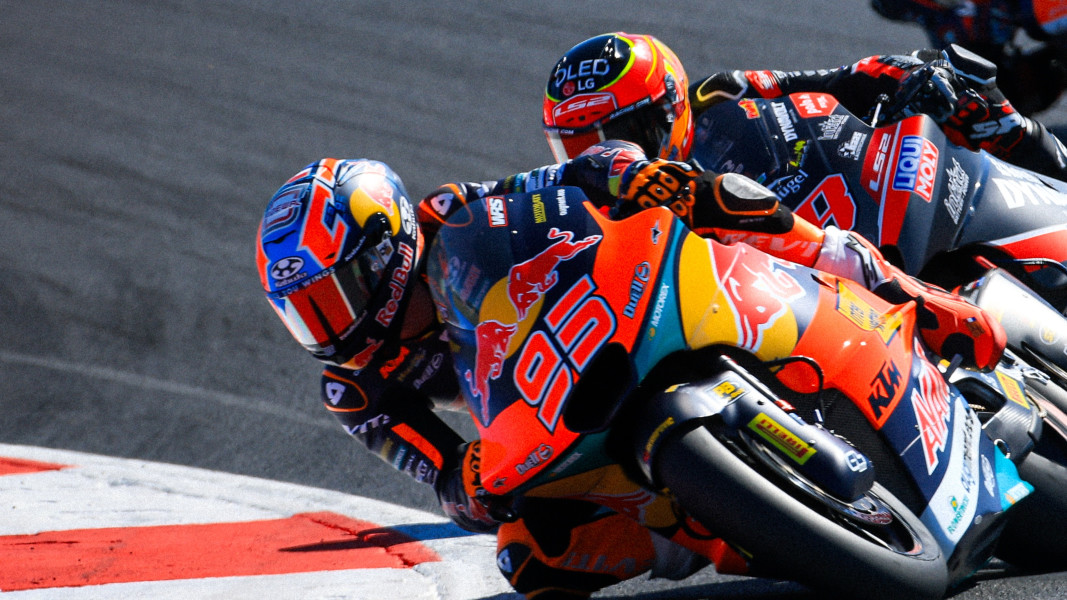
There are some calls a doctor would rather not receive. On a MotoGP circuit, Angel Charte knows only too well that any one of these calls could mean a rider is lying on the track and that, within seconds, he must make decisions that could mean the difference between life and death. At that moment, there is only one priority: to get there, assess the situation and save the rider.
Dr Angel Charte has been working in the world of motor racing for decades and knows only too well the divide between the spectacle we see from the outside and the reality a doctor faces when arriving at the scene of an accident. A reality that can sometimes be brutal.
In an interview with SPEEDWEEK.com writer Manuel Pecino, the doctor talks about his day-to-day work at the racetrack and how medical care in the MotoGP World Championship has been taken to a whole new level in recent years.
Immediate intervention seems to be of crucial importance in a sport like MotoGP. How important is it to have a medical team that can intervene practically straight away at the scene of an accident? The unit was set up in the wake of Marco Simoncelli’s tragic accident in 2011. That incident made one thing very clear: the riders had to be given a chance of survival. And the only way to achieve this was to station an intensive care team directly at the racetrack. That hadn’t existed before.
When that accident happened, there were problems with transport – with the stretcher, with the ambulance and with a medical facility which, from a medical point of view, did not have a sufficiently competent structure at the time. It turned into a disaster.
Topic of the week
Spanish Grand Prix at the new Madring: track – hit or miss?
The people of Madrid had set their sights high for their city’s first Formula 1 World Championship race since 1981. But have the high expectations for the new Madring mixed-circuit track really been met?
TV Program
Since then, we have improved day by day, and I believe that the current situation is of crucial importance. Of the more than a thousand accidents we deal with, perhaps eight or nine are truly serious, but in these cases it may be necessary to intubate the rider, carry out certain procedures … and that can only be done right there at the racetrack. The time lost in the process is crucial.
If you have a brain haemorrhage and it isn’t stopped within less than two minutes, the patient could die. That’s why I consider this unit to be a brilliant invention. And it’s not just me saying that: the international press has said the same. For the world of motor racing – which is probably the most dangerous there is – I consider it indispensable.
And what happens if the injuries are life-threatening? If the injuries are incompatible with life, the patient must be taken off life support and transported away. And when I say ‘inconsistent with life’, I mean internal injuries that cannot be treated: it is impossible to operate, it is impossible to replace an organ … In such cases, there is nothing more that can be done.
The unit plays a very important role within the World Cup. In fact, other sports have wanted to copy it, even if that isn’t always particularly sensible.
This is a highly operational unit. We’re not here to appear on television or sit around in an office. Our job is to act immediately.
What’s more, you’re the head of a unit that moves from circuit to circuit, with a medical team that changes as well. How do you manage to maintain the same high standards? When we started this unit, a close-knit team was put together. At first, I wasn’t entirely sure. Then I was sent to Qatar and became even more sceptical, but eventually they won me over.
However, I set out some very important conditions: I wanted my own team and my own equipment, which would accompany me at all times. Due to various legal issues we faced worldwide, this team had to disband. As a result, I found myself having to travel from circuit to circuit around the world, selecting doctors who were willing to work with me.
The selection process remains very strict. They must have more than five years’ specialist training in intensive care medicine, anaesthesia or emergency medicine, be employed on a permanent contract at a university hospital in their country, and undergo continuous professional development – which I check at every race.
And at every Grand Prix, you reassess your team, so to speak? I have a team for every race. The team at the Sachsenring, for example, was new this year. Some of the former team members have retired or moved to another city, so we practically had to replace the whole team.
They had to go through a sort of test with me. I asked them questions to determine whether or not they had a good grasp of a particular subject.
The riders are also able to get back on the track after crashes that would put any of us out of action. Is it true that they’re ‘cut from a different cloth’? That’s an urban myth. The human body is the same for everyone. It’s obvious that, once we reach a certain age, we can no longer do what they do. But they do start driving cars and riding motorbikes at a very early age. They had a motorbike even as children and have been in many accidents, though not necessarily serious ones. This forces them to learn how to fall, how to slide and how to react correctly.
So this myth that they’re cut from a different cloth isn’t true from a physical point of view. Mentally, too, I don’t think they’re that different, although they’ve got their work well under control. They want to race, and for a long time any accident seemed like a minor setback to them. That’s changing now.
So what sets them apart? They’re trained differently. They cope better with impacts, handle fear very well, know how to fall and how to avoid crashes. They know where they can take risks and where they can’t. There are no madmen here.
And they cope better with pain. Well, nobody actually ‘copes’ with pain: pain is pain. It’s just that nowadays we have a wide range of medicines to relieve it practically within ten seconds.
When a rider crashes, we know exactly when they’ve sustained an injury and when they haven’t. They’ve learnt to recognise this too.
I was recently alerted about a rider and drove straight over. As I began to examine him, he said to me: ‘I’ve broken my cervical spine.’ And I told him: “You haven’t broken anything.” He’d been incredibly lucky in a serious accident. We carried out a full-body CT scan, and there was nothing wrong with him.
Do you get the impression that drivers have been a bit more careful lately? Yes. I’ve noticed a certain caution, particularly recently. They now realise that one day they could end up in hospital following a very serious accident. That recklessness of the past is a thing of the past.
I’m always keeping an eye on what they say, and Martin, for example, says things like ‘I know that one day I could end up in hospital’ or ‘I listen to my body’. That shows that attitudes have changed.
Then they go out on the track and things change, because out there you have to fight for victory. If you don’t take risks, you’re out. But I believe this unit has been a great help to the riders and the MotoGP World Championship. And not because we set it up, but because it’s full of brilliant experts.
To be continued …
Seen already?
Don't miss out on any highlights: The Speedweek newsletter, sent out twice a week, delivers the latest news, exclusive commentary and all the important dates from the world of motorsports - directly into your inbox
Highlight Videos
ServusTV Media Library
26. Sept. | 12:31 Min
22. Sept. | 3:57 Min
„Haben gezittert bis zur letzten Kurve"
20. Sept. | 4:01 Min
20. Sept. | 41:28 Min
Pedro Acosta: „Danke an alle Fans“
20. Sept. | 5:36 Min
20. Sept. | 3:52 Min
Quiles: „Es war toll, in Österreich zu fahren“
20. Sept. | 3:15 Min
Holgado & Alonso beantworten eure Fragen!
20. Sept. | 4:01 Min
MotoGP News
All News


Newest Articles
All ArticlesNew New New New


