
Belgian GP: Do you understand Spa? Here’s what’s behind the corner names
Many GP fans are familiar with the corner names at the Circuit de Spa-Francorchamps, but let’s be honest: do you really know why Eau Rouge or La Source are called that? We’ve set out to investigate.
This article is an automatically generated English version. The

In der berühmten Eau Rouge-Senke
Foto: XPB
In der berühmten Eau Rouge-Senke
© XPB


The Circuit de Spa-Francorchamps, one of Formula 1’s last great open-air venues, breathtakingly set amidst the Ardennes – one of only four circuits to have featured in the very first Formula 1 season in 1950, alongside Monte Carlo, Monza and Silverstone.
Formula 1 drivers love Spa-Francorchamps because the circuit hugs the landscape and some of its corners pose the greatest challenges, especially when it rains – something you can always expect in Belgium, summer or not. This coming weekend is no exception.
Eau Rouge, La Source, Blanchimont: evocative names, but let’s be honest – do you actually know where all these corner names come from? We’ve looked into this question and are starting with the hairpin bend after the start and finish line: La Source.

Der Circuit de Spa-Francorchamps
Foto: SPEEDWEEK.com
Der Circuit de Spa-Francorchamps
© SPEEDWEEK.com
La Source – Literally translated: ‘the spring’. The name of this hairpin bend – the slowest section of the circuit – derives from the numerous healing springs in the Spa region.
Before the start of the season, critical voices dominated, but the World Championship rounds so far have shown that the rule changes are delivering exactly what was hoped for: excitement right up to the final lap.
TV program
Eau Rouge – Opinions differ as to the origin of the name for this dip. Some say ‘red water’ refers to the water’s high iron content. Others point to the sometimes bloody history of the Ardennes, dating back to Roman times, when the Amblève river ran red with blood.
Raidillon – Literally translated, Raidillon means ‘steep path’. That fits quite well, as the track climbs uphill from Eau Rouge. Just how steep the track is there doesn’t come across at all on television. When the riders dive into the dip, they feel as though they are heading straight for a wall.
Kemmel – Over the years, the meaning has been lost. In any case, this section of the circuit has nothing to do with the Kemmelberg in West Flanders; etymologically, it’s more closely related to the word for caraway.
Les Combes – A ‘combe’ is a small ravine or an erosion valley. Here, the track heads back down the hill.
Malmédy – Takes its name from the nearby town of 12,500 inhabitants and derives from the Latin ‘a malo mundarum’, meaning ‘cleansed of evil’. The Warche river used to burst its banks regularly; the church saw this as a sign from God.
Rivage – Literally: riverbank. Named after a nearby hamlet. It was later renamed ‘Bruxelles’ (Brussels), after the capital of Belgium. But everyone still calls it Rivage. The following left-hand bend has no official name, but was known for years as the ‘commentator’s bend’ because it was the only bend visible from the track commentator’s position at the time.
Pouhon – A double left-hander that many drivers describe as at least as thrilling as Eau Rouge or Blanchimont. Pouhon is one of those springs rich in iron that have given the Spa region its name and fame. Etymologically, Pouhon means ‘place where the water springs’, from the Walloon word ‘poujhon’.
Fagnes – Fagnes is a cross-border, domed plateau between Belgium and Germany, covering an area of around 600 square kilometres. The village of Francorchamps is situated in the Fagnes region. In German, this is known as ‘Fenn’, and ‘Fenn’ derives from the Dutch word ‘Veen’ (meaning ‘moor’).
Campus – A name that has hardly caught on for the left-hand bend. It stands for the ‘Campus Automobile’, which borders the track there – a centre of excellence for improving driving skills.
Stavelot – The name of the bend after the town of the same name, which was called Stablo in Roman times. Stavelot is considered one of the oldest towns in Belgium. The Benedictine monastery of Stablo was founded in 648. Today, the former monastery walls house, amongst other things, a racing car museum well worth a visit.
Paul Frère – The legendary racing driver, journalist and author passed away in 2008. The right-hand bend leading to Stavelot is named in his honour.
Blanchimont – The full-throttle section, an ultra-fast left-hand bend, is synonymous with the village.
Chicane – This chicane was designed to slow the cars down before they returned to the start and finish. It is also often called the ‘bus stop’. When the track was still open to public transport, a regular bus did in fact stop here.
And what about Spa and Francorchamps?
Today, ‘Spa’ is used worldwide to refer to springs and places of well-being. The town of Spa became famous for its springs; the origin of the word is disputed. Some trace it back to the Germanic word for ‘to spit’. Did the first people to use the springs perhaps spit out the water? We do not know.
The origin of Francorchamps is unclear. The place was first mentioned in the first half of the 12th century and may derive from ‘Francorum campus’, the camp of the Franks. However, there is also a surviving commemorative plaque listing the former owners of Stavelot Abbey. One of them was called – Francorcamp.
Seen already?
Don't miss out on any highlights: The Speedweek newsletter, sent out twice a week, delivers the latest news, exclusive commentary and all the important dates from the world of motorsports - directly into your inbox
Highlight videos
ServusTV media library
60 Grad, Trinkflasche hin: Russells Ruhe-Geheimnis
29. Juni | 1:07 Min
28. Juni | 7:46 Min
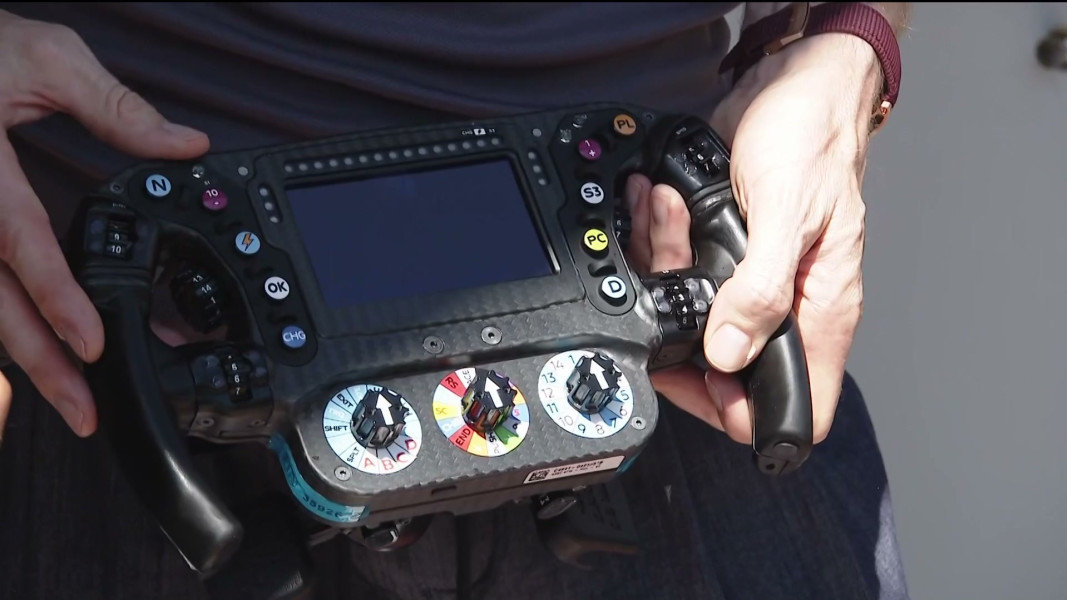
Hülkenberg zeigt sein Lenkrad
27. Juni | 3:55 Min
26. Juni | 5:31 Min
„Reh auf der Strecke!“ Kult-Funk vom Red Bull Ring
24. Juni | 2:25 Min
Funk beweist: Hamilton schon fast wie Schumacher!
16. Juni | 2:00 Min
8. Juni | 2:53 Min
Monaco Historique 2026: Highlights - Tag 1
28. Mai | 24:15 Min
Formula racing News
All news


Newest articles
All articlesNew New New New New


