
Formula 1 • New
Nico Hülkenberg (Audi): “Then we’ll have the best chance...”
In Belgium, McLaren will finally have the new Mercedes engine on board. The British team are also bringing a new rear wing. However, McLaren is deliberately playing down expectations regarding performance.
This article is an automatically generated English version. The

Will these two innovations mark a turning point for McLaren? Ahead of the race at Spa, the British team has announced that Papaya will finally be fitted with the new Mercedes engine in Belgium. A completely new rear wing is also among the kit for Spa-Francorchamps.
McLaren had to wait a relatively long time for the overhauled power unit: at Spielberg at the end of June, the Mercedes works team raced with the new internal combustion engine for the first time. At Silverstone two weeks ago, the other two customer teams, Williams and Alpine, also had the updated model on board. In Belgium, it’s finally McLaren’s turn. The new internal combustion engine has a new specification and is said to be more reliable. Whilst the Mercedes engine has impressed with its performance this season, it has also suffered frequent failures. In China, for example, neither of the two (!) McLarens was able to start the race. As for the works team, Kimi Antonelli in Barcelona and George Russell in Montreal, for instance, retired due to reliability issues.
McLaren’s Neil Houldey, Technical Director of Applied Engineering at the British team, says: “We’re coming to Spa with a new rear wing. It’s an upgrade that was already in the pipeline as part of the car’s development programme. We’re confident that this update will give our car a bit more performance, but we’re fully aware that, following a difficult British Grand Prix – particularly in terms of raw performance – this race won’t be plain sailing either. We therefore don’t expect any major changes in terms of our competitiveness.” So the new wing is unlikely to work any magic.
On the long, hilly and fast circuit through the Belgian Ardennes, engine power and energy management – which is complicated with the new cars – will be the key factors. Houldey predicts: “Belgium will be an incredible challenge from an energy management perspective. It’s one of the circuits on the calendar where energy consumption is at its highest. We’re expecting a significant number of super-clips, which will put both the car and the drivers to the test.” By this he means recharging the battery.
On top of that, as is the case every year, Spa is unpredictable when it comes to the weather: the forecast is unclear and difficult to predict. Spa-Francorchamps is notorious for persistent rain and varying conditions across the circuit’s nearly 7-kilometre length. Houldey: “Even though wet weather brings its own set of challenges, we see this as a valuable opportunity to finally drive this car in wet conditions and understand its behaviour in low-grip situations, which could provide crucial data for the rest of the season.”
Before the start of the season, critical voices dominated, but the World Championship rounds so far have shown that the rule changes are delivering exactly what was hoped for: excitement right up to the final lap.
Don't miss out on any highlights: The Speedweek newsletter, sent out twice a week, delivers the latest news, exclusive commentary and all the important dates from the world of motorsports - directly into your inbox
60 Grad, Trinkflasche hin: Russells Ruhe-Geheimnis
29. Juni | 1:07 Min
28. Juni | 7:46 Min
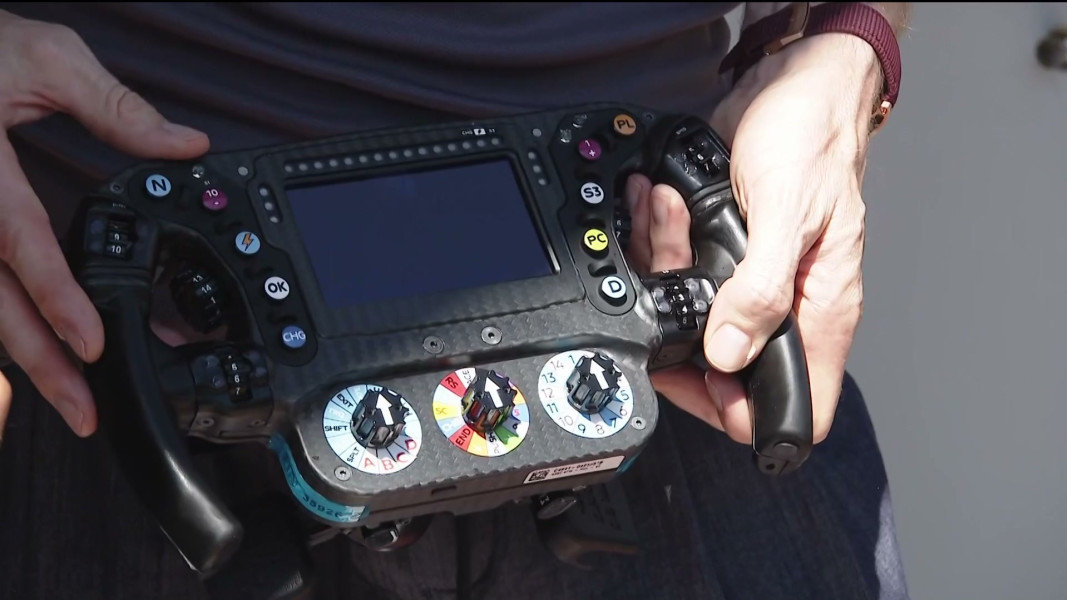
Hülkenberg zeigt sein Lenkrad
27. Juni | 3:55 Min
26. Juni | 5:31 Min
„Reh auf der Strecke!“ Kult-Funk vom Red Bull Ring
24. Juni | 2:25 Min
Funk beweist: Hamilton schon fast wie Schumacher!
16. Juni | 2:00 Min
8. Juni | 2:53 Min
Monaco Historique 2026: Highlights - Tag 1
28. Mai | 24:15 Min


The latest news around the clock, analyzed and commented on by experts, with exclusive behind-the-scenes insights. Here, fans write for fans.

