
Racing Rarities Puzzle: Man in red, but not in a Ferrari or Alfa Romeo
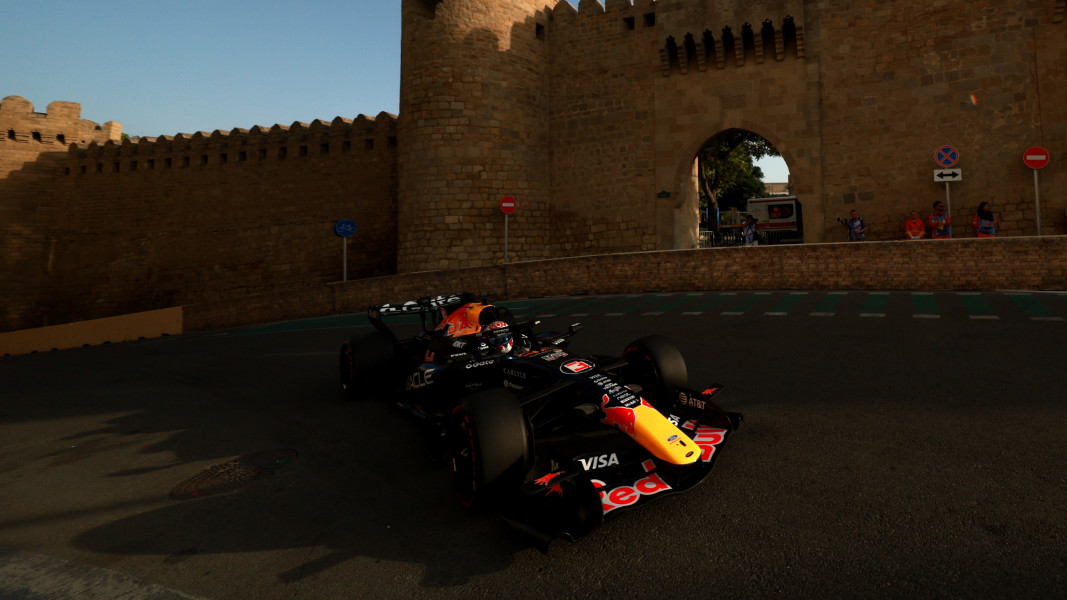
This driver competed in the red of Ferrari and Alfa Romeo during his career, but not in our photo. Who is it? Where and when was this photo taken? Join in the fun!
This article is an automatically generated English version. The



Wer ist unser Mann in Rot?
Foto: Grand Prix Photo
Wer ist unser Mann in Rot?
© Grand Prix Photo
Each week from Tuesday, we present a little piece of motorsport history, mostly from the archives of our photography partners XPB and Grand Prix Photo. Tell us who you can recognise (Example: Jo Siffert, Monza, 1970) and join in the guessing game for the fun of it – there’s nothing to be won. Send your answer to: mathias.brunner@speedweek.com. The closing date for entries is Sunday of the current week at midnight.
Entry is free of charge. The competition is open to anyone aged 18 or over. Employees of the participating companies are not eligible to enter. The judges’ decision is final.
Any data provided as part of the quiz will be used solely for the purposes of running the competition and will not be passed on to third parties. Further information can be found in our privacy policy.
For the new quiz: He drove in the red of Ferrari and Alfa Romeo, but not in our picture.
Our clue for the final task was: The team is a true Formula 1 classic, but the colours are rather unusual. Pictured is the French driver Patrick Tambay in the pits at Watkins Glen in 1978; his McLaren is not, as usual, in full Marlboro livery, but features various shades of blue from the Löwenbräu beer brand.
Topic of the week
Spanish Grand Prix at the new Madring: track – hit or miss?
The people of Madrid had set their sights high for their city’s first Formula 1 World Championship race since 1981. But have the high expectations for the new Madring mixed-circuit track really been met?
TV Program

Patrick Tambay mit seinem Löwenbräu-McLaren in Watkins Glen (USA) 1978
Foto: Grand Prix Photo
Patrick Tambay mit seinem Löwenbräu-McLaren in Watkins Glen (USA) 1978
© Grand Prix Photo
Background: Marlboro’s parent company, Philip Morris, also owned the Miller Brewery, and from the mid-1970s onwards, Löwenbräu was one of its brands. To popularise the beer in North America, McLaren competed in ‘beer blue’ on several occasions – at Watkins Glen and Long Beach (USA), as well as in Montreal (Canada). Today, Löwenbräu is part of the global Anheuser-Busch group.
The Frenchman Patrick Tambay passed away in early 2022 at the age of 73, following a battle with Parkinson’s disease.
The Parisian began his career at the Winfield Racing School; in the years that followed, he worked his way up to Formula 2, where he finished runner-up overall in 1975 and third the following year.
In the following season, he competed in the Can-Am series for Carl Haas’s team and clinched the championship with six wins in nine races.
Tambay made his Formula 1 debut during the French Grand Prix weekend in 1977, driving for the Surtees team. However, in his one-off appearance for the team, he failed to qualify for the race.
He made his Grand Prix debut that same year at Silverstone in an Ensign fielded by Theodore Racing. However, he only managed three laps before technical problems forced him to retire early.
Subsequently, however, Tambay secured two fifth-place finishes and one sixth place, thereby earning himself a seat at McLaren. He drove for the long-established British team for the next two years, after which he was left without a permanent seat and turned his attention to the Can-Am series, where he celebrated his second overall victory in 1980.
Tambay then returned to Formula 1 once more, driving for Theodore Racing in the first seven races of the season before moving to Ligier midway through the season. Disgusted by the disputes over the draconian contracts with the drivers, he retired from Grand Prix racing at Kyalami in 1982.
But his time in the premier class was not yet over, for when Gilles Villeneuve was killed at Zolder in 1982, Patrick Tambay was signed by Ferrari as his successor.
With the Scuderia from Maranello, he enjoyed the greatest successes of his Grand Prix career in the years that followed: in 1982, he finished third at Brands Hatch to secure his first Grand Prix podium finish, and later that same year he claimed his first Formula 1 victory at the Hockenheimring.
In the following season, he also crossed the finish line first at Imola, securing his second and final Grand Prix victory.
Although Tambay went on to secure several podium finishes, he moved to Renault for the 1984 season. With the French team, he secured three further podium finishes over the course of two years.
At the end of 1985, Renault once again withdrew from Formula 1, so Tambay returned to his former team principal, Carl Haas.
However, their F1 programme with Lola and the Beatrice Group proved to be a failure, meaning that Patrick Tambay’s Grand Prix career came to an end after the 1986 season. This time for good.
He did not give up racing, of course; in the years that followed, he competed in the World Sportscar Championship and finished fourth in the 1989 24 Hours of Le Mans. He also took part in the infamous Paris-Dakar rally and celebrated two top-three finishes.
After Tambay hung up his racing helmet, he worked as a Formula 1 commentator for French television.
He was also active in politics as deputy mayor of Le Cannet in France.
Seen already?
Don't miss out on any highlights: The Speedweek newsletter, sent out twice a week, delivers the latest news, exclusive commentary and all the important dates from the world of motorsports - directly into your inbox
Highlight Videos
ServusTV Media Library
„Das habe ich noch nie gesehen!“
28. Sept. | 1:46 Min
Trotz Verstappen-Befehl: Hadjar macht Druck!
27. Sept. | 1:44 Min
26. Sept. | 51:43 Min
26. Sept. | 1:21 Min
Bilderbuch-Start von Verstappen
26. Sept. | 1:29 Min
26. Sept. | 1:29 Min
Nächste Aufholjagd von Antonelli?
26. Sept. | 2:53 Min
Baku: Wer schnappt sich die Pole?
26. Sept. | 2:22 Min
Formula Cars News
All News


