Bridge collapse & Lauda’s fire crash: The day that shook Austria
1 August 1976 began with the collapse of the Reichsbrücke in Vienna and ended with the anxious question of whether Niki Lauda would survive his accident at the Nürburgring. A look back at a dramatic day.
This article is an automatically generated English version. The
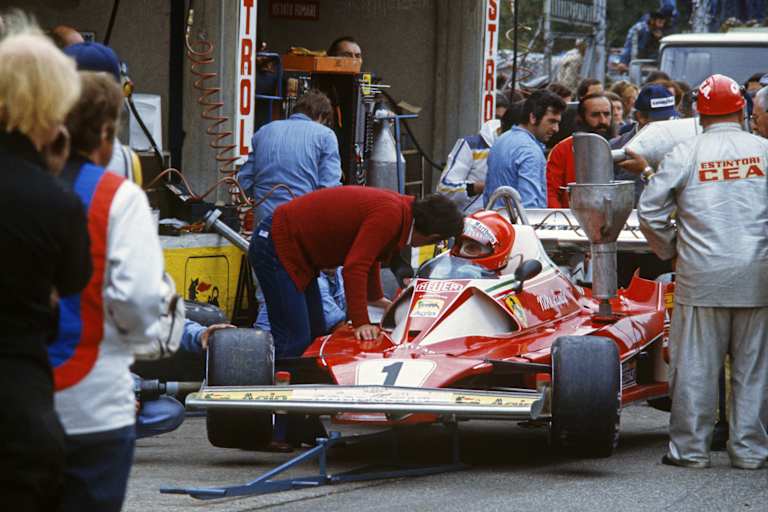
In Monza meldete sich Niki Lauda im GP-Zirkus zurück
Foto: Grand Prix Photo
In Monza meldete sich Niki Lauda im GP-Zirkus zurück
© Grand Prix Photo


It was a day unlike any other in Austria’s history. The collapse of the Reichsbrücke in Vienna – the city’s main crossing over the Danube – in the early hours of 1 August 1976 was a disaster which, fortunately, claimed few lives. And that afternoon, Niki Lauda’s accident at the Nürburgring suddenly cast doubt on his title defence, which many had already considered a certainty. For weeks of anxious uncertainty 50 years ago, the question of whether he would survive kept Austria and fans worldwide on tenterhooks.
It was 4.53 am when the Reichsbrücke, built between 1934 and 1937, crashed through the pylons and plunged into the Danube. At that early hour, there were only seven people in several vehicles on the bridge, six of whom were able to save themselves. Only one car driver was recovered hours later, but was found dead. Shipping traffic on the Danube was suspended for two months until the end of September.
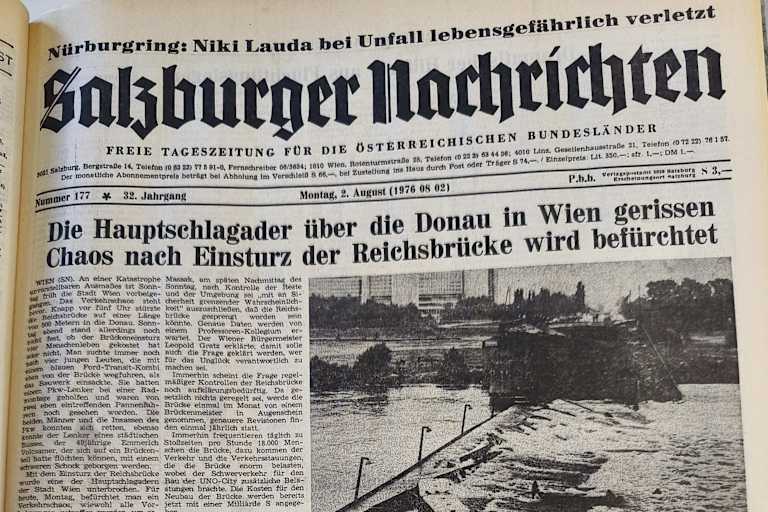
Titelseite der Salzburger Nachrichten am 2. August 1976
Foto: Gerhard Kuntschik
Titelseite der Salzburger Nachrichten am 2. August 1976
© Gerhard Kuntschik
Recommendations
Mentioned in this article
The operation to clear the rubble lasted until January 1977. After five weeks, a temporary bridge for the tram was completed, followed in December by one for private vehicles. It was not until November 1980 that the current (third) Reichsbrücke was opened to traffic. The cause of the 1976 collapse – the bridge had previously been inspected seven times, most recently in 1975 – was attributed to several unforeseeable factors, including substandard concrete which had allowed water to penetrate the pier bases. This led to progressive deterioration of the concrete base. Tensile stresses caused by frost action in winter further exacerbated the problem.
Bad news from Germany
On 1 August 1976, I was working at the European Rallycross Championship round at the Melk LERU-Ring (now the Wachauring). When, between two heats, the track announcer Armin Holenia reported on Niki Lauda’s serious accident at the Nürburgring, the victory of local hero Franz Wurz (the father of Alex Wurz) in the Lancia Stratos became a mere footnote for many spectators.
Topic of the week
Spanish Grand Prix at the new Madring: track – hit or miss?
The people of Madrid had set their sights high for their city’s first Formula 1 World Championship race since 1981. But have the high expectations for the new Madring mixed-circuit track really been met?
TV Program
Holenia recalls: “I was about to set off that morning from my flat in Vienna’s second district, crossing the Danube to Melk, when I heard about the bridge collapse and had to choose a different route. When the news then came in from Germany, it became difficult to concentrate. Edi Finger (the long-serving ORF radio sports editor, who was to ‘go mad’ in Córdoba two years later, ed.) set off immediately and drove back to the studio in Vienna. And we were all hoping for more information from the Nürburgring.’
Lauda later repeatedly rejected the accusation made by many media outlets that he had campaigned against the Nürburgring as a Formula 1 circuit. His proposal not to hold a Grand Prix at the Nürburgring in 1976 was shot down by the other drivers. For many, however, he remained the man who ‘ruined’ the old Ring as a Formula 1 circuit.
It wasn’t just in Austria that fans were on the edge of their seats as they followed Lauda’s fight for survival. And the organisers of the Austrian Grand Prix – the first race after the Nürburgring – had to realise what a race without Niki meant: Only 40,000 spectators witnessed John Watson’s surprise victory in the Penske, even though there were two Austrians on the grid: Harald Ertl (8th in the Hesketh) and Hans Binder (retired in the Ensign).
Comeback after just 42 days
On 7 September 1976, Lauda’s comeback began with a secret test at Fiorano. The following day, a press conference was held at Fuschl Castle, during which Lauda confirmed his return at Monza the following weekend: “It will certainly be a very tough start, as the competition has now completed two more races. But if I manage to finish this fresh start to my career with at least a tenth-place finish, then I see my chance for the future once again,” Lauda explained, almost emotionlessly, in a packed ballroom.
42 days after the accident, Lauda crossed the finish line in fourth place at Monza. He was in excruciating pain and, at times, gripped by panic.
Niki Lauda: No great emotions
He never had any problem returning to the scene of the accident at the mine. In 2006, he met his main rescuer, Arturo Merzario, there and thanked him (belatedly) with a gold Rolex. When he was interviewed by an American TV reporter at the scene of the accident during the filming of Ron Howard’s film *Rush*, he ‘coincidentally’ found his ‘ear’ – a pastry he’d brought with him. The reporter was reportedly completely flustered by this.
Lauda was never a man of great emotion. When I spoke to him after the *Rush* premiere about the fact that therapist Willi Dungl – without whom the comeback could never have taken place in such a short time – had been completely overlooked in the film, my Niki replied dryly: “They couldn’t take care of everything.”
Seen already?
Don't miss out on any highlights: The Speedweek newsletter, sent out twice a week, delivers the latest news, exclusive commentary and all the important dates from the world of motorsports - directly into your inbox
Championship Standings
Full Standingsorg-location for [2026] 2026
2026
2025
2024
2023
Pos
Driver
Team
Points
1


292
2

211
3


191
4


186
5

167
6


145
7

120
8

71
9


59
10


41
Highlight Videos
ServusTV Media Library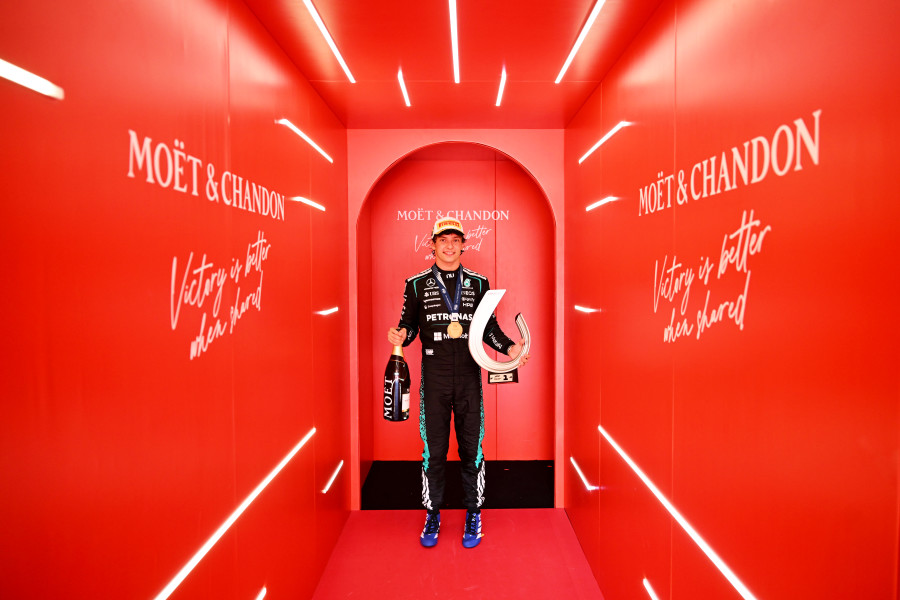
50-Meter-Drama von WM-Maschine eiskalt ausgenutzt!
14. Sept. | 1:36 Min
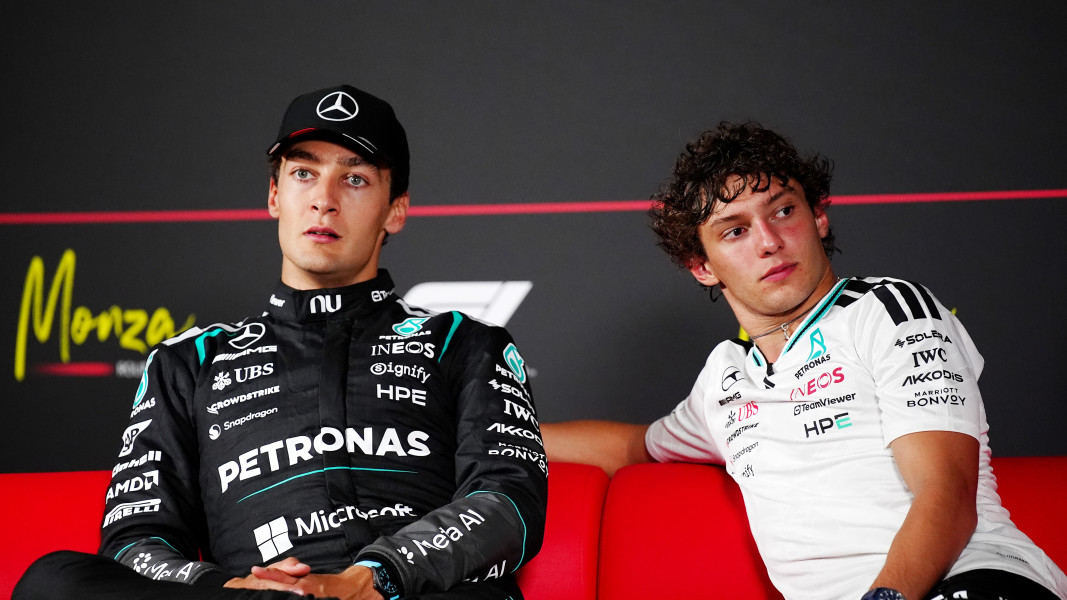
Mercedes in Monza: Funk verrät Stimmung
7. Sept. | 1:15 Min

4. Sept. | 4:58 Min
Hat Hamilton Mercedes-Heimweh?
24. Aug. | 1:54 Min
Liam Lawson: Markantes Style-Detail!
23. Aug. | 7:14 Min
Paddock-Tour: Weite Wege in Zandvoort
22. Aug. | 7:08 Min
Keine Bitterballen für Andrea & Christian
21. Aug. | 6:00 Min
21. Aug. | 4:44 Min
Events
All Formula 1 EventsPast Italian Grand Prix
 04.–06.09.2026
Past Spanish Grand Prix
 11.–13.09.2026
Next up Azerbaijan Grand Prix
 24.–26.09.2026
Next up Bahrain Grand Prix
 02.–04.10.2026
Singapore Grand Prix
 09.–11.10.2026
Past Italian Grand Prix
Past Spanish Grand Prix
Next up Azerbaijan Grand Prix
Next up Bahrain Grand Prix
Singapore Grand Prix
Formula Cars News
All News
Newest Articles
All ArticlesNew New New New New New New