Michael Galinski on the new IDM: “My aim is to scale back”
As Technical Director, Michael Galinski aims to make the IDM more affordable from 2027 onwards. In an exclusive interview, he explains his plans for clear rules and closer links between the lower classes and the World Championship.
This article is an automatically generated English version. The
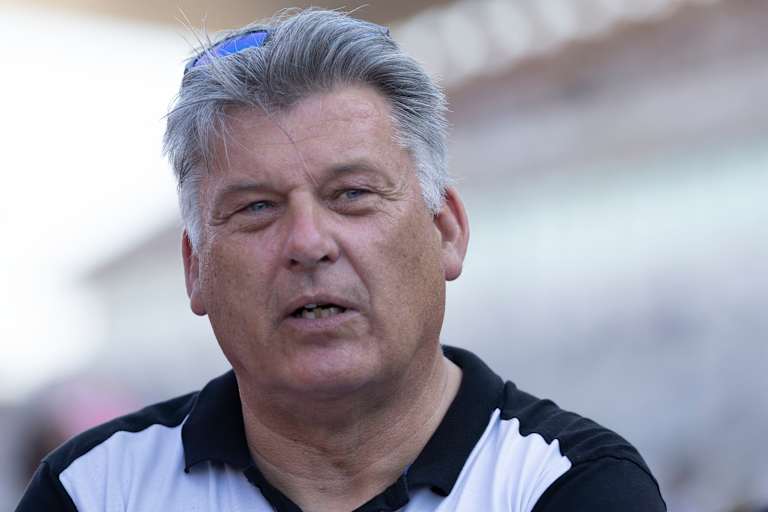
Michael Galinski wird Technischer Direktor der IDM
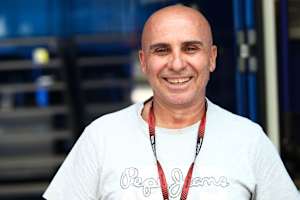
Foto: Gold & Goose
Michael Galinski wird Technischer Direktor der IDM
© Gold & Goose


In an exclusive interview with SPEEDWEEK.com, Galinski made it clear that his personal attachment to the IDM was also a key factor in his decision to take on this role. He had been concerned by developments over the past few months.
“I come from the IDM and am one of the longest-serving members. I’ve always been involved with great passion. This year, participation has continued to decline, and that has made me sad. I was there in Oschersleben and noticed the dissatisfaction amongst those involved. People were complaining about the rules, which weren’t clearly defined enough. I heard from many teams that it’s no longer their IDM. The constant rule changes were a point of criticism,” reported Galinski.
Recommendations
Mentioned in this article
Dissatisfaction in the Euro-Moto paddock gave Galinski pause for thought
His impressions were not limited to individual voices in the paddock. In discussions with long-standing officials from other teams, too, he encountered concerns about the championship. “I met with Werner Daemen and Jens Holzhauer – they all seemed dissatisfied with the situation. Even the name ‘Euro Moto’ struck me as odd. I can understand what the intention was. The basic idea was positive. The aim was to create a European championship, but it didn’t work out. In Europe, almost everyone knows the IDM, but hardly anyone is familiar with the term ‘Euro Moto’. The new name hasn’t caught on,” he noted.
With the ADAC as the promoter, Galinski now sees a solid way forward. Their concept focuses on promoting young talent and a progression path through the various classes. The Sportbike and Supersport classes are intended to enable young riders to progress, whilst the Superbike category remains the pinnacle of the championship.
Topic of the week
Topic of the week: MotoGP’s new schedule proved highly controversial
In 2027, MotoGP will also enter the 850cc era with a new schedule. It was not so much the changes themselves as the way the decisions were reached that caused a stir. A prime example of: ‘Talking helps’.
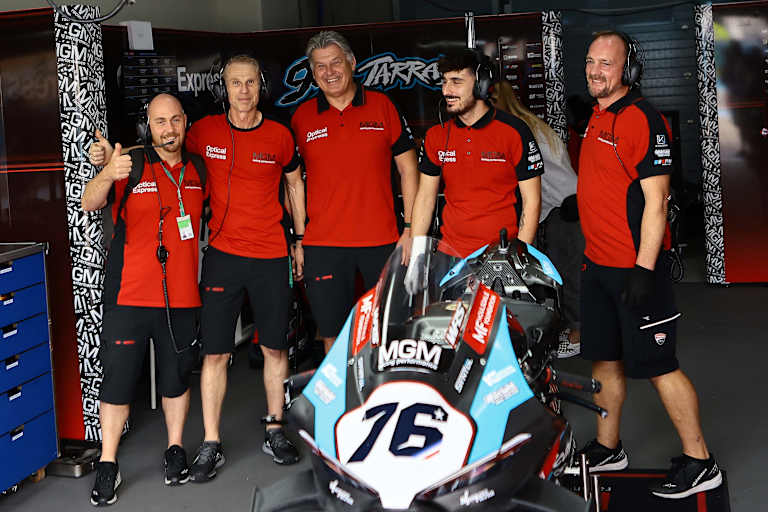
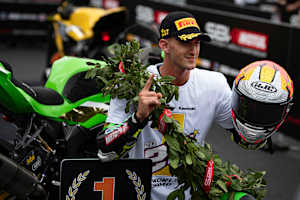
Michael Galinski verabschiedete sich mit MGM aus der Superbike-WM
Foto: Donnyfoto
Michael Galinski verabschiedete sich mit MGM aus der Superbike-WM
© Donnyfoto
“There came a point when it was unclear whether the series had any future at all. In the ADAC, we’ve found a strong partner. The IDM is very fortunate. The philosophy is that young talent is nurtured in the lower classes, thereby feeding into the classes above. I really liked this concept,” explained Galinski.
The fact that Udo Mark is taking on a central role encouraged him to get involved himself. The two have known each other for many years. “I’ve known Udo Mark for ages. He was already involved in the IDM and had some good ideas. But the DMSB didn’t agree at the time. For us as teams, though, it was brilliant. When I heard that Udo was involved in the new IDM, I had a chat with him, and that’s how it all came about,” said the future Technical Director.
What ideas Galinski has for the IDM’s relaunch
Galinski has set out a clear direction for his own area of responsibility. Technical freedom should not be allowed to increase any further. Instead, he wants to assess what level of investment is sensible and financially viable for a national championship. “My role as Technical Director will be to shape the regulations and review the technical aspects. My aim is to scale back and under no circumstances to scale up further. There are motorbikes in the Euro Moto class that could almost compete in the World Championship. The scope of what’s been approved there is enormous. I wonder what the point of it all is. Costs have risen dramatically. That has to change,” emphasised Galinski.
At the same time, for the Sportbike and Supersport classes, he is aiming for closer alignment with international regulations. Compatible technical rules could reduce the effort involved in guest appearances and facilitate exchanges between the IDM and the World Championship. This is still the objective for the new regulations.
“I’d like to align the smaller classes with the World Championship regulations. This would make the costs manageable for the teams, and would allow World Championship riders to make guest appearances in the IDM and vice versa. We are in close contact. The FIM is keen for us to work closely together,” explained Galinski.
In doing so, the new management is addressing two key concerns: the IDM should remain affordable for its existing participants whilst also serving as a springboard into international racing. Clear, transparent and consistent regulations are intended to give teams greater planning certainty. Pirelli remains the exclusive tyre partner for the three premier classes.
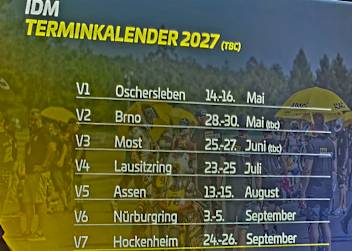
The ADAC is also planning changes beyond the technical side of things. In the medium term, additional activities in the paddock are intended to strengthen the connection with fans and make the events more attractive for families. The provisional calendar comprises seven race weekends between May and September at Oschersleben, Brno, Most, the Lausitzring, Assen, the Nürburgring and Hockenheim.
For Galinski, the fresh start begins with collaboration in the paddock. “I’m looking forward to the IDM and hope that some new teams will join us and that we can reach a consensus with the established teams. The IDM is a great championship,” he emphasised.
Seen already?
Don't miss out on any highlights: The Speedweek newsletter, sent out twice a week, delivers the latest news, exclusive commentary and all the important dates from the world of motorsports - directly into your inbox
Euro Moto News
All News

Newest Articles
All ArticlesNew New New New