
Ducati’s new MotoGP 850cc bike: How development is being accelerated
Ducati faces a massive development challenge for the 2027 MotoGP season. Additional computing power is set to speed up work on the engine and aerodynamics of the new 850cc bike.
This article is an automatically generated English version. The

Lenovo ist für Ducati mehr als ein Sponsor
Foto: Lenovo
Lenovo ist für Ducati mehr als ein Sponsor
© Lenovo


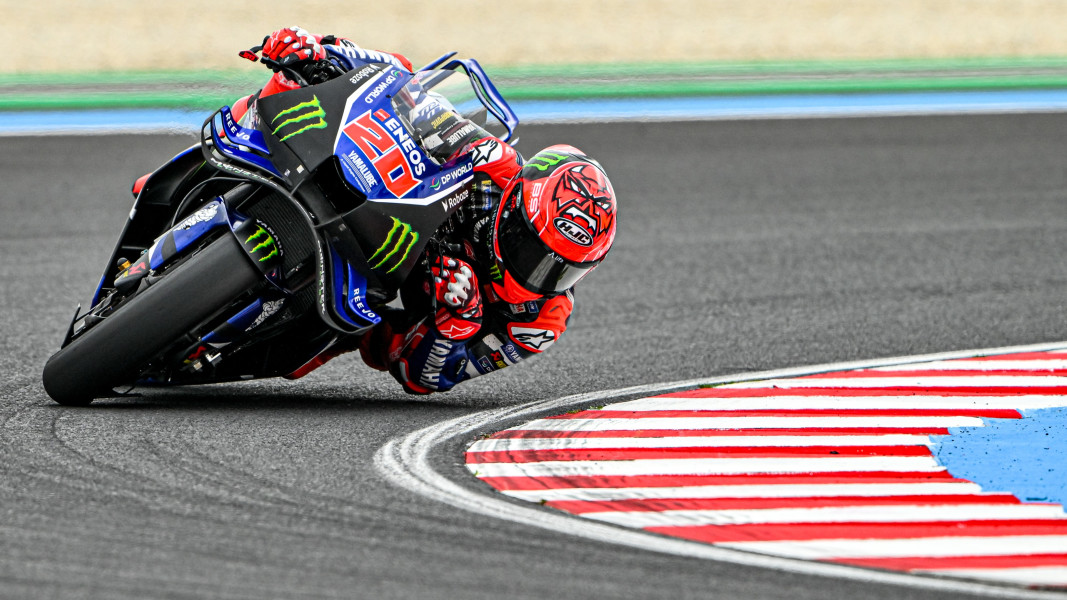
Whilst the 2026 MotoGP season is entering its decisive phase, development of the all-new Desmosedici GP for 2027 has long been in full swing at Ducati Corse. The new technical regulations are forcing the engineers at Borgo Panigale to undertake a fundamental redesign – from the 850cc engine right through to the aerodynamics.
At the same time, Ducati cannot afford to neglect the development of the current Desmosedici. The factory is therefore working in parallel on two different MotoGP projects: the bike for the ongoing title battle against Aprilia and the all-new generation for 2027.
To cope with this dual workload, Ducati, together with its title and technology partner Lenovo, has significantly expanded Ducati Corse’s high-performance computing (HPC) infrastructure. The additional computing power enables engineers to run more engine and aerodynamic simulations simultaneously and to virtually investigate a greater number of different solutions before any actual components are manufactured.
Development of the 850cc engine: computing time halved
The new technology is particularly evident in the development of the 850cc engine. According to Ducati, the computing time for three-dimensional CFD simulations of the engine has been reduced by 50 per cent. Structural analyses now take around 30 per cent less time.
The theoretical computing power of the expanded infrastructure stands at more than 108 TFLOPS with double precision. Compared with the previous generation of compute nodes, computing power has increased by around 48 per cent, whilst approximately twice as much RAM is now available.
The 2027 MotoGP grid will feature five new regular riders, with at least three of those dropped set to move to the World Superbike Championship. The ones to suffer as a result are Alvaro Bautista and Danilo Petrucci.
TV program
For the developers, this means one thing above all: significantly more variants can be investigated in the same amount of time. Only the most promising solutions then need to be manufactured and tested as real prototypes. Ducati expects this to result in shorter development times, lower costs and greater accuracy. “Lenovo has once again supported us with the technology we need to optimise the design and development of the motorbike,” explained Davide Barana, Technical Director at Ducati Corse.
Parallel development, in particular, poses major challenges for the racing department. “We need sufficient computing power to finalise the design of our next-generation Desmosedici GP whilst, at the same time, continuing to develop the 2026 machine during the current season and competing for the championship.”
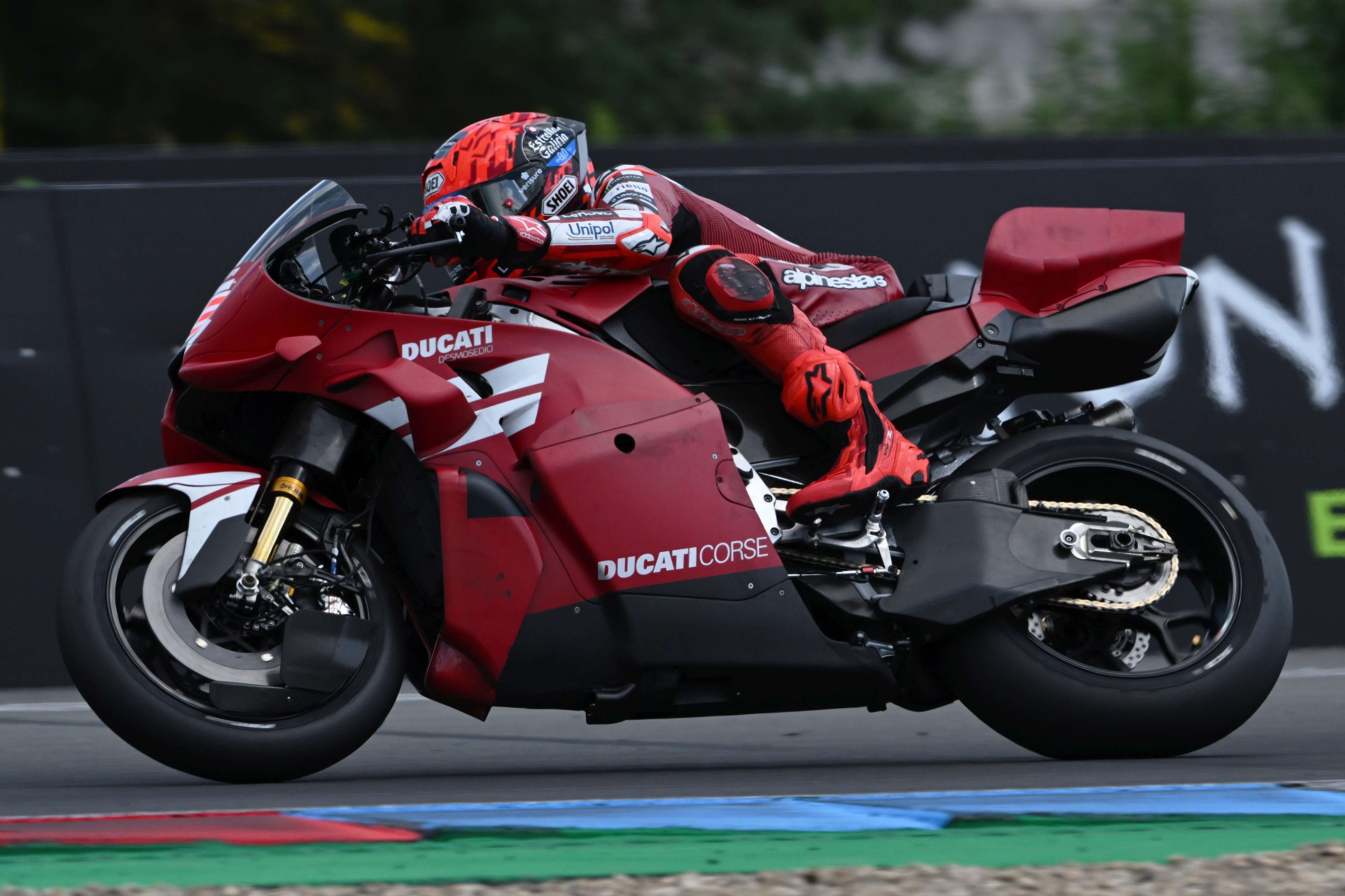
Marc Marquez mit der 850er-Ducati beim Brünn-Test
Foto: David Ulrich
Marc Marquez mit der 850er-Ducati beim Brünn-Test
© David Ulrich
Simulations are becoming increasingly important for Ducati
Virtual development is becoming increasingly important not only for the engine but also for aerodynamics. As real-world test rides are restricted by the MotoGP concessions system, Ducati is attempting to carry out as many development steps as possible on the computer first.
With this more powerful infrastructure, more complex simulation models can be used, designed to replicate real-world conditions more accurately. This enables the engineers, amongst other things, to analyse in greater detail the impact that aerodynamic changes have on the motorcycle as a whole. “High-performance computing systems and data analysis therefore play a crucial role in accelerating both development programmes,” emphasises Barana.
For Ducati, this expansion comes at a crucial time. In 2027, MotoGP will undergo its biggest technical overhaul in years. Engine capacity will be reduced from 1,000 to 850 cubic centimetres, whilst at the same time there will be restrictions on aerodynamic freedom. Added to this is the switch in the official tyre supplier from Michelin to Pirelli.

Ducati-Technikchef Davide Barana
Foto: Ducati
Ducati-Technikchef Davide Barana
© Ducati
Ducati is already gaining initial experience with the new Desmosedici on the racetrack. Test rider Nicolo Bulega has ridden the 850cc prototype on several occasions and most recently described it as a “very good base”. Despite lower power output, he says the gap in lap times compared to the current 1,000cc MotoGP machines is surprisingly small.
Whilst Bulega and the Ducati test team put the theory to the test on the track, more and more development variants are to be screened out – initially virtually – at Borgo Panigale. The additional computing power could thus become a key factor in the race to produce the best MotoGP machine of the new 850cc era.
Seen already?
Don't miss out on any highlights: The Speedweek newsletter, sent out twice a week, delivers the latest news, exclusive commentary and all the important dates from the world of motorsports - directly into your inbox
Highlight videos
ServusTV media library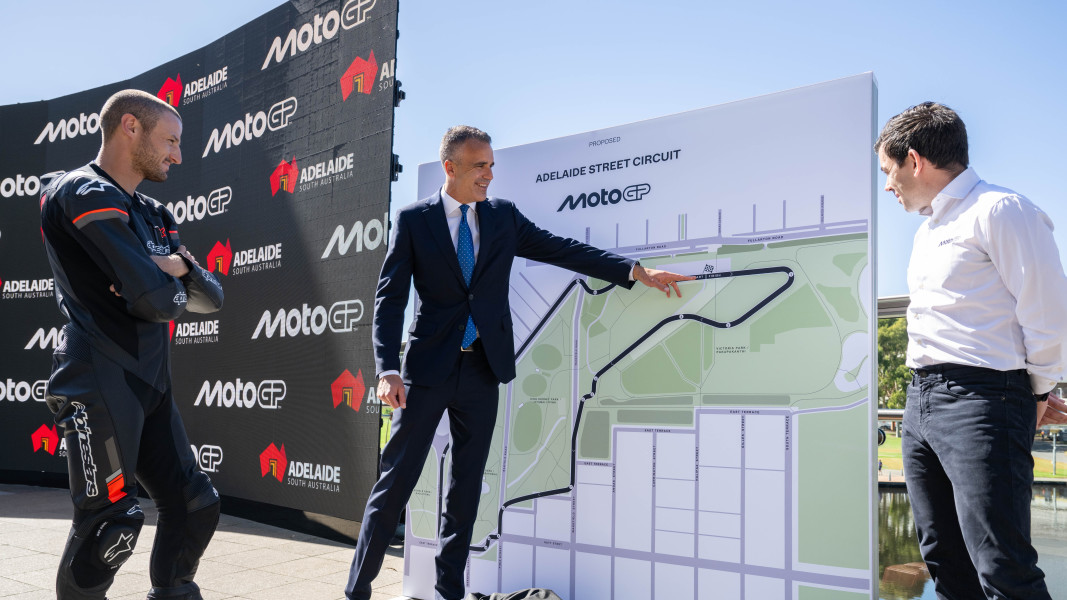
Das ist der Stadtkurs in Adelaide
3. Sept. | 1:47 Min
3. Sept. | 13:40 Min
30. Aug. | 6:28 Min
30. Aug. | 35:18 Min
30. Aug. | 4:59 Min
Packender Zweikampf um den Sieg!
30. Aug. | 4:08 Min
Marquez gegen Bezzecchi um Platz 1!
30. Aug. | 2:06 Min
30. Aug. | 4:07 Min

MotoGP News
All News


Newest Articles
All ArticlesNew New New New New


