MotoGP riders are not circus monkeys: why dissatisfaction is growing
Given the current gruelling MotoGP calendar, which crams seven race weekends into nine weeks, a certain amount of discontent is perhaps inevitable.
This article is an automatically generated English version. The
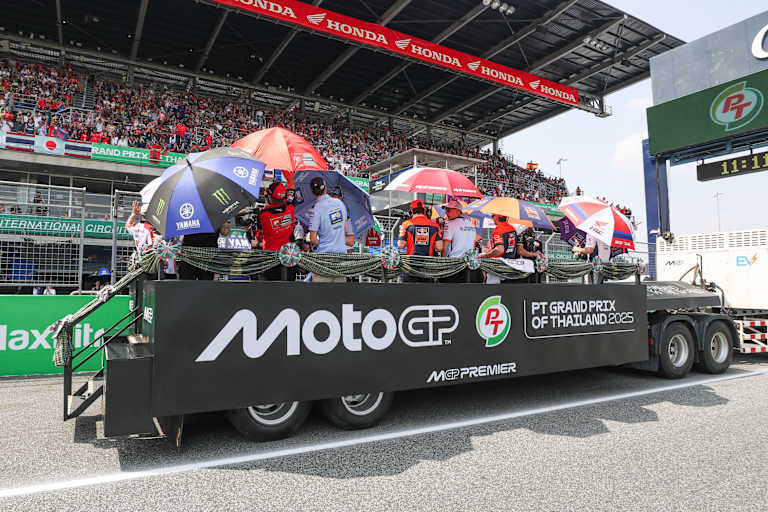
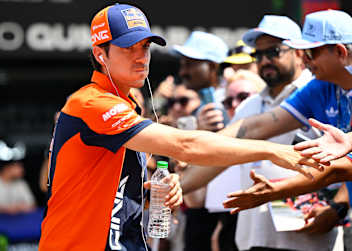
Die Fahrerparade: Wer zu weit weg ist, sieht nichts
Foto: Gold and Goose Photography
Die Fahrerparade: Wer zu weit weg ist, sieht nichts
© Gold and Goose Photography


Most of the discontent stems from the riders, who feel increasingly ignored and under pressure due to a series of new rules, restrictions and threats, whilst the demands placed on them off the track are growing ever greater. Their role as athletes striving for sporting success seems to be taking a back seat to their role as entertainers, whose job is to help MotoGP attract more fans.
Jack Miller said, as part of a lengthy and at times contradictory series of quoted remarks: “It’s a misconception that we’re here to be entertainers. Which we are… but our entertainment consists of riding motorbikes in races. The race is the show.”
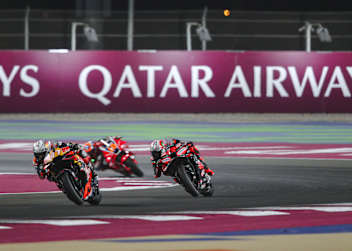
The staging of the Qatar Grand Prix is highly controversial
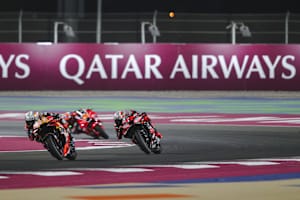
One issue that led to a special meeting of the riders on the eve of the cancelled Australian Grand Prix concerned the round in Qatar – the race had been postponed due to the outbreak of the war with Iran. US air bases in Doha had already been targeted. Since then, the war had not only dragged on – with repeated threats of escalation from an unpredictable Donald Trump – but had also escalated, with new players and attacks on Saudi Arabia. Staff at the US Embassy were advised to leave the country. The German Foreign Office advises against travel to Qatar. Yet MotoGP is doing the opposite and sticking to its plans for the race weekend from 6 to 8 November –
Recommendations
Mentioned in this article
This was followed by another controversy, triggered when, on the morning of the Japanese Grand Prix, Marc Márquez
Riders have less and less time for what really matters
There are various other events and commitments that have one thing in common: the riders are treated like trained monkeys, often at a time when they’d much rather be with their teams, preparing their motorbikes or getting themselves mentally and physically ready for the upcoming race.
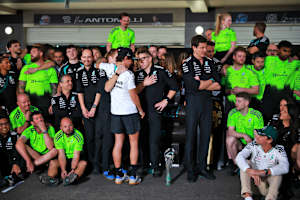
With his third-place finish at the Mexican Grand Prix, Kimi Antonelli has become the youngest of the 36 Formula 1 world champions to date. The 20-year-old Italian is on a record-breaking run. The Tifosi are dreaming of Antonelli in a Ferrari.
TV Program
Marc’s explanation for skipping the karting nonsense was that he needed to ice his injured right shoulder – following a warm-up session twice as long as usual for everyone to test the suddenly urgently needed hard tyres. MotoGP’s response was a stern warning of a hefty fine (5,000 euros) for any rider
New format for the 2027 MotoGP season
Added to this was the announcement of a
In two of these sessions, the entire 22-rider starting grid will be out on the track at the same time, completing decisive laps – a risk that was the very reason the Q1 and Q2 sessions were originally introduced.
According to Carlos Ezpeleta, the second-in-command at MotoGP,
We’ve got no say in the matter and have to keep our mouths shut.Marc Márquez
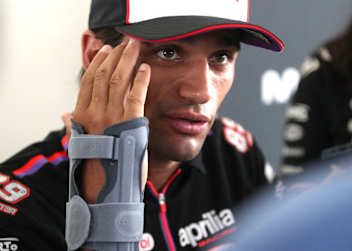
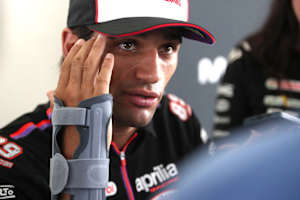
More generally, the criticism was that this had been done without any consultation with the riders. Marc once again spoke for many. “It would be interesting to understand what the main objective is, because for the rider it just means a greater burden. But we have no say in the matter and have to keep quiet. The teams and the organisers decide, so you either accept it or pull out.” At the same press conference, Jorge Martín added: “They don’t even ask us. It would be nice if the organisers showed a bit of interest in the riders.”
Safety Commission meetings are a token gesture
All this is grist to the mill for those who often view these talented athletes as scapegoats. This certainly raises a few questions. The riders supposedly have a say – at the Safety Commission meeting on Friday evening with MotoGP management. Yet this once-influential body has lost both significance and attendance since the days of Valentino Rossi and co. Partly because many safety issues have improved radically since then, and partly because the riders – not out of apathy, but because they are extremely busy during a race weekend for all the PR and racing reasons mentioned above – can hardly find the time for it.
But instead of just grumbling and moaning – why don’t they join forces and set up a representative body? Just as the Formula 1 drivers do in the GPDA (Grand Prix Drivers’ Association)? But there is already a history behind this that reflects the difficulty competitors have in finding a common voice. There is no active figurehead. Perhaps someone like Valentino. Or Marc. But each of them is already working flat out and has their hands full. They have neither the time nor the inclination, nor any financial need. So, for the time being, they will continue to perform merely as ‘circus monkeys’.
Seen already?
Don't miss out on any highlights: The Speedweek newsletter, sent out twice a week, delivers the latest news, exclusive commentary and all the important dates from the world of motorsports - directly into your inbox
Championship Standings
Full Standingsorg-location for [2026] 2026
2026
2025
2024
2023
Pos
Rider
Team
Points
1


399
2


355
3

332
4


295
5


278
6


265
7

236
8


197
9

173
10


134
Highlight Videos
ServusTV Media Library
Sepang: Die Tops & Flops des Wochenendes
1. Nov. | 7:19 Min
1. Nov. | 4:45 Min
1. Nov. | 12:10 Min
Katar-Streit: Droht MotoGP-Fahrern eine Sperre?
1. Nov. | 4:02 Min
Mentalitäts-Monster Marc: „Jetzt musst du liefern“
1. Nov. | 1:21 Min
Pratama schreibt Geschichte für Indonesien!
1. Nov. | 2:32 Min
Trotz Verletzung: Martin-Comeback schon in Katar?
1. Nov. | 2:55 Min
1. Nov. | 1:23 Min
Events
All MotoGP Events


MotoGP News
All News