
Commuter Garrett Gerloff: This is the trick he uses to combat jet lag
Kawasaki rider Garrett Gerloff is once again living permanently in the US and makes the journey to Europe for almost every race. The Texan has developed a special strategy to combat jet lag.
This article is an automatically generated English version. The

Garrett Gerloff pendelt zwischen Europa und den USA
Foto: Gold & Goose
Garrett Gerloff pendelt zwischen Europa und den USA
© Gold & Goose


For Garrett Gerloff, life as a World Superbike rider involves a challenge that many of his European rivals are unfamiliar with: constantly switching between time zones. After temporarily relocating to Europe, the American is now back living with his wife in his home country.
“I’m now living full-time with my wife in the US again. We started doing that last year,” the Kawasaki rider explained in an exclusive interview with SPEEDWEEK.com. “This year, I’ve been flying back to America after every race.”
Only in exceptional cases does the Texan stay on this side of the Atlantic between two events. For instance, after the event in Most in May, he chose not to return to the US and spent the time leading up to the Aragon weekend in Europe. “But that was one of the few occasions when I stayed in Europe for a couple of weeks,” the American explained.
Special strategy helps combat jet lag
As a result, Gerloff accumulates numerous long-haul flights over the course of a season. The journey from the US to Europe in particular can be unpleasant due to the time difference. The 31-year-old and his wife Elizabeth have therefore looked closely at how to minimise the effects of jet lag.
The timing of meals plays a crucial role in this. “We’ve found a solution that’s mainly about when we eat. We’ve looked closely at jet lag and how to keep it to a minimum,” revealed Gerloff.

Der Grund für die Rückkehr in die USA: Gerloffs Frau Elizabeth
Foto: Gold & Goose
Der Grund für die Rückkehr in die USA: Gerloffs Frau Elizabeth
© Gold & Goose
The adjustment to the European time zone therefore begins even before take-off. “On the day we leave, we always get up at around three in the morning to kick-start the adjustment process,” explained the Kawasaki rider. Even more unusual is Gerloff’s dietary strategy. “We have our last meal at around midday. After that, we don’t eat anything until we’ve arrived in Europe.”
For Gerloff, there is a clear rationale behind this. The sleep-wake cycle is not only influenced by light; the timing of meals also plays a role in the body’s internal clock. “The body clock is largely determined by light, but also by when you eat. This method has helped us a great deal,” reported the American.
Nevertheless, Gerloff cannot completely prevent the effects of jet lag. He usually arrives on the Tuesday before a race weekend. “When we arrive on Tuesday morning, Tuesday is difficult and sometimes Wednesday is too. But after that, we both feel fine and are ready for the weekend.”
A strong season: Gerloff delivers
The Kawasaki rider cannot see any negative impact on his performance on the motorbike. “I don’t think it affects my riding or my concentration,” emphasised Gerloff.

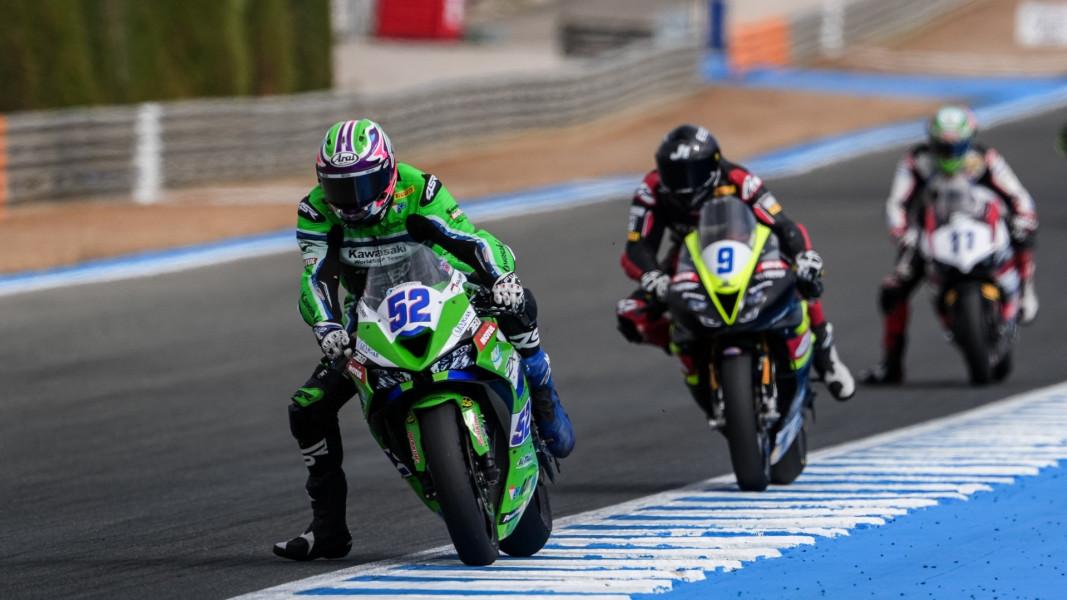
Garrett Gerloff mit der Kawasaki ZX10-RR 2026
Foto: Gold & Goose
Garrett Gerloff mit der Kawasaki ZX10-RR 2026
© Gold & Goose
Even whilst he’s in the US, his preparations for the races continue without interruption. “I carry on training at home and arrive at the circuit well-prepared to do my job and give it my all.”
The move back to the US therefore means significantly more travelling for Gerloff. However, by carefully adjusting his sleep patterns and mealtimes, the Kawasaki rider is trying to ensure that the many kilometres between his home and the European race tracks do not put him at a disadvantage, at least in sporting terms.
Seen already?
Don't miss out on any highlights: The Speedweek newsletter, sent out twice a week, delivers the latest news, exclusive commentary and all the important dates from the world of motorsports - directly into your inbox
Highlight Videos
ServusTV Media Library
Bulega mit emotionalem Abschied
18. Okt. | 1:48 Min
Bautista verpasst Podium knapp
18. Okt. | 2:55 Min
„Habe die gesamte Auslaufrunde geweint“
18. Okt. | 5:12 Min
18. Okt. | 17:42 Min
Saisonabschluss-Rekorde & Abschieds-Drama
18. Okt. | 1:32 Min
18. Okt. | 56:55 Min
18. Okt. | 54:36 Min
18. Okt. | 49:28 Min
WorldSBK News
All News


Newest Articles
All ArticlesNew New New New New


