Triumph Rocket 3 with more electronics: power cruiser gets a facelift
The three-cylinder powerhouse remains the key feature, but the formula is being tweaked: Triumph’s revamped Rocket 3 is getting more electronics and comfort. One visual distinguishing feature has been phased out.
This article is an automatically generated English version. The
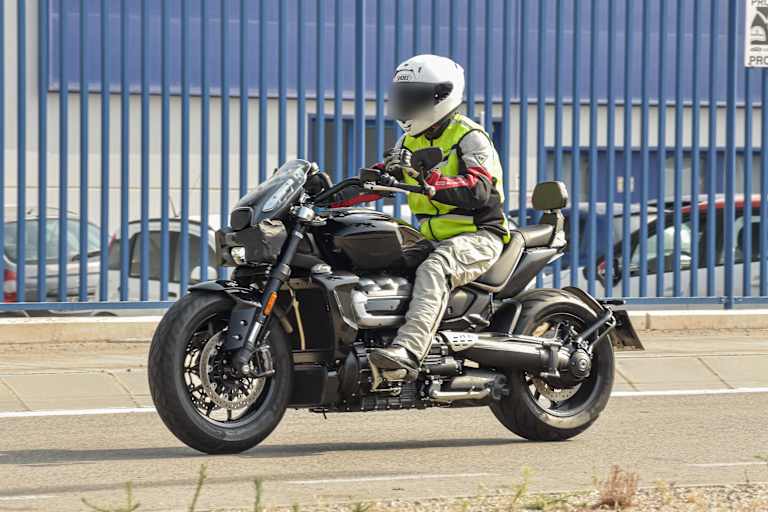
Die Front wird überarbeitet, um Platz für eine Radareinheit zu schaffen
Foto: BMHoehne
Die Front wird überarbeitet, um Platz für eine Radareinheit zu schaffen
© BMHoehne


A displacement of almost 2.5 litres from three cylinders and 225 Newton-metres of torque transmitted to the cardan shaft: The Triumph Rocket 3, by virtue of its powertrain alone, is a flagship for the British brand in terms of both image and technology, and a symbol of the ‘power cruiser’ segment, which in Europe is currently dominated only by the competition from Bologna. At the same time, the current generation of the Rocket 3 is now seven years old.
Seven years during which Triumph has continued to boost performance, from an initial 167 to the current 182 PS. However, the engine’s peripheral components have remained largely untouched, so it is time for a revamp. The engineers at the Hinckley-based brand clearly agree, as they are currently working flat out on a thoroughly revamped Rocket 3. This is suggested by sightings of an early development prototype, which we were able to observe during test rides in Spain. And the innovations that the test riders are assessing for production readiness on the prototype visible in our photos go far beyond mere cosmetic changes: the most obvious change is the front end, although its design on the motorbike in our photos is still largely provisional. However, the British manufacturer will apparently be fitting a radar module there in future, which is likely to serve as the basis for adaptive cruise control and an emergency braking assistant. Triumph is also set to introduce this system to the Tiger 900 and 1200 ranges this spring.
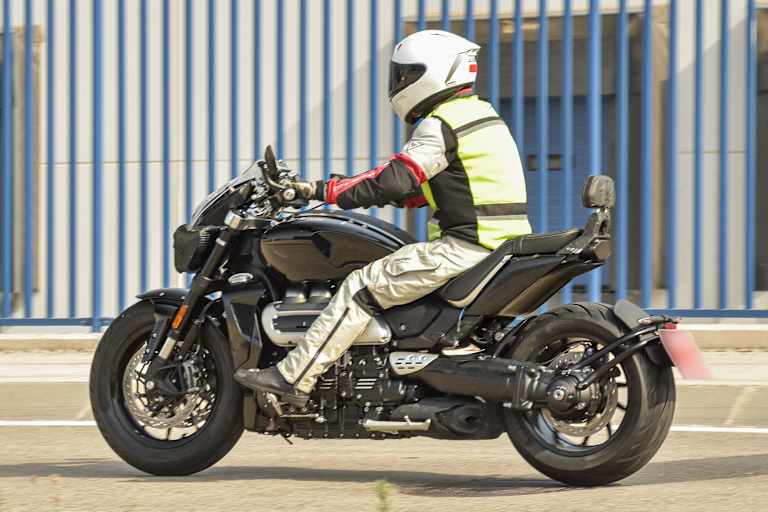
Das Profil bleibt erhalten und damit der Power-Triple - Radar auch am Heck
Foto: BMHoehne
Das Profil bleibt erhalten und damit der Power-Triple - Radar auch am Heck
© BMHoehne
The Rocket 3’s lighting units are also being redesigned as part of this update, although the final design is not yet apparent. In any case, the current, distinctive twin round headlights have had their day. The front fork suggests a semi-active suspension system will be fitted in future. A new bridge is mounted on the fork, on which a higher-mounted handlebar, set at a different angle, ensures improved ergonomics.
A new TFT screen is fitted to the prototype – it is unclear whether its design is already finalised. The redesigned fuel tank flows into a similarly redesigned seat. It sits on a newly constructed rear subframe. Where the rear light is located on the current model, there will in future be an additional radar module, which presumably monitors traffic behind the bike to provide the rider with warnings about, for example, vehicles in the blind spot. Ducati and BMW, amongst others, have long been using systems of a similar design. As with the front wheel, the rear suspension is also new. This is consistent with the fact that the higher passenger backrest at the rear of the prototype, together with the windscreen fitted, suggests that the motorbike shown here is the future GT variant. The radar modules and the semi-active suspension also fit the picture and suggest that Triumph will, in future, be giving the Rocket 3 at least a touch more long-distance capability than is currently the case. With the right set-up, the incredibly powerful triple engine is certainly well-suited to this task. Externally, there are just as few new features to be seen on the bike as there are on the wheels and brakes. It is not yet clear when the British manufacturer will unveil the new version. However, the high proportion of parts that are still provisional suggests it is likely to take more than a year.
Topic of the week
Spanish Grand Prix at the new Madring: track – hit or miss?
The people of Madrid had set their sights high for their city’s first Formula 1 World Championship race since 1981. But have the high expectations for the new Madring mixed-circuit track really been met?
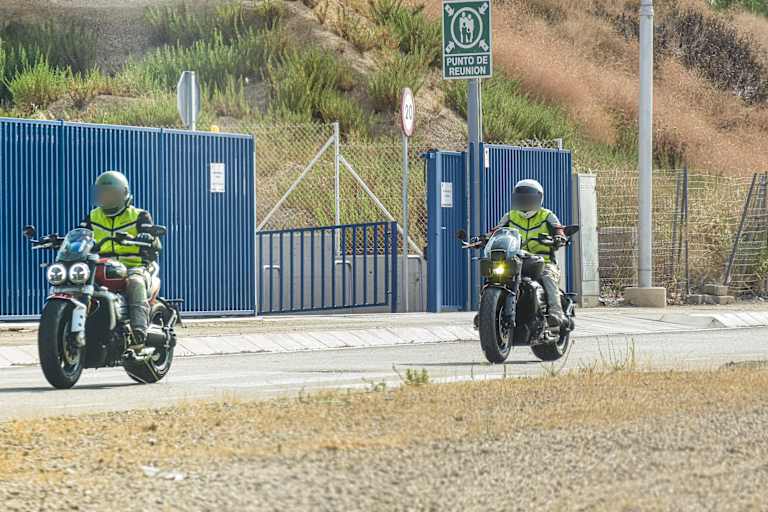
Triumph-Ingenieure vergleichen die aktuelle mit der neuen Rocket-Generation
Foto: BMHoehne
Triumph-Ingenieure vergleichen die aktuelle mit der neuen Rocket-Generation
© BMHoehne
Seen already?
Don't miss out on any highlights: The Speedweek newsletter, sent out twice a week, delivers the latest news, exclusive commentary and all the important dates from the world of motorsports - directly into your inbox
Produkte News
All News

Newest Articles
All ArticlesNew New New New New New New New