
Ducati has built something from scratch: “Took over a shambles in 2013”
In the MotoGP, Superbike and Supersport classes, Ducati is among the frontrunners – for Philipp Öttl, this is the result of years of hard work. That’s why he has mixed feelings about the balance rule.
This article is an automatically generated English version. The

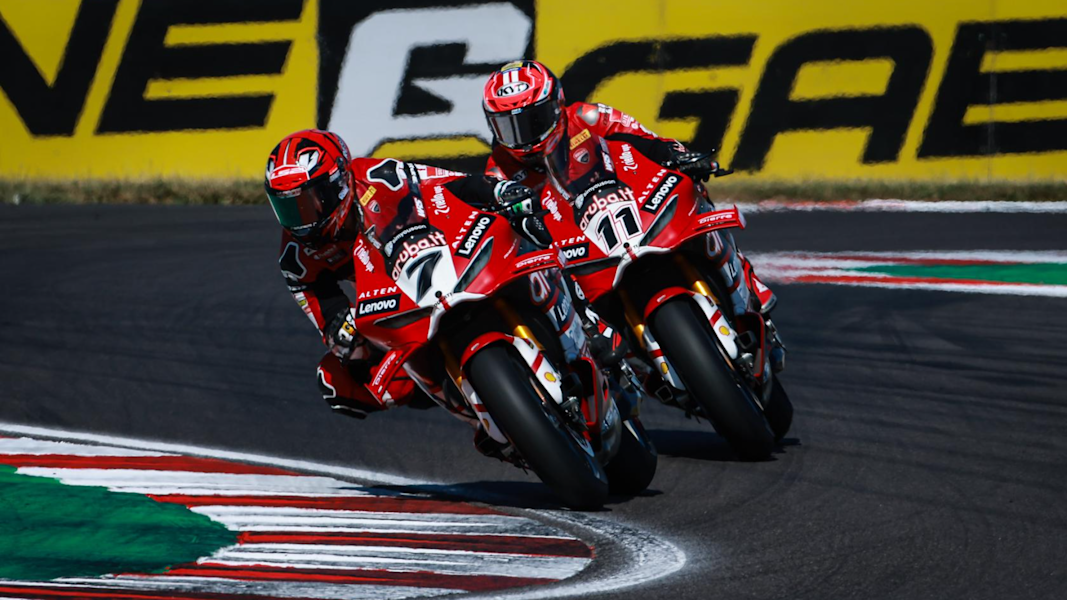
Philipp Öttl auf der Ducati von Feel Racing
Foto: gold & goose
Philipp Öttl auf der Ducati von Feel Racing
© gold & goose


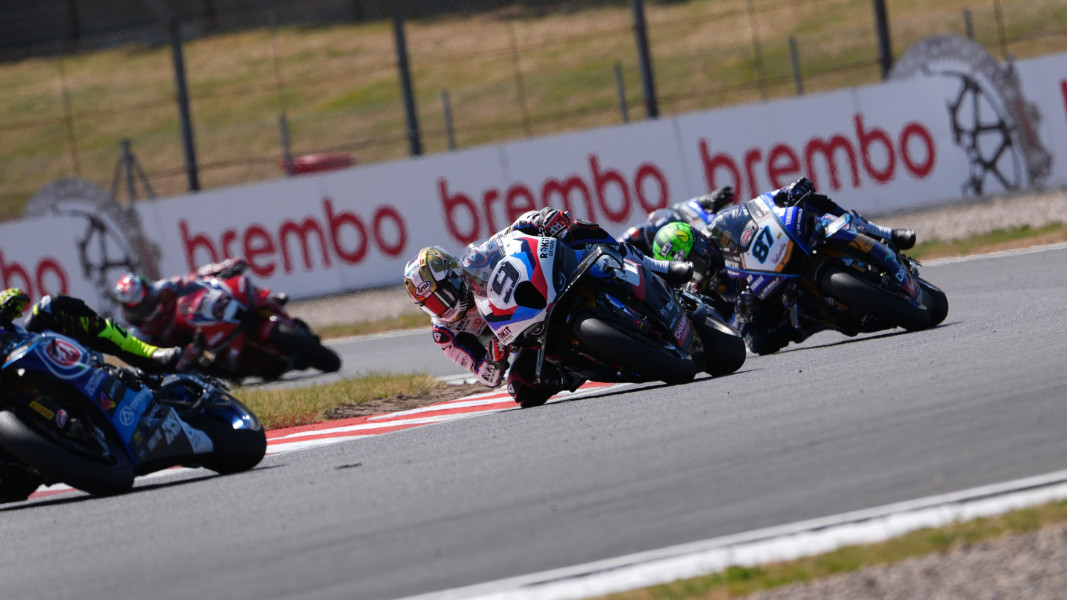
Until 2021, only motorbikes with a specific engine capacity and corresponding number of cylinders were permitted in the Supersport class: four-cylinder engines were limited to 600 cc, three-cylinder engines were allowed to have 675 cc and V2 bikes 750 cc. However, the market changed and manufacturers increasingly responded to customer demand for greater displacement. The regulations became increasingly out of step with this development, and the Supersport World Championship degenerated into a Yamaha Cup with the participation of a few Kawasakis and a handful of MV Agustas.
The introduction of the ‘Next Generation Rules’ from the 2022 season onwards marked a turning point; today’s diversity of brands, with eight manufacturers and extremely exciting races, underlines the wisdom of this move.
A balance system is never fair
The only downside is that the motorbikes are so technically diverse that a sophisticated balancing system is required to ensure a reasonable degree of a level playing field. For each manufacturer, this is achieved not only through a prescribed minimum weight and permitted maximum revs, but also via the permitted throttle opening. It goes without saying that such a solution is not ideal or always fair for every make, every rider and every circuit. As long as there is a Balance of Performance, there will be discussion and debate.
For one thing is also certain: although a great deal of data can be collected today, the rider factor cannot be precisely factored out. The only rider performing consistently at the very highest level this season is World Championship leader Albert Arenas from the Swiss team AS Yamaha, who has stood on the podium 13 times in 16 races.

Philipp Öttl
Foto: gold & goose
Philipp Öttl
© gold & goose
Ferrari came away empty-handed at the Dutch Grand Prix: Lewis Hamilton finished fourth, Charles Leclerc fifth. Afterwards, both drivers were angry, and team principal Fred Vasseur found himself having to explain the situation.
TV program
“Arenas is one of the strongest riders,” notes Philipp Öttl, currently sixth in the World Championship and the second-best Ducati rider in the field. “But the rider factor isn’t factored into the rules; it’s exactly the same in the Superbike World Championship. The Supersport World Championship is relatively well-balanced, so the bikes race well and everyone is more or less up there at the front. But it’s also the case that some are investing heavily whilst others get frustrated because they can’t keep up – even though they’re riding a twelve-year-old bike.”
We can’t even stay on their tail.Ducati rider Philipp Öttl
This is a sore point for the 30-year-old from Ainring near Salzburg: he is well aware of the skills and efforts of Ducati and his Feel Racing team, but he experiences the reality on the track. “The Ducatis are severely restricted by the rules, we have neither good top speed nor strong acceleration. We can’t even stay on their tail. If we start at the front, we ride at the front. But we don’t get into a position where we can overtake anyone. We have to wait for an opponent to make a mistake.”
Ducati has built something up over many years
“Gigi Dall’Igna took over a shambles in 2013,” Öttl explained in an interview with SPEEDWEEK.com. “And how long did it take them to become MotoGP World Champions? Almost ten years, right up to Bagnaia. Ducati has built something up in the MotoGP and Superbike World Championships and is quite rightly demanding that the others also put in ten years of effort. Although in motor racing, there’s never any guarantee that it will actually pay off. I’d also prefer to be standing on the podium and know that things will work out eventually – but not every weekend. A slightly different perspective on Ducati would be desirable. We need a bit more power in the lower rev range, not at the top end. I don’t hold it against the rule-makers too much, though, because everything is so difficult to measure and yet still plays a role – such as aerodynamics, for example. You can’t just look at the power and torque curves on the test bench.”
Seen already?
Don't miss out on any highlights: The Speedweek newsletter, sent out twice a week, delivers the latest news, exclusive commentary and all the important dates from the world of motorsports - directly into your inbox
Highlight videos
ServusTV media libraryIrre Aufholjagd & Dominanz pur!
12. Juli | 1:32 Min
12. Juli | 4:50 Min
12. Juli | 1:24 Min
11. Juli | 1:31 Min
Drama kurz vor der Zielflagge!
14. Juni | 1:32 Min
14. Juni | 1:30 Min
13. Juni | 1:32 Min
31. Mai | 1:31 Min
WorldSBK News
All news


Newest articles
All articlesNew New New New New New New New New New


