
Management offensive: The MotoGP sponsors are taking another step
It’s not just the MotoGP grid that’s set for a number of personnel changes in 2007. SPEEDWEEK.com columnist Michael Scott offers his sharp take on the ‘middle management offensive’.
This article is an automatically generated English version. The

Show must go on: Die MotoGP ist im Entertainment-Geschäft
Foto: Gold and Goose
Show must go on: Die MotoGP ist im Entertainment-Geschäft
© Gold and Goose


Last week, the bigwigs at the company – which is no longer called Dorna but, following its takeover by Liberty Media last year, is now known as the MotoGP Sports Entertainment Group (MSEG for short) – made a triumphant announcement. A whole host of new appointments were revealed.
Four new additions to the management team! All of which say a great deal about what has happened to the World Championship and what continues to happen. And let no one claim that this makes the organisation a bit top-heavy. These management heavyweights have been carefully selected from the world of business and sport. Or, if you will, the sport business.
Money, money, money
Actually, we should stick to the official term: sports entertainment. Competitions as profit centres, whose unique selling point is the sporting performance of super-talents, which is transformed into money through risk, sweat and top-class performance. These people’s interest in this inspiring talent lies solely in profit. Hefty margins, value appreciation – and a great deal of money. Sport and athletes serve to line their pockets. Fans exist for the same reason.
The four newly appointed executives hold impressive-sounding titles: Chief Strategy Officer, Chief Revenue Officer and so on. All four come from various lucrative sports: the American NFL (football), the English Premier League (Tottenham Hotspur and Manchester United), Formula 1 and the UFC (Ultimate Fighting Championship – I had to Google it first. The images made me nervous) – as well as from sectors of pure entertainment: Discovery and Warner Brothers.

MotoGP-Boss Carmelo Ezpeleta (li.) mit Derek Chang (CEO Liberty Media)
Foto: Gold and Goose
MotoGP-Boss Carmelo Ezpeleta (li.) mit Derek Chang (CEO Liberty Media)
© Gold and Goose
Topic of the week
Nicolo Bulega: Toprak’s successor will not fail in MotoGP
The Italian Nicolo Bulega is the first rider to have won the world title in both the Supersport and Superbike classes; from 2027, he will be racing in MotoGP. His performances this season are second to none.
TV Program
The influence of the owner, Liberty Media, is now clearly evident, not least because, for the first time in several years, those appointed do not come from the immediate or extended family circle of Dorna boss Carmelo Ezpeleta. This is the clearest sign that MotoGP has transformed from the personal fiefdom of the Spanish mastermind into a much more broadly based commercial enterprise. (This is not intended as a dig at Ezpeleta senior. After all, it was his vision that brought the sport to where it is today in the first place.)
What’s the catch?
So what? A successful business on a grand scale can’t possibly harm MotoGP and the Superbike World Championship, can it? Even if it steers the sport away from its traditional European home to distant Asian countries, where far more mopeds are sold.
Even if top riders are treated like trained monkeys, parading around the circuits on flatbed lorries in tacky displays, when they should actually be preparing for the GP race. Even if the popular venue at Phillip Island is scrapped in favour of a potentially sterile street circuit in Adelaide.

Schlägt große Wellen: Der Umzug der MotoGP nach Adelaide (2027)
Foto: Adelaide Grand Prix
Schlägt große Wellen: Der Umzug der MotoGP nach Adelaide (2027)
© Adelaide Grand Prix
And even if the whole thing has a completely alien feel to it, compared to the very mature club races that MotoGP resembled not so long ago. This latest development follows Dorna’s long and largely successful campaign to bring the entertainment aspect of the sport to the fore.
A key milestone was the threat to exclude factory teams (we recall the production-based CRT bikes of 2012 and 2013). This forced Honda, Yamaha and the like to offer factory-spec bikes to customer teams, as we see today.
Numerous rules ensure excitement in every respect
This was followed by a whole series of simplifications to the technical regulations. Standard tyres and standard electronics are probably the most important, but there are further details: standard engine specifications … four cylinders with a fixed maximum bore, as well as pages of specifications on gear ratios and chassis.
Then came the engine development freeze, a rule that required tinkering with the concession system to restore technical and other freedoms for struggling manufacturers. One of the stated reasons was cost control, but just as important was that it levelled the playing field. This made the World Championship races at the very top more evenly matched (following the same principle, the Bolshoi Ballet could have fitted lead weights into its dance shoes so that less talented dancers could keep up with their performances. But that’s a completely different matter).

Es geht eng zu: In Sachen Spannung hält die MotoGP Wort
Foto: Gold and Goose
Es geht eng zu: In Sachen Spannung hält die MotoGP Wort
© Gold and Goose
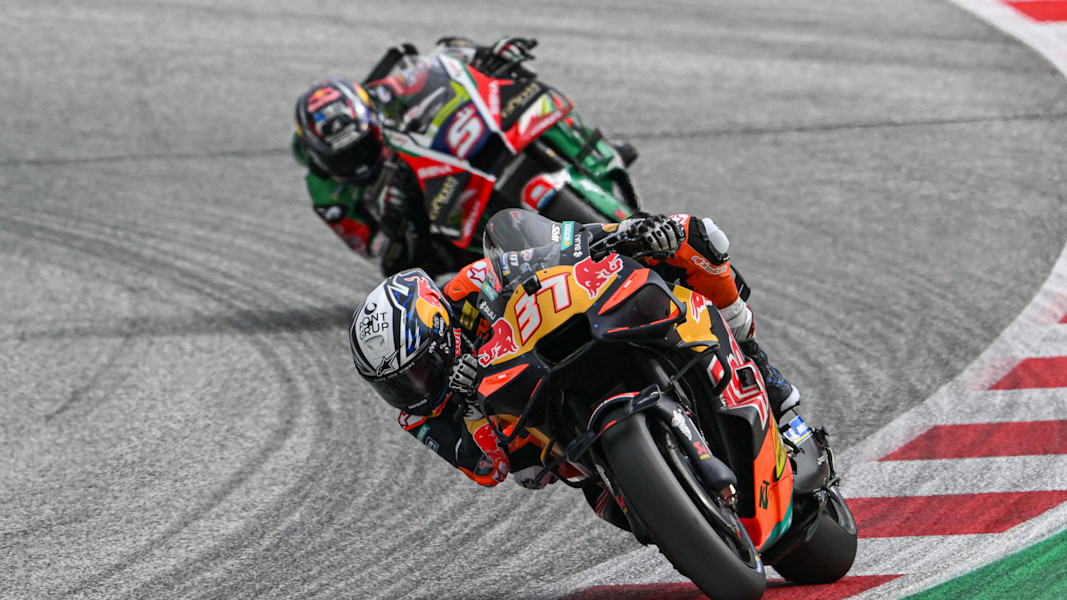
The best part was that world-leading television technology brought out the very best in what we already knew to be the most exciting motor sport in the world. And let’s be honest: it worked. You only have to look at this year’s championship – the most exciting and varied in history. After 14 of 22 races, the frontrunners were tied on points at the top. What’s more… as we enter the final third of the season, there are still four or five potential winners in the running. That’s unprecedented.
So where’s the problem? I’ve no idea, to be honest. It just seems as though, alongside the gains, something has been lost. Something that’s hard to define. Perhaps it’s authenticity, or humanity. Something that puts the athletes, who risk so much, more at the centre – just as it used to be, back when racing wasn’t yet inundated with strategies, financial directors and an army of success-hungry middle managers.
The best approach is to welcome the investors and simply let them get on with it. The growth of the sport will balance out the top-heavy structure. And we should bear in mind that motor racing has never been better – or, in fact, safer. Just think about who’s paying for it. You and I.
Seen already?
Don't miss out on any highlights: The Speedweek newsletter, sent out twice a week, delivers the latest news, exclusive commentary and all the important dates from the world of motorsports - directly into your inbox
Highlight Videos
ServusTV Media Library
26. Sept. | 12:31 Min
22. Sept. | 3:57 Min
„Haben gezittert bis zur letzten Kurve"
20. Sept. | 4:01 Min
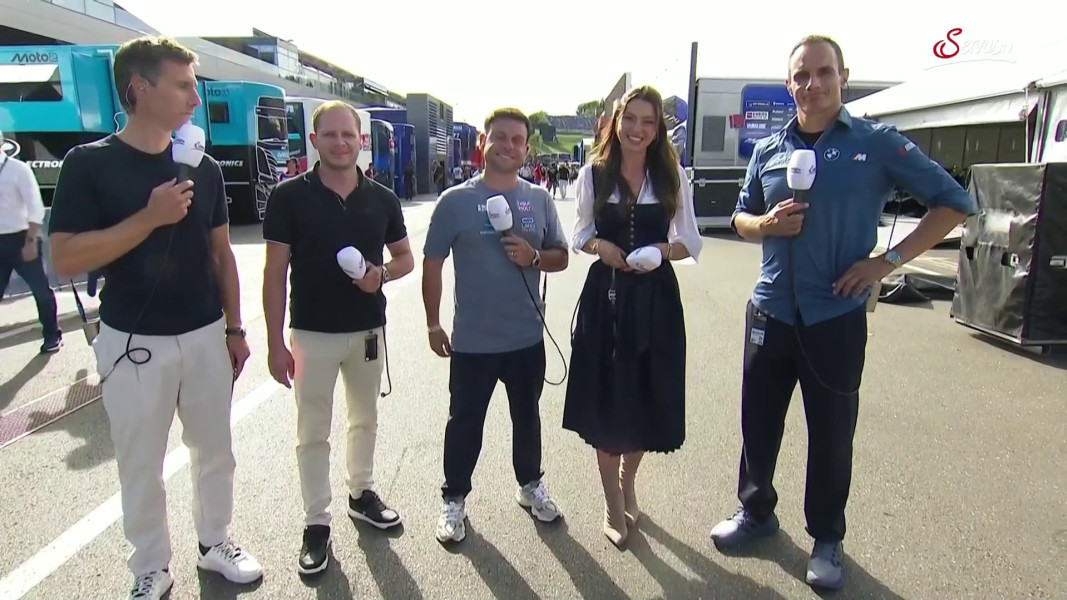
20. Sept. | 41:28 Min
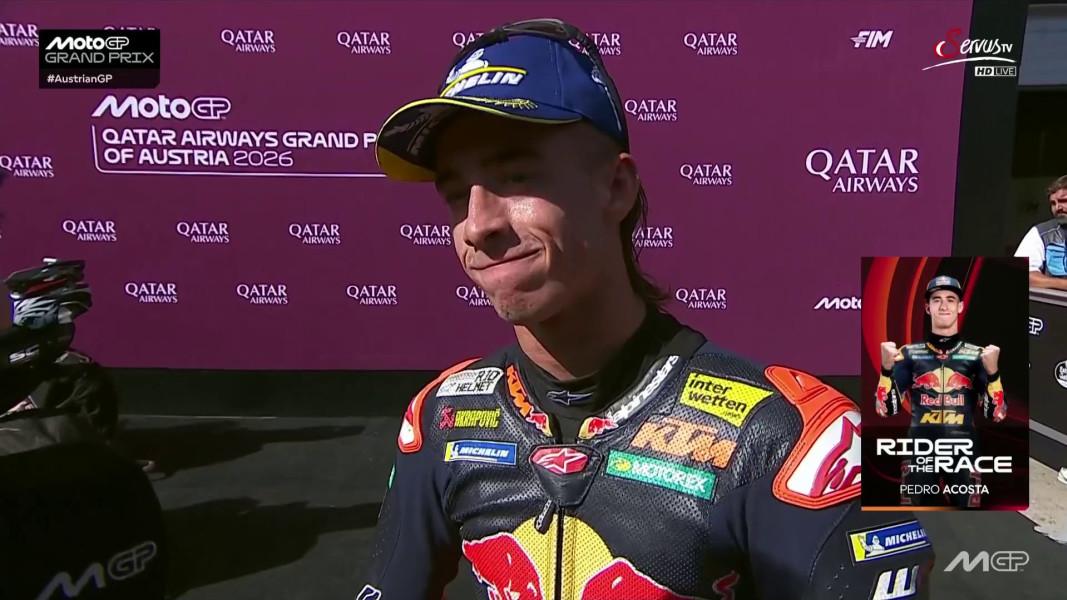
Pedro Acosta: „Danke an alle Fans“
20. Sept. | 5:36 Min
20. Sept. | 3:52 Min
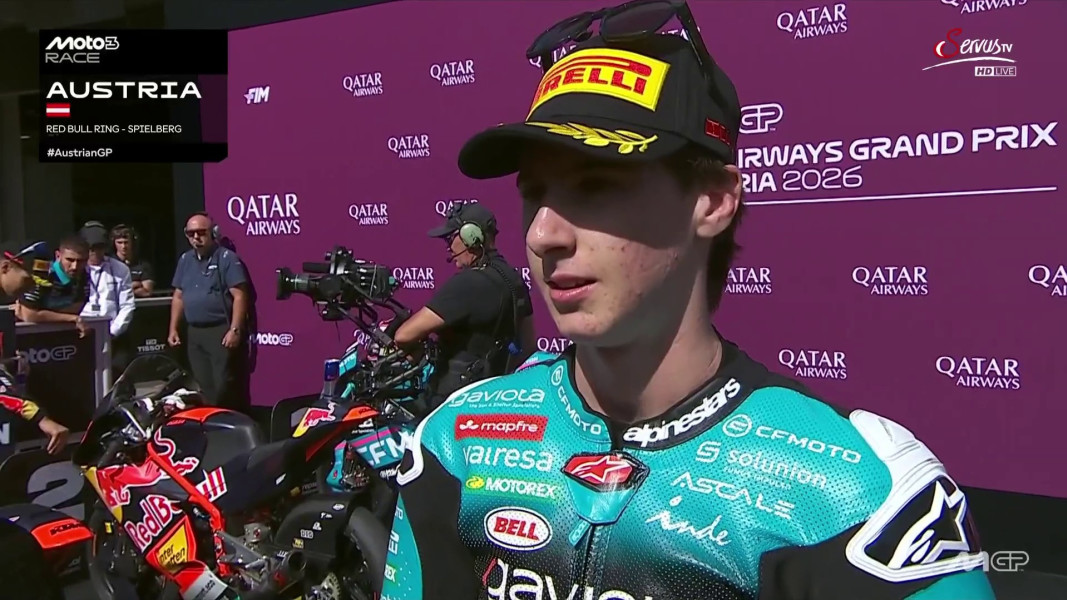
Quiles: „Es war toll, in Österreich zu fahren“
20. Sept. | 3:15 Min
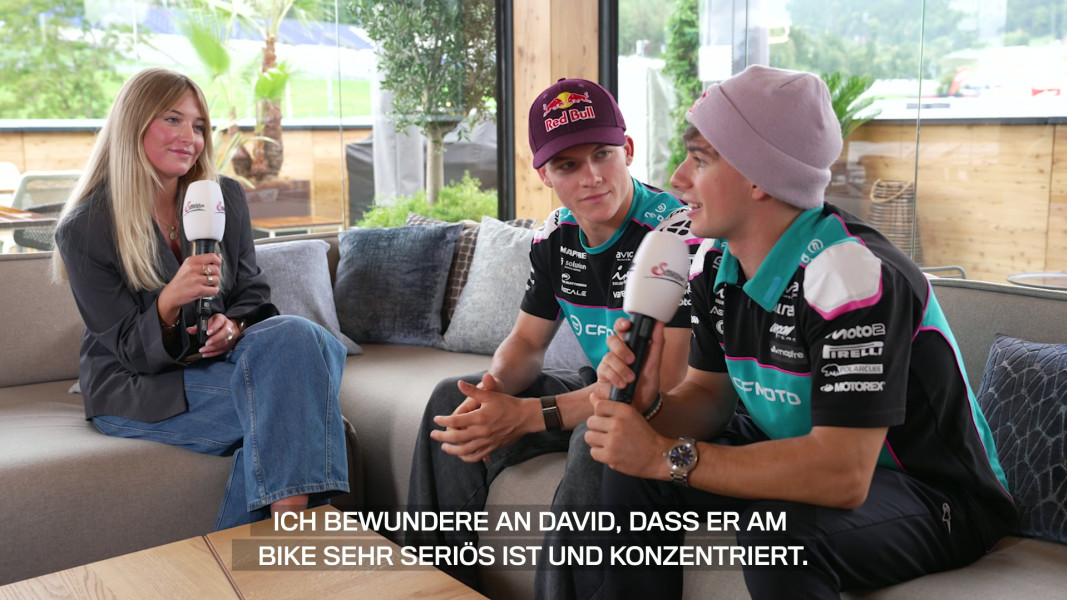
Holgado & Alonso beantworten eure Fragen!
20. Sept. | 4:01 Min
MotoGP News
All News


Newest Articles
All ArticlesNew New New


