
Why Intact rider Senna Agius could be the next big MotoGP star
MotoGP is undergoing a generational change for 2027 and Australia's newest Grand Prix hopeful has the potential and attributes to stand out from the crowd.
This article is an automatically generated English version. The

Moto2-Erfolgspilot Senna Agius
Foto: Gold and Goose
Moto2-Erfolgspilot Senna Agius
© Gold and Goose


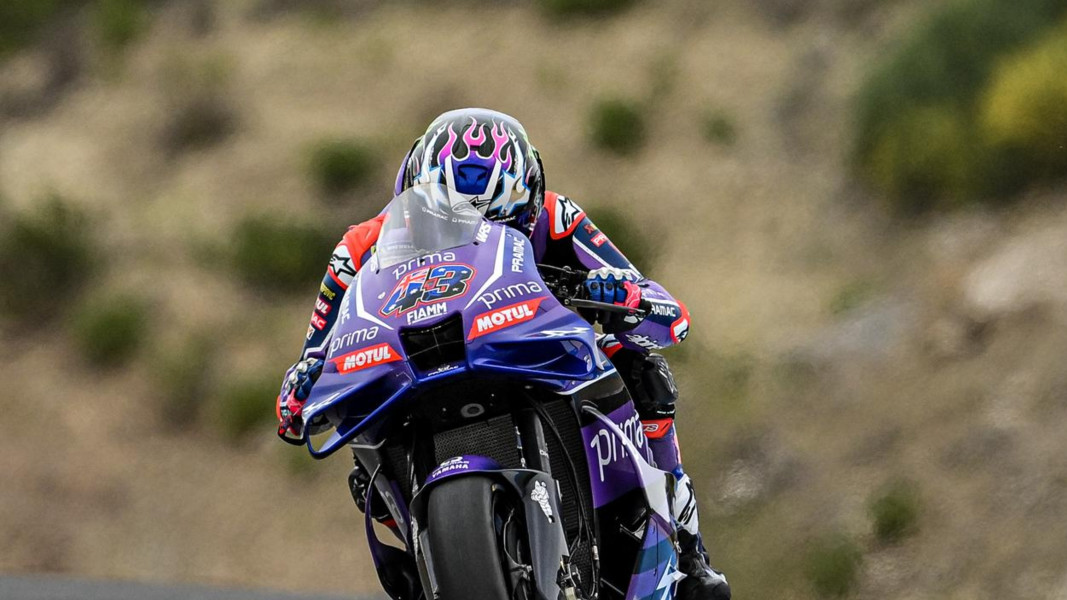
We meet up-and-coming Moto2 talent Senna Agius - the latest name on the verge of making the jump to MotoGP - in the dark, industrial-looking hospitality area of the Liqui Moly Dynavolt Intact GP team in the Mugello paddock, where he is studying a bottle of red wine. The place is almost empty before the lunchtime rush, and the tall, wide-eyed 20-year-old (he turns 21 next week) takes a photo of the label with his mobile phone. We ask him if he's a wine connoisseur and all we get is a blank stare. "I have an app that scans the labels. I'd like to see where the wine comes from and how much it's worth." Unsurprisingly, Senna doesn't drink alcohol, but it's immediately obvious that we're dealing with a curious mind.
Agius is eloquent, thoughtful and speaks softly. Intellectual. Young people are forced to grow up quickly in the fast-paced, sometimes unpredictable, sometimes cruel world of elite motorsport, and the Andorra-based Australian has in common with other Moto2 peers that he is older and more mature than his age would suggest.
Outside the Intact GP transfer window, MotoGP is buzzing. Behind closed doors, contracts are signed and sealed at breakneck speed - between riders and teams, teams and manufacturers as well as investors, teams and the MotoGP Group. The paddock always struggles to keep its biggest secrets to itself and it seems as if most of the high-calibre changes have already been finalised. But since Mugello, the final places on the MotoGP grid for 2027 and 2028 have been the hottest topic.

Nach acht Events auf Platz 4 der Moto2-WM – Senna Agius
Foto: Ronny Lekl
Nach acht Events auf Platz 4 der Moto2-WM – Senna Agius
© Ronny Lekl
"Nothing has been decided yet," Tech3 Team Principal Günther Steiner admitted on Thursday in Tuscany. "But most [other] teams have signed riders, so our candidates have nowhere else to go! We are pretty relaxed. When you're last in line, the choice is yours."
Topic of the week
Spanish Grand Prix at the new Madring: track – hit or miss?
The people of Madrid had set their sights high for their city’s first Formula 1 World Championship race since 1981. But have the high expectations for the new Madring mixed-circuit track really been met?
TV Program
KTM and Aprilia satellite teams Tech3 and Trackhouse appear to be the last available refuges, while names like Alex Rins (30 years old), Jack Miller (31), Luca Marini (28), Brad Binder (30) and Franco Morbidelli (31) are all on hold and waiting. Other riders such as Joan Mir (28), Enea Bastianini (28) and Maverick Viñales (31) have been brought into the conversation, but with little conviction. The addition of 25-year-old Mugello Saturday Sprint winner Raul Fernandez to the list - potentially ending a three-year tenure at Trackhouse - caused a stir, but also confirms that MotoGP riders need to have several irons in the fire as the series becomes just as much of an entertainment product.
In the focus of Günther Steiner
Moto2 graduates are about to make the leap. "We can try with a Moto2 rider; that could be an opportunity for us," added Steiner. Although it has yet to be confirmed, rookies Daniel Holgado, Izan Guevara and David Alonso are likely to compete in the premier class from 2027. The Spaniard and the Colombian have two world championship titles between them and have each won GPs in Moto3 and Moto2.
Senna Agius is increasingly associated with his contemporaries making the leap to the top, and this is a topical and exciting subject as his team-mate Manuel Gonzalez confidently leads the early stages of the Moto2 World Championship for the second year running. The Spaniard dominated the Italian Grand Prix and has three wins to his name, while he has only missed out on the podium once so far in 2026. The 23-year-old Gonzalez completed an impressive mid-season MotoGP test for Trackhouse at Aragon last year to replace the injured Ai Ogura, but much to his reported frustration, he has yet to be given a chance in MotoGP.
Although his 2025 title challenge faded in the second half of the season against a struggling Diogo Moreira, the runner-up has an iron focus and an approach that arguably eclipses Holgado and Guevara's pedigree. Alonso has struggled with a right shoulder injury so far in 2026, but the Colombian's outgoing personality and marketability are strong assets.

Senna Agius hat sich in der Moto2-WM durchgebissen
Foto: Ronny Lekl
Senna Agius hat sich in der Moto2-WM durchgebissen
© Ronny Lekl
Perhaps Manuel Gonzelez's profile just doesn't fit the bill, and the fact that he holds a Spanish passport is likely to play a part, with MotoGP potentially losing its two native English speakers for 2027 (note: there has been no full-time Briton in the series since 2020 and no American since 2015). The MotoGP group is known to have supported certain riders and teams in the past to make the field more diverse.
Senna Agius credits Gonzalez with part of the rapid evolution of riding style in Grand Prix, despite the latter only contesting his third full-time year in Moto2, and the two are linked by their alternative, non-traditional route into MotoGP: Gonzalez via World Supersport and Supersport 300 and Agius via the European Moto2 Championship. Similar to the current Gresini Ducati rider Fermin Aldeguer, who used the unusual route via MotoE and Moto2 riders to make his breakthrough.
The big opportunity for Moto2 riders
In terms of recruitment, manufacturers still value proven MotoGP results and experience (and this will become even more important when they start breaking in the 850cc bikes from 2027), but Moto2 riders will arguably have the easiest transition ever thanks to the reduction in displacement and Pirelli tyres.
Agius and his teammates will know the Italian tyres inside out, while the others will have to get used to the new situation after a decade of riding Michelin tyres in MotoGP. For the potential new factory rookies (Guevara and Alonso), while they still need to develop mechanically and familiarise themselves with the electronics, 2027 (at least initially) is likely to prioritise rider performance over aerodynamic or technical superiority - and that's great news for Moto2 riders, who will need to be at the top of their game to succeed in arguably the tightest category in Grand Prix racing.
Agius has made rapid progress in his current class. He scored a podium finish in his rookie season in 2024, doubled that tally and added two wins in 2025; he already has two victories to his name in 2026. He has moved up from 18th to 10th place and is now fourth in the world championship. The potential is beyond question. The decisive factor is that the timing is now favourable. "To take the plunge next year? I'd say I'm not quite ready at the moment," said Agius when we interviewed him in the summer of 2025. "The more competitive you can be in Moto2 and the better shape you're in when you compete there, the better." Two consecutive victories in Brazil and the USA this season have further underlined his qualities, as Moto2 remains very inconsistent and the winners and podium finishers are hard to predict.
Senna's background and career history are standout features in a 2027 MotoGP entry list that - aside from a Brazilian, a Turk, a Japanese rider and two French riders - could be largely made up of Spaniards and Italians. These are the obvious differences. Agius has made it this far mainly thanks to his skill and his drive to improve. One example of this is his eager, almost obsessive endeavour to refine his technique for the even competition conditions (only two chassis brands) of the 765cc Triumph-powered Moto2 bikes.
"My technique on the bike has improved a lot. I had extreme strengths and extreme weaknesses at the same time, and sometimes they cancelled each other out." For example? "Going into the corner with the rear and not being decisive enough with the front wheel. I wasn't the best at corner entry and in the rookie season, when you don't qualify at the front, I struggled a bit. If you have no clearance with the front wheel, you can't do crazy overtaking manoeuvres, and in Moto2, if you don't overtake in the first half of the race, you get overtaken!"
Senna Agius the perfectionist
Like the outstanding top riders, Agius has a feel for the subtleties and behaviour of his bike. In the Grand Prix, many riders are determined, many are brave, many brake late and many are calculating and analytical. Many also improve their ability to conserve and make the most of tyre life. So those who make the difference have to refine the smallest details. This is exactly where Agius seems to shine.
"I had to work a lot on my braking technique and corner entry angle to turn the bike over the front wheel and get it off the edge of the tyre to be competitive," he explains. "A few times in 2024, I suddenly completely overloaded the tyres because - like in Germany when I was with the top riders - I just had to ride like that to keep up with them. You have to set up the bike precisely and that was something I wasn't really good at. Last year I improved and this year I made a big step forward over the winter by just focusing on corner entry and technique with the front wheel."
"When Manu joined the team in 2025, his style was completely focused on the front of the bike and he is consistently the best - or the most efficient - when it comes to coming out of lean angles without really spending much time in maximum lean angle. It manages this lean angle and then turns with the chassis. That's why he's always consistent in the races and you never see him have a massive dip."

Agius: Platz 3 beim Ungarn-GP am Balaton
Foto: Gold and Goose
Agius: Platz 3 beim Ungarn-GP am Balaton
© Gold and Goose
Senna Agius appreciates motocross as much for the mental demands as for the handling and physical side of the sport. "In Moto2, it's important to be consistent on every lap of the race. That's why motocross and off-road are an important part of my training, because you need enormous concentration to ride consistently on every lap. Every metre of the track is different. If you miss the ideal line or go off track, you crash. You're constantly searching for grip. On a racetrack, on the other hand, you're fighting for position on the tarmac. If you get too far out, nothing really happens and you don't have to fear any consequences. In motocross, you have to be perfect."
He comes across as a perfectionist, so it's no surprise when Agius describes his racing mode. "It's strange," he says with a half-smile, "but for some reason I'm not 'present' in a race. I feel like I'm watching myself. It doesn't feel like it's from a first-person perspective; that's what I'm saying. I anticipate things that I see. It's a strange state of mind, and I've only ever felt it on a racing bike."
Concentrating on the job - Agius himself talks little about MotoGP
Plans and contracts will be announced publicly in a few weeks. Given his proximity to Gonzalez, does he understand the Spaniard's predicament and the looming realisation of timing and fate? "Understanding is perhaps not the right word. Everyone has their own difficulties. His is that he has the same nationality as other riders. He has achieved success, but I come from the other side of the world and that means you can be taken advantage of and not do the right thing because you don't know. You can make mutual friends and be influenced by people you meet in your career, but nobody tells you where to live, what to do and what teams to start in. I've swallowed shit for years. I think I sympathise with him because it's a tough moment ... but we all have our own problems."
For now, Agius is trying to dampen the rumours and his own anticipation of the move to MotoGP. Adjusting to the emotional highs and lows of the sport is another part of his intensive training. "If I had to name my biggest goal, it would be to ride in MotoGP next year," he admits. "I'm looking forward to talking about it, but it's also closely linked to what I'm doing in Moto2 at the moment and if I don't fully focus on that, the results won't come and it will jeopardise my chances. It's a very contradictory thing."
Seen already?
Don't miss out on any highlights: The Speedweek newsletter, sent out twice a week, delivers the latest news, exclusive commentary and all the important dates from the world of motorsports - directly into your inbox
Highlight Videos
ServusTV Media Library
Andrea Iannone 1on1: Neuer Job für „The Maniac”
19. Sept. | 3:08 Min
Deutsch lernen mit Professor Rammerstorfer
18. Sept. | 2:26 Min
Red Bull Ring 2020: Erinnerung an Horror-Crash
18. Sept. | 3:21 Min
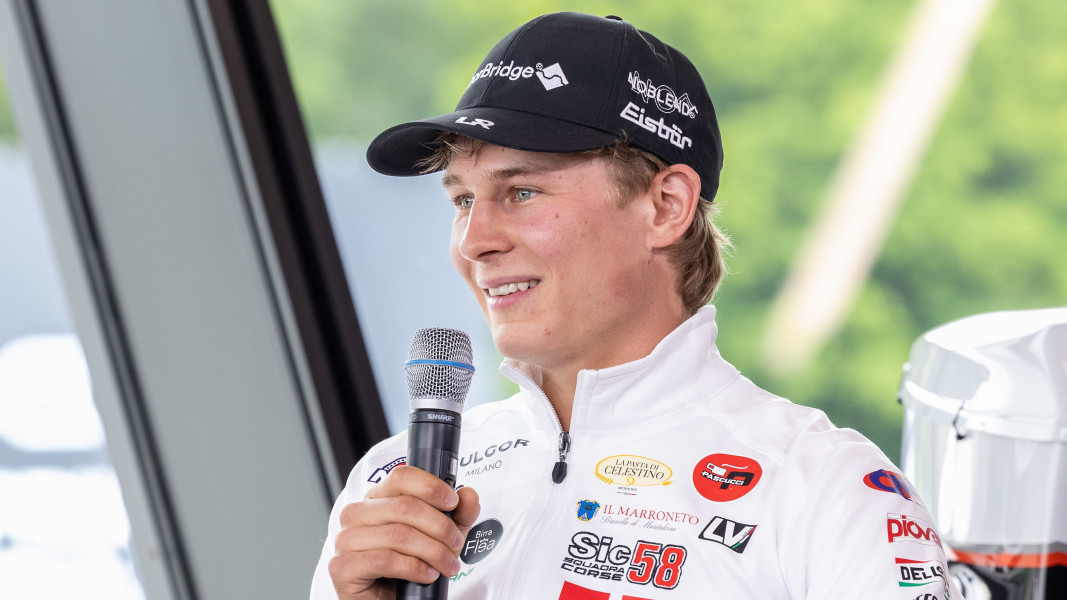
Mit Leo Rammerstorfer in der SIC58-Box
18. Sept. | 2:35 Min
17. Sept. | 13:20 Min
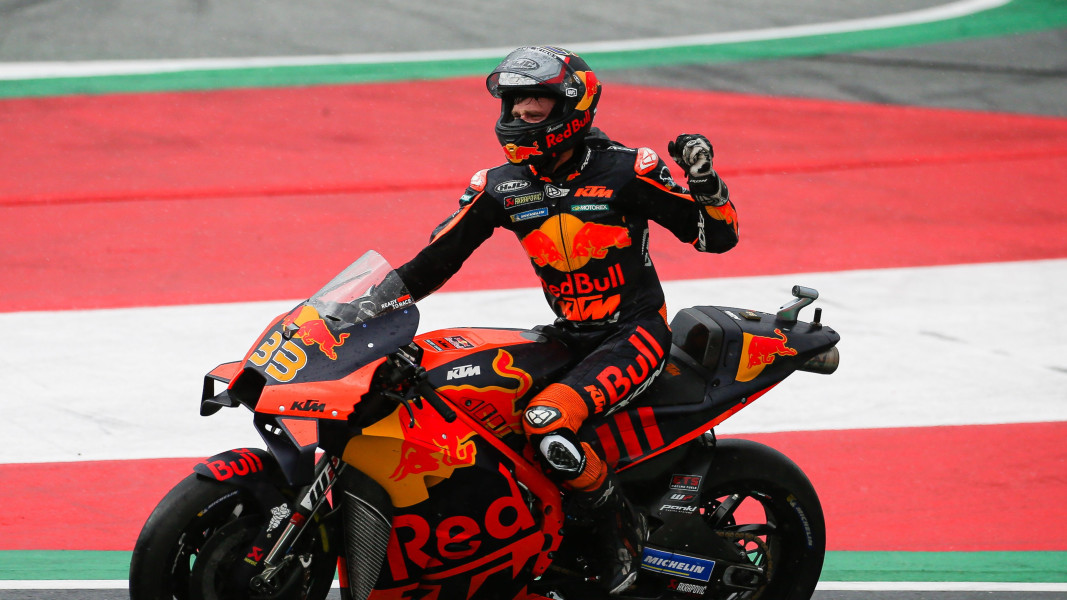
Red Bull Ring 2021: „Big Balls“ Binder!
16. Sept. | 1:38 Min
Misano: Die Tops & Flops des Wochenendes
13. Sept. | 6:15 Min
13. Sept. | 4:26 Min
Events
All MotoGP EventsPast Gran Premio de Aragón
Motorland Aragón, Spanien 28.–30.08.2026Past Gran Premio di San Marino
Misano World Circuit Marco Simoncelli, Italien 11.–13.09.2026Live
Motorrad Grand Prix von Österreich
Red Bull Ring, Österreich 18.–20.09.2026Next up Grand Prix of Japan
Twin Ring Motegi, Japan 02.–04.10.2026Pertamina Grand Prix of Indonesia
Mandalika International Street Circuit, Indonesien 09.–11.10.2026

Past Gran Premio de Aragón
Motorland Aragón, Spanien 28.–30.08.2026Past Gran Premio di San Marino
Misano World Circuit Marco Simoncelli, Italien 11.–13.09.2026Live
Motorrad Grand Prix von Österreich
Red Bull Ring, Österreich 18.–20.09.2026Next up Grand Prix of Japan
Twin Ring Motegi, Japan 02.–04.10.2026Pertamina Grand Prix of Indonesia
Mandalika International Street Circuit, Indonesien 09.–11.10.2026
MotoGP News
All News


Newest Articles
All ArticlesNew New New New New New New New New


