Less power, artificial balance: the BSB as a model for the Superbike World Championship?
Less power, more equality of opportunity: the BSB is revamping its technical package for 2027. The concept could also prove of interest to the Superbike World Championship if larger engines are permitted from 2030.
This article is an automatically generated English version. The
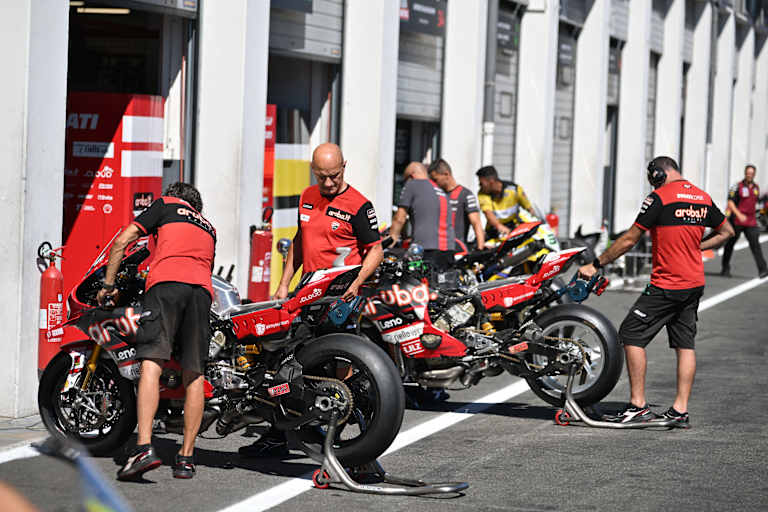
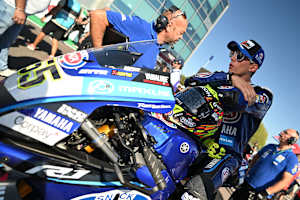
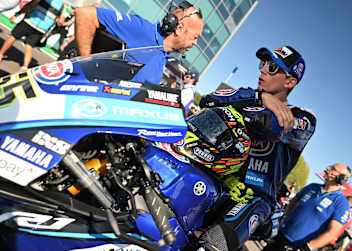
Superbike-Zukunft: Werden die verschiedenen Bikes künstlich angeglichen?
Foto: Gold & Goose
Superbike-Zukunft: Werden die verschiedenen Bikes künstlich angeglichen?
© Gold & Goose


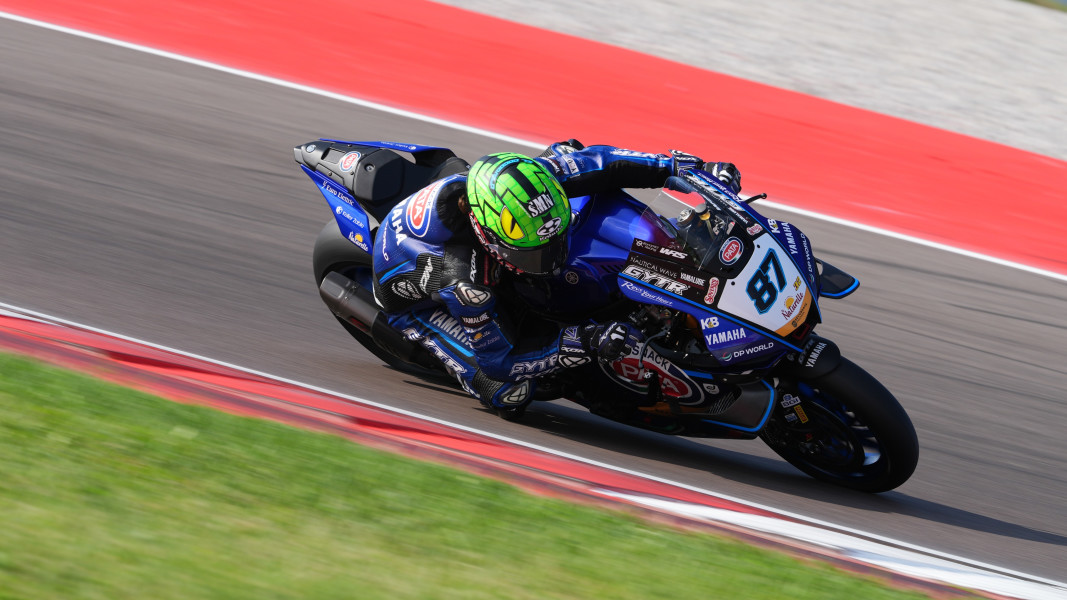
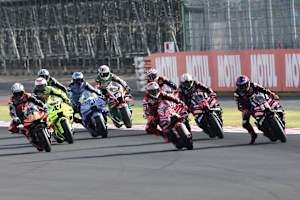
The British Superbike Championship is embarking on a fundamental technical overhaul for 2027. With its ‘Next Generation’ platform, the BSB aims to reduce performance disparities between the motorbikes, offer more manufacturers a realistic chance of success and keep costs in check. This concept could serve as an interesting model for the Superbike World Championship.
Behind this overhaul lies a trend that also affects the World Championship: the range of new 1000cc supersport bikes is shrinking. At the same time, the available motorbikes are increasingly diverse in terms of their age, engine designs and performance potential. The BSB is responding to this with a Balance of Performance, similar to that already in place in the Supersport Next Generation and Sportbike categories.
At the heart of the system is new electronics from Mectronik, which replaces the BSB’s previous standardised control unit. A torque-based engine management system is designed to ensure that every approved model operates within a defined performance window.
Less power than the production models
The BSB cites a power output of around 200 bhp – equivalent to approximately 203 PS – as a starting point. However, it is not just peak power that is crucial: torque delivery across the entire rev range is also to be controlled. As soon as race data becomes available, the initial standardisation of engine power is to be followed by a more comprehensive standardisation of actual performance.
On the traditional British race circuits, some of which are very compact, limiting the power potential is a sensible move. At the same time, it is intended to reduce the strain on the engines, extend their service life and minimise the need for replacement units. The series anticipates this will deliver a significant cost advantage.
Topic of the week
A stuttering start to the Bahrain Grand Prix: the FIA narrowly avoids a fiasco like the one in Indianapolis in 2005
Fans could hardly believe their eyes at what they witnessed at the Bahrain Grand Prix: cars crawling along, racing cars that simply came to a standstill. The FIA narrowly avoided a fiasco like the one at Indy in 2005.
TV Program
The BSB also intends to differentiate in terms of the permitted level of technical modification. Modern superbikes are to remain significantly closer to their production specification. Older models, on the other hand, may be fitted with defined components where these are necessary to achieve the specified performance window.
“The aim is to create an environment in which a significantly wider range of manufacturers can realistically compete. We want to reduce the need for costly development whilst enabling teams and riders to make a difference,” explains MSV Managing Director Jonathan Palmer. “Our aim is for every brand represented to have the potential to compete at the front with the right combination of team and rider.”
BSB changes its approach: driver aids to be permitted
Another significant change concerns driver aids. The new package includes traction control based on inertial sensors, as well as anti-wheelie and launch control. The controlled introduction of these systems is also intended to make it easier for riders to move up from junior classes or other championships.
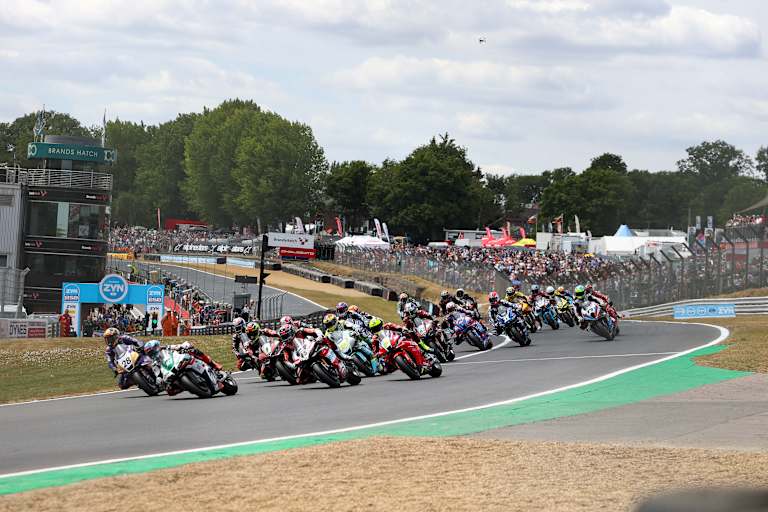
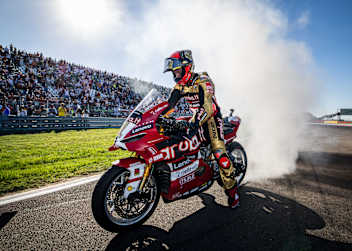
Die Britische Superbike-Meisterschaft steht vor einem Neustart
Foto: BSB
Die Britische Superbike-Meisterschaft steht vor einem Neustart
© BSB
BSB Series Director Stuart Higgs speaks of a far-reaching fresh start: “The changes represent a fundamental reorientation of the championship. We are utilising tried-and-tested technical principles to strengthen the breadth of competition between manufacturers, teams and riders once again. This is not the first time the BSB has taken the necessary steps to develop and introduce new sporting and technical solutions.”
What does this mean for the Superbike World Championship?
The World Superbike Championship would therefore do well to take a closer look at the UK. From 2030, the
However, a larger displacement does not automatically mean that all manufacturers will have to compete with 1,200 cm³ engines in future. Rather, engines of varying sizes with different power and torque characteristics could come up against one another. To ensure fair competition, appropriate balancing tools would be a logical addition.
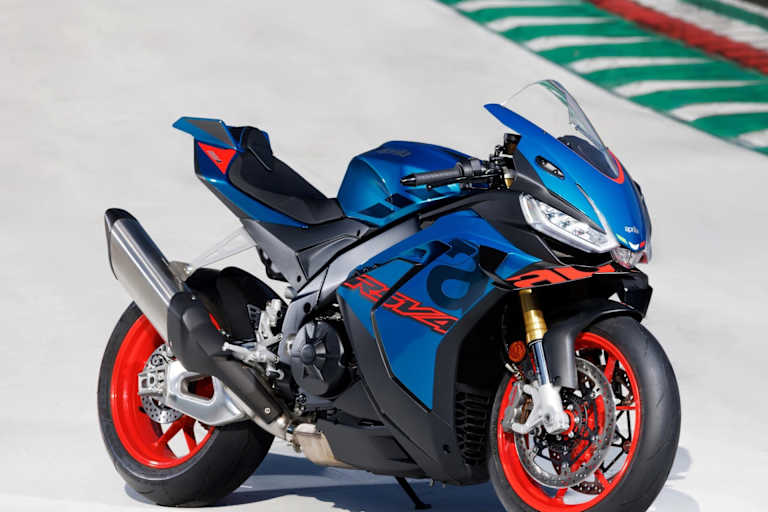
Die Aprilia RSV4 hat 1099 ccm
Foto: aprilia
Die Aprilia RSV4 hat 1099 ccm
© aprilia
The World Championship already employs measures to level the playing field between manufacturers. Plans for 2027 include, amongst other things, a manufacturer-specific rev limiter combined with a fuel flow restriction. A torque-based system modelled on the British approach would be another possible way of bringing together different production-based concepts.
There has been no announcement as yet regarding the adoption of the BSB package. Nevertheless, the idea behind it can be aptly described as ‘NextGen Superbike’: a wider variety of standard production motorbikes is to become competitive, without the most powerful or the most expensively developed package alone setting the standard.
From 2027, the BSB will have to demonstrate how well this ambition can be put into practice. According to those in charge, the initial feedback from existing and potential teams has been positive. Discussions with potential new and returning manufacturers are already underway. The British experience could prove valuable for the World Championship ahead of the next technical liberalisation in 2030.
Seen already?
Don't miss out on any highlights: The Speedweek newsletter, sent out twice a week, delivers the latest news, exclusive commentary and all the important dates from the world of motorsports - directly into your inbox
Championship Standings
Full Standingsorg-location for [2026] 2026
2026
2025
2024
2023
Pos
Driver
Team
Points
1


602
2

469
3


269
4


226
5


219
6


193
7

184
8


145
9


140
10

125
Highlight Videos
ServusTV Media Library
Machte Bulega den Deckel drauf?
27. Sept. | 1:30 Min
27. Sept. | 27:47 Min
Nicolo Bulega: Seine emotionale letzte Runde!
27. Sept. | 5:13 Min
27. Sept. | 64:14 Min
27. Sept. | 46:48 Min
27. Sept. | 1:19 Min
26. Sept. | 18:56 Min
26. Sept. | 1:30 Min
Events
All WorldSBK Events


WorldSBK News
All News
Newest Articles
All ArticlesNew New