
A stuttering start to the Bahrain Grand Prix: the FIA narrowly avoids a fiasco like the one in Indianapolis in 2005
Fans could hardly believe their eyes at what they witnessed at the Bahrain Grand Prix: cars crawling along, racing cars that simply came to a standstill. The FIA narrowly avoided a fiasco like the one at Indy in 2005.
This article is an automatically generated English version. The

Lewis Hamilton im Ferrari
Foto: XPB
Lewis Hamilton im Ferrari
© XPB


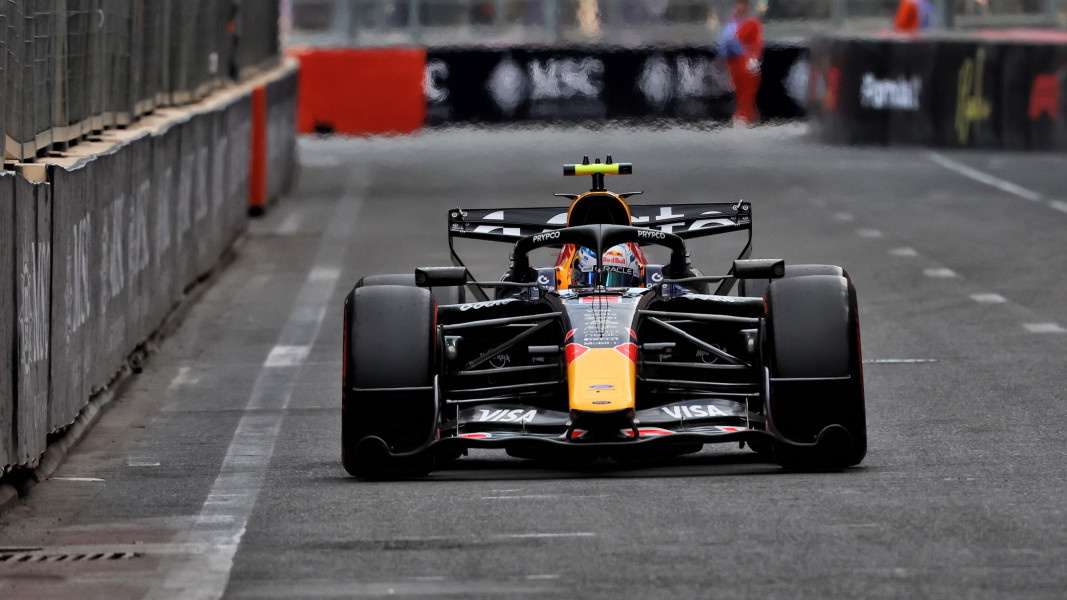
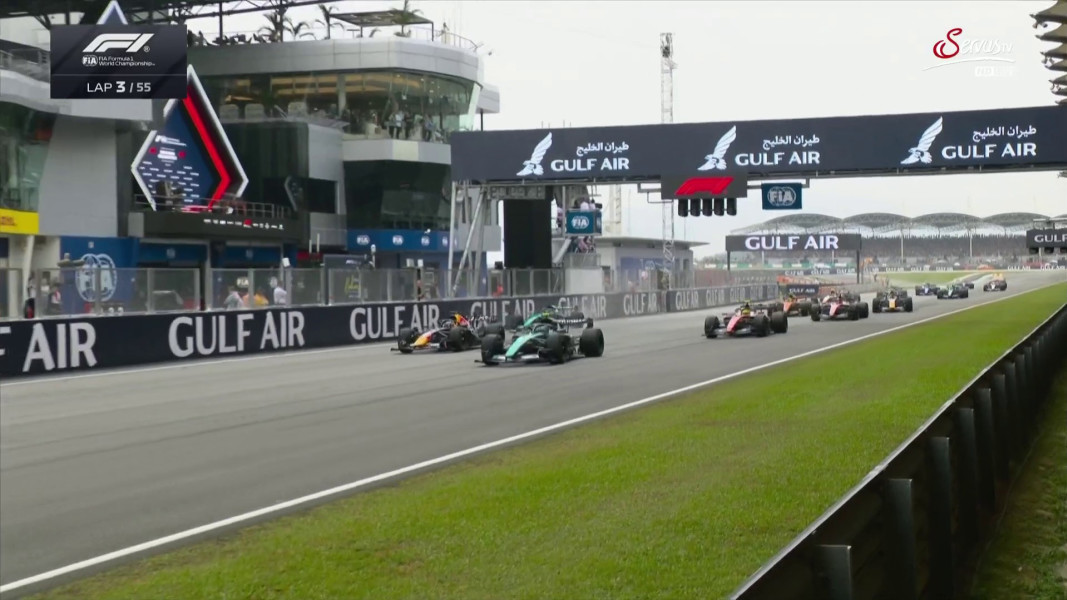
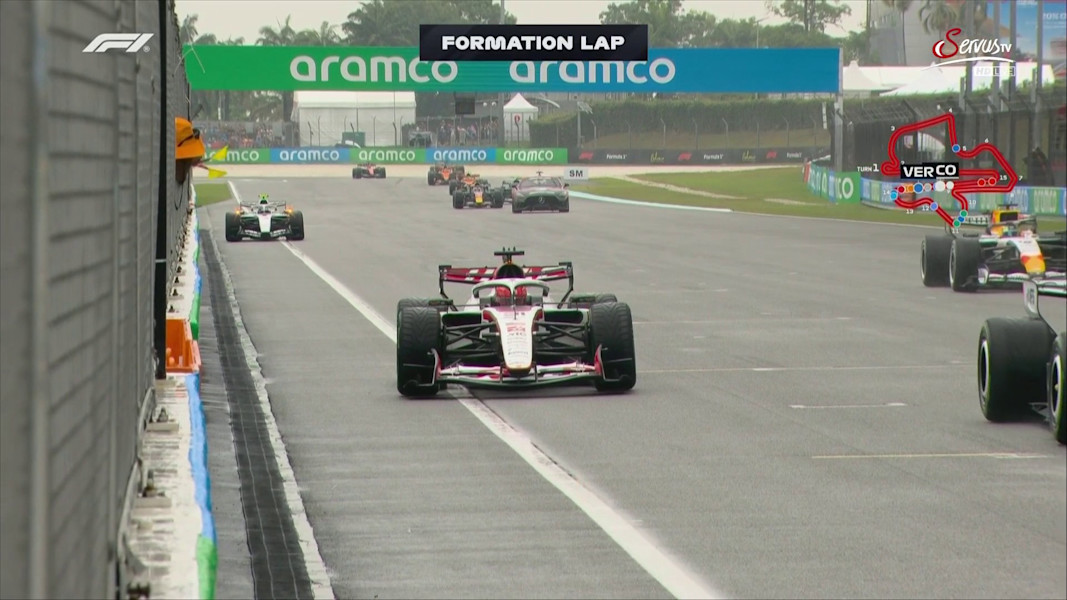
What a stuttering start to the 2026 Bahrain Grand Prix! The fans were dumbfounded by what was happening at the Sepang International Circuit – some racing cars were slowing down more and more, as if someone had pulled the handbrake; in some cases, cars even came to a standstill, whilst the other drivers weren’t sure whether they were allowed to overtake those affected or not, before their own cars started playing up, in short, a complete shambles.
It later transpired that the fault lay with a software issue: a standardised programme designed for all teams by specialists from the International Automobile Federation (FIA) in collaboration with the engine manufacturers – intended to throttle the power of the power units when the track is wet.
Ferrari protégé Oliver Bearman points out: “I didn’t even know that the FIA had the option to restrict power on a wet track. I think that goes a bit too far and is a nightmare for spectators to understand.”
The problem with this software is that the teams and the FIA had hardly any opportunity to test the 2026 race cars on a wet track; otherwise, it would have quickly become clear what has now become evident to everyone: this software is faulty.
During the break before the restart, the power units were reprogrammed, after which the cars ran smoothly again.
Topic of the week
A stuttering start to the Bahrain Grand Prix: the FIA narrowly avoids a fiasco like the one in Indianapolis in 2005
Fans could hardly believe their eyes at what they witnessed at the Bahrain Grand Prix: cars crawling along, racing cars that simply came to a standstill. The FIA narrowly avoided a fiasco like the one at Indy in 2005.
TV Program
It’s a shame that Formula 1 fans missed out on an even better race due to the enforced break (whilst the cars had to be updated with modified software). Because during that time, the track dried out.
Mercedes ace George Russell: “It all felt a bit like a waste of time – the red flag, the enforced break, then spending so long behind the safety car. That wasn’t Formula 1 at all. If I’d been sitting in the stands as a fan, I’d have been pretty disappointed.”
The rule-makers now have to face some rather embarrassing questions. Most fans are asking on social media: why didn’t anyone at the FIA think that this software for driving on a wet track might need to be put through a practical test? And what would have happened if the issue hadn’t been resolved during the enforced break?
Modern power units are too complicated
Ultimately, the mess at the start of the Bahrain Grand Prix has once again highlighted the fact that Formula 1’s modern power units are too complicated. Take the first part of the season, when some drivers were unable to start at all due to engine problems, such as Audi with Nico Hülkenberg in Australia or McLaren in China with both cars.
See also the stark differences in pace between the cars when, for example, the car in front is charging its battery whilst the car behind is releasing energy. This led to some hair-raising moments and ‘yo-yo’ overtaking manoeuvres, which, whilst resulting in numerous position changes, are difficult for some spectators to follow.
Finally, note the behaviour that is unnatural even for racing drivers, as Max Verstappen has highlighted. ‘If we look at the history of the sport, it’s always been like that – the driver who gives it their all, who brakes the latest, who gets back on the throttle the earliest, who takes risks in the fast corners, they were rewarded, because that’s how you could gain time in the corners.”
“But these days, all you’re constantly thinking is: ‘In this corner, I need to hold back a bit, I need to brake later, I need to get back on the throttle later, I need to lift off – that’s the only way I’ll have enough power for top speed on the straight later on.’ That’s the sort of thing you’re thinking about. That’s just not natural for a racer. It shouldn’t be like that.”
At the Madring, Formula 1 champion Fernando Alonso mocked the World Championship as the ‘Battery World Championship’. ‘It’s in the nature of these powertrains that you have to recharge the battery in fast corners or at the end of the straights, because that’s when it’s most efficient. But those are precisely the places that a racer enjoys, or where a good driver makes the difference. That goes against the nature of the racer or against the instinct to push the car to its limits.’
“It’s a shame that you arrive at a new, exciting circuit with really challenging corners like the Monumental – and then, with these cars, the driver’s contribution is zero.”
“Our media representative could drive the Monumental. But that’s not the motorsport I want. I want a Formula 1 in which skill and courage are rewarded. Now my speed depends solely on how much charge is left in the battery.”
Unfortunately, this fundamental problem will be with us for years to come. A new generation of engines won’t arrive until 2030 – or more likely 2031.
Indianapolis 2005: Spat on by the fans
Following all the commotion in Malaysia, some F1 supporters are writing: Formula 1 has narrowly avoided a humiliation here, just like in Indianapolis in 2005.
Flashback.
Between 2000 and 2007, the US Grand Prix took place at the Indianapolis Motor Speedway; a section of track was built specifically for Formula 1 in the inner circuit, using part of the classic oval, albeit in the opposite direction to the IndyCar and NASCAR races.
The then IMS boss, Tony George, spent 60 million dollars on the modifications, including a new control tower. However, the fate of the Formula 1 race at Indy was sealed by the utter embarrassment of 2005.
At the time, Michelin had supplied tyres to the US that were unable to cope with the stresses of the oval section of the circuit. During practice, Ralf Schumacher had a serious crash in Turn 13 after suffering a puncture to his left-rear tyre. Michelin rushed to fly in other tyres – Barcelona specification – but the problem persisted.
Legal experts warned the French firm: ‘If there is another accident, perhaps even involving injured spectators, you will be inundated with lawsuits that will cost you millions.’
Michelin requested the installation of a chicane before Turn 13 to reduce the load on the tyres, but the FIA officials rejected this. The proposal that Michelin drivers should collect fresh tyres every ten laps was also rejected. That would have meant six to seven pit stops, as the race was over 73 laps.
The result: after the warm-up lap for the US Grand Prix, all the cars fitted with Michelin tyres pulled into the pits – that is, fourteen cars from the Renault, McLaren, BMW-Williams, Toyota, Red Bull Racing, Sauber and BAR-Honda teams.
Only six cars fitted with Bridgestone tyres lined up on the grid: two Ferraris (driven by Michael Schumacher and Rubens Barrichello), two Jordans (driven by Tiago Monteiro and Narain Karthikeyan) and two Minardis (driven by Christijan Albers and Patrick Friesacher).

Indianapolis 2005: Wo sind die anderen Autos?
Foto: XPB
Indianapolis 2005: Wo sind die anderen Autos?
© XPB
The 130,000 fans were initially stunned by this bizarre spectacle, then they became absolutely furious; they whistled and booed, and many spontaneously scribbled signs expressing their disgust. They demanded their money back, writing ‘Gone Prix’ (gone, lost, gone) on pieces of cardboard and handkerchiefs instead of ‘Grand Prix’; they wrote ‘Formula 1 stinks’, ‘you’re letting us down’ and ‘restart the race’. Which, unfortunately, did not happen.
From lap 10 onwards, thousands of fans left their seats and went home. A mob gathered outside the track’s ticket office, furiously demanding their money back. The police had to be called to prevent the situation from escalating.
No one cared any longer that Michael Schumacher had won ahead of Rubens Barrichello and that Tiago Monteiro had become the first Portuguese driver to stand on a Formula 1 podium. Four police officers were assigned to Michael Schumacher’s side because Ferrari feared for the superstar’s safety.
As always, Niki Lauda summed up the situation perfectly: “This is the biggest Formula 1 joke of all time; I’ve never experienced such a farce in my entire life.”
Having submitted all my reports that day, I wanted to drive away from the media car park in my hire car that evening.
The area was surrounded by fans whose anger had not yet subsided. When the disillusioned Grand Prix visitors saw from my ID that I must have something to do with the circus, I was viciously abused and spat on. As I drove off, fans pounded on my hire car with their fists.
I couldn’t even be angry with them. Because I was ashamed of my Formula 1.
Formula 1 remained in Indy until 2007, in accordance with the contract at the time with series promoter Bernie Ecclestone. The fans gave the premier class the cold shoulder.
It wasn’t until 2012 that Grand Prix cars returned to the US, to the first circuit in North America built specifically for Formula 1: the Circuit of the Americas near Austin, Texas. The race remains a hit with the public to this day.
Seen already?
Don't miss out on any highlights: The Speedweek newsletter, sent out twice a week, delivers the latest news, exclusive commentary and all the important dates from the world of motorsports - directly into your inbox
Highlight Videos
ServusTV Media Library
Sepang backstage: Das ging alles schief!
4. Okt. | 1:20 Min
„Auto-Software hatte im Nassen einen Fehler"
4. Okt. | 2:03 Min
4. Okt. | 11:29 Min
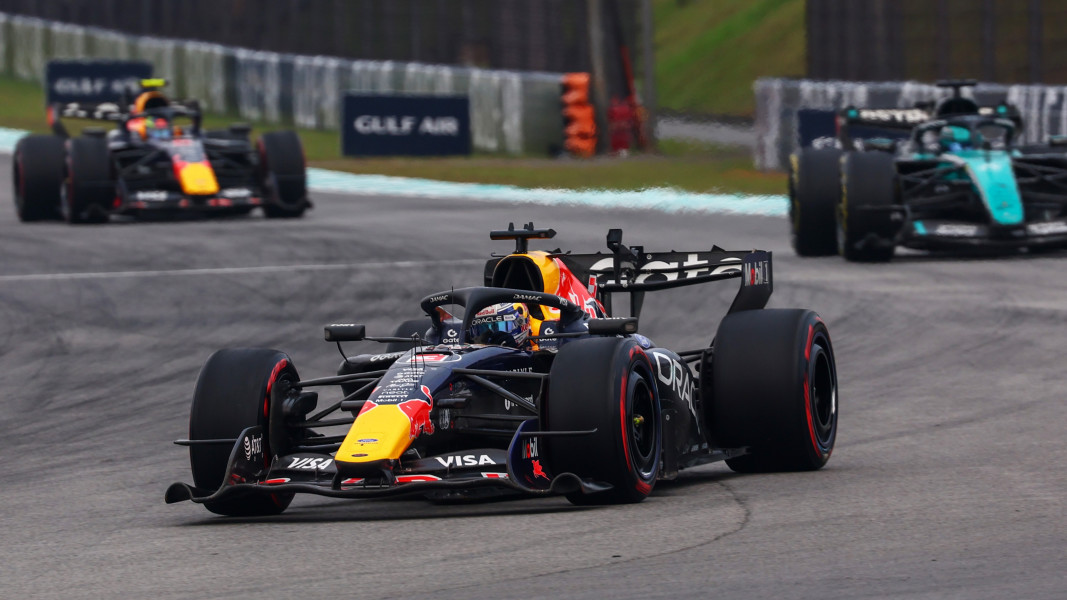
Regen-Chaos und Software-Probleme!
4. Okt. | 2:59 Min
Antonelli und Russell mit Raketen-Starts!
4. Okt. | 1:40 Min
Start-Abbruch! Software-Probleme legen Autos lahm
4. Okt. | 1:14 Min
Sepang: Wer schnappt sich die Pole?
3. Okt. | 2:06 Min
3. Okt. | 29:00 Min
Formula Cars News
All News


Newest Articles
All ArticlesNew New New New New New New New


