
Hungaroring Heat Grand Prix: Drivers staggered out of their cars, half-fainting
For years, the Hungarian Grand Prix was characterised by steel-blue skies and plenty of sunshine – the World Championship round was often a veritable battle against the heat, with drivers pushed to the limits of their endurance.
This article is an automatically generated English version. The

Bei einigen Rennen ist jede Erfrischung willkommen
Foto: XPB
Bei einigen Rennen ist jede Erfrischung willkommen
© XPB


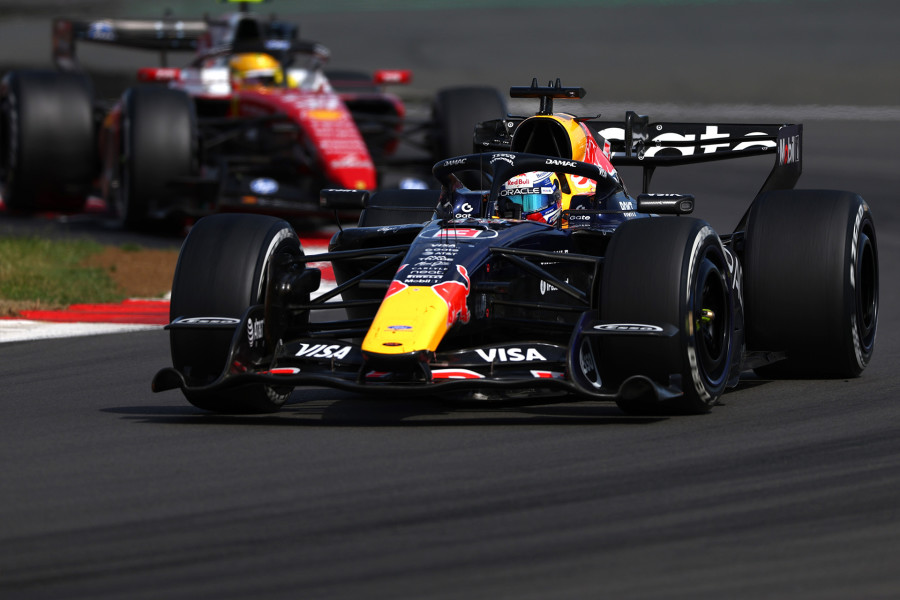
Friday practice for the Hungarian Grand Prix at the end of July 2021. Mick Schumacher, then a Haas GP driver, was astonished: “A track temperature of 63 degrees – I’ve never experienced anything like that in my career.”
The Hungaroring, nestled in a hollow not far from the village of Mogyoród, once again lived up to its reputation: over numerous Grand Prix seasons, the Hungarian Grand Prix has been the hottest Grand Prix of the year, with picture-postcard weather guaranteed.
Over more than 40 years here, I’ve time and again seen drivers stumble out of their cars, half-fainting after a sweltering Grand Prix at the Hungaroring, looking years older. By comparison, the temperature of just under 30 degrees at the 2026 event will seem almost pleasant.
In 2021, many a Formula 1 fan, like Mick Schumacher, found themselves wondering: 63 degrees – is that actually a heat record for Formula 1?
It may never be possible to answer this question beyond doubt, because no precise measurements were taken at the start of Formula 1’s history, and newspapers and books alike recorded varying figures in print.
Before the start of the season, critical voices dominated, but the World Championship rounds so far have shown that the rule changes are delivering exactly what was hoped for: excitement right up to the final lap.
TV program
The prime example of this is the 1955 Argentine Grand Prix: most reporters at the time spoke of 40 degrees in the shade, whilst other reports stated that the temperature in Buenos Aires was 37 degrees. The track temperature was 52 degrees.
In the days when driver changes were still permitted, numerous cars were driven by several drivers because most drivers could not cope with the extreme heat – only the two Argentinians, Juan Manuel Fangio (winner) and Roberto Mieres (5th place) managed to cross the finish line in the 1955 Argentine Grand Prix without being relieved. They were used to such temperatures from their home country.
In the 1950s, Reims in France was considered just as much of a ‘hot Grand Prix’ as a race at the Hungaroring is in the modern era of Formula 1.
In July 1959, temperatures in Reims at least approached the 40-degree mark, and the American Masten Gregory suffered heatstroke. It was so hot that the track surface began to melt – an effect I personally witnessed in the late 1980s at the US Grand Prix in Phoenix (Arizona). A sneaker print of mine is said to be immortalised there to this day...
I don’t know who gave the go-ahead for the daft idea of heading to Texas in July of all months for the 1984 Dallas Grand Prix debut. We do know, however, that there too, with temperatures hovering around 40 degrees, the track began to disintegrate and had to be repaired in a great hurry and in a makeshift manner.
Quick-setting concrete was only part of the solution. Goodyear’s tyre engineers could scarcely believe their eyes when they measured the track temperature: 66 degrees!
Keke Rosberg coped best with the heat and won. It was the race in which Nigel Mansell’s Lotus ground to a halt shortly before the end, the Briton heroically pushing his car towards the finish line – and then collapsing beside it.
For years, the Malaysian Grand Prix was promoted as the ‘hottest Grand Prix of the year’, and the high humidity only reinforced that impression.
“It always took three to four days for your body to get used to the heat,” Valtteri Bottas, one of the fittest drivers on the grid at the time, explained to me. “You start with a bit of training outdoors to really get your body working up a sweat. We can’t withstand the heat like the locals do, but those few days of acclimatisation make all the difference.”
NASCAR star Bobby Allison told me in the early 1980s how he used to prepare for hot stock car races in the American South: he simply put his rowing machine in the sauna! And even today, Formula 1 drivers still train in the sauna before a race in the heat.
In July 2019, the Hockenheimring felt like a giant frying pan: the Formula 1 circus was sweating in 39-degree air temperatures, whilst the track had heated up to 60 degrees during the second free practice session.
The record for the hottest race goes to Bahrain in 2005: the temperature never dropped below 41.9 degrees throughout the entire race! Fernando Alonso won in his Renault, with a track temperature of a comparatively moderate 56 degrees.
And for anyone who thinks that races in extreme heat are no longer an issue, I’d like to remind them of Qatar 2023: the American Logan Sargeant staggered out of his Williams, unable to continue the sweltering Qatar Grand Prix or even stay on his feet. His mechanics had to support him; otherwise, Sargant would have collapsed.
Esteban Ocon had to vomit into his helmet during the race.
George Russell thought he was losing consciousness.
Lance Stroll complained of blurred vision.
Winner and world champion Max Verstappen said after the 2023 Qatar Grand Prix: “That was one of the worst races I’ve ever experienced. The heat! The humidity! It was really pushing the limits.”
Yet the problem in Qatar was self-inflicted for two reasons and, to some extent, predictable.
Firstly, the race was scheduled for early October. Everyone knows that it can get sweltering in Qatar at that time of year. For 2024, the race has wisely been rescheduled to take place after Las Vegas and before the World Championship finale in Abu Dhabi.
The second problem in 2023 was harder to spot. The new kerbs at the Losail International Circuit caused microscopic damage to the Pirelli tyres due to high-frequency stress.
The Milan-based company therefore stipulated for the Grand Prix that drivers must not cover more than 18 laps on a single set of tyres.
This led to three, and in some cases four, pit stops during the race and a faster pace than in other World Championship rounds, as the shorter stints meant the usual tyre management strategy was no longer applicable.
Max Verstappen confirmed: “That was 57 laps at qualifying pace. I’m absolutely knackered.”
Seen already?
Don't miss out on any highlights: The Speedweek newsletter, sent out twice a week, delivers the latest news, exclusive commentary and all the important dates from the world of motorsports - directly into your inbox
Highlight videos
ServusTV media library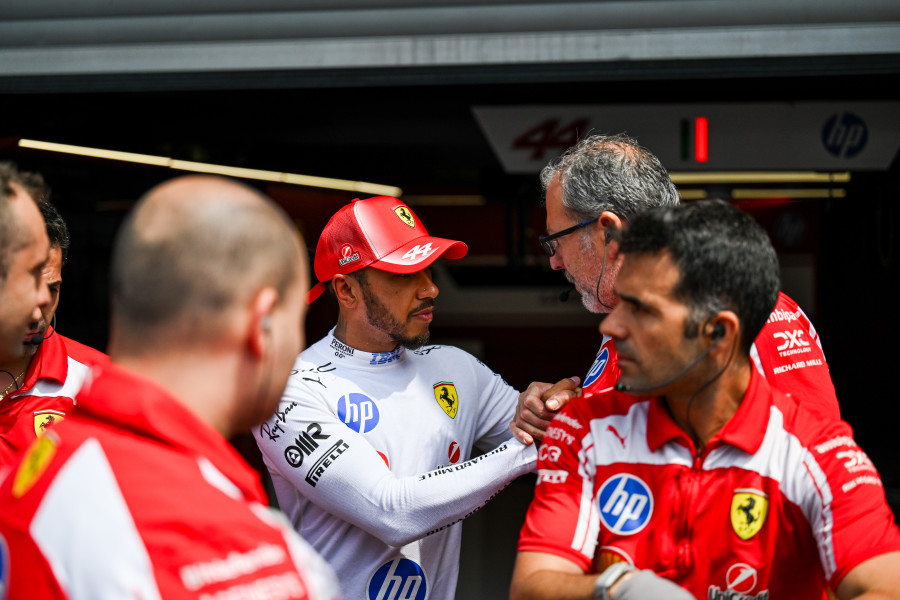
Verschweigt Ferrari Hamilton absichtlich Strafen?
20. Juli | 1:54 Min
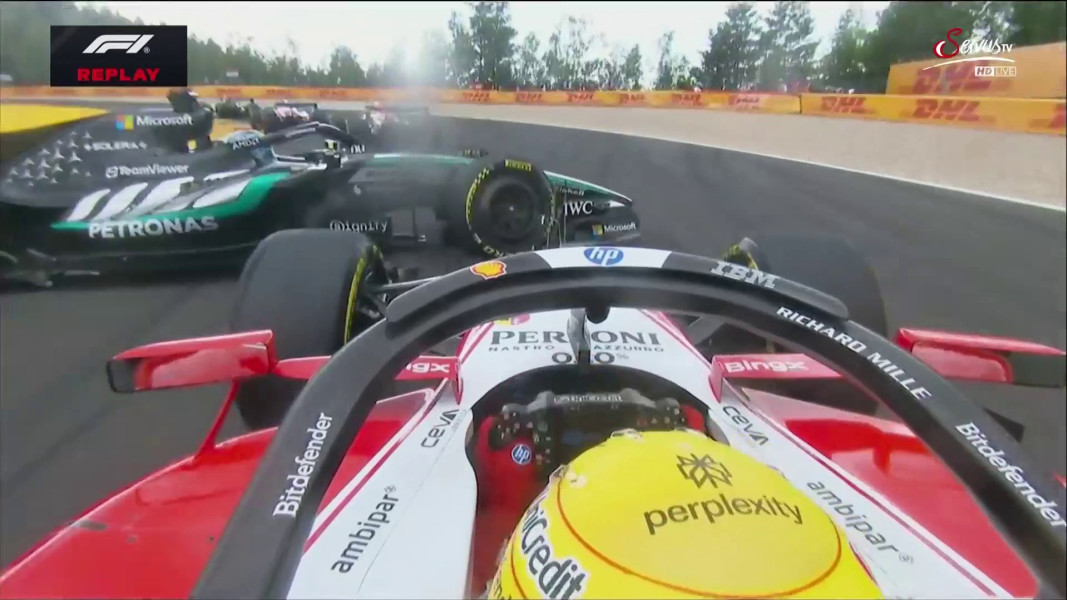
Kollision zwischen Russell und Hamilton!
19. Juli | 1:07 Min
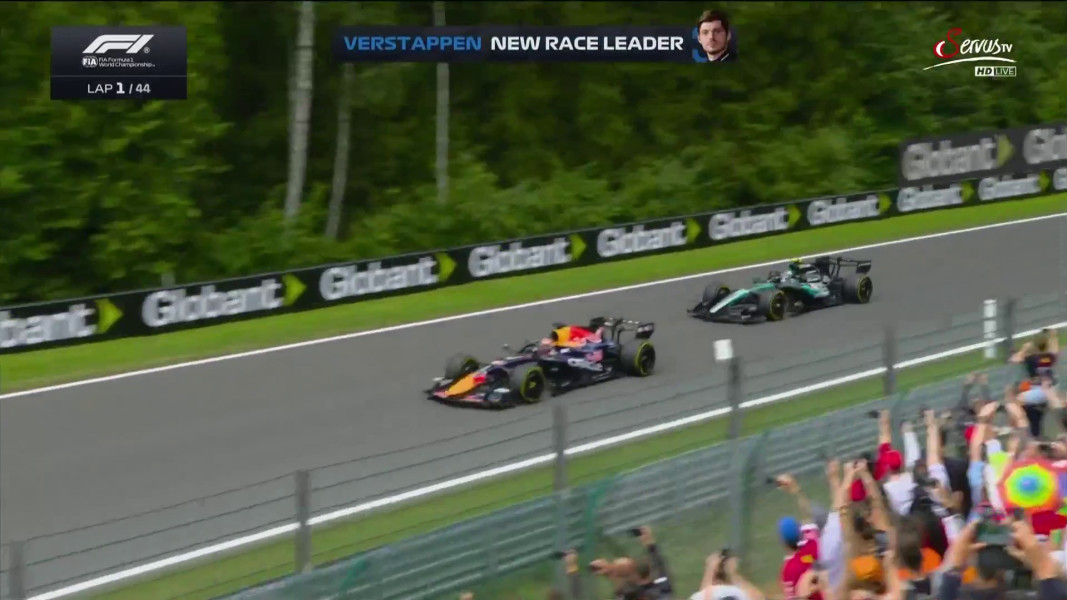
Spa: Führungswechsel nach dem Start!
19. Juli | 1:03 Min
Spa-Francorchamps: Das ging alles schief!
19. Juli | 1:21 Min
Spa-Francorchamps: Die Analyse des Rennens
19. Juli | 69:59 Min

F1-Geschichtsstunde mit Andi Gröbl
19. Juli | 7:53 Min
Spannender Fight der Titel-Anwärter!
19. Juli | 2:39 Min
Mit Teamwork in die erste Startreihe
19. Juli | 1:51 Min
Events
All Formula 1 eventsPast British Grand Prix
Silverstone Circuit, Great Britain 03.–05.07.2026Past Belgian Grand Prix
Circuit de Spa-Francorchamps, Belgien 17.–19.07.2026Live
Hungarian Grand Prix
Hungaroring, Ungarn 24.–26.07.2026Dutch Grand Prix
Circuit Zandvoort, Niederlande 21.–23.08.2026Italian Grand Prix
Autodromo Nazionale Monza, Italien 04.–06.09.2026

Past British Grand Prix
Silverstone Circuit, Great Britain 03.–05.07.2026Past Belgian Grand Prix
Circuit de Spa-Francorchamps, Belgien 17.–19.07.2026Live
Hungarian Grand Prix
Hungaroring, Ungarn 24.–26.07.2026Dutch Grand Prix
Circuit Zandvoort, Niederlande 21.–23.08.2026Italian Grand Prix
Autodromo Nazionale Monza, Italien 04.–06.09.2026
Formula racing News
All news


Newest articles
All articlesNew New New New New New


