Yamaha R1: What is being developed in Europe – and how the MotoGP project is contributing
Unlike Ducati, Yamaha develops its racing motorbikes at various locations. Project manager Riccardo Tisci describes the R1 development and explains how the MotoGP department is helping.
This article is an automatically generated English version. The
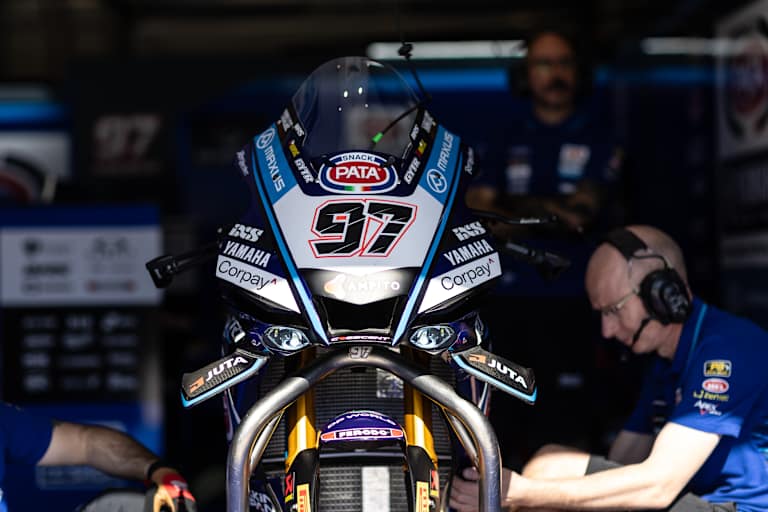
Die WM-Version der R1 wird vollständig in Europa entwickelt
Foto: Gold & Goose
Die WM-Version der R1 wird vollständig in Europa entwickelt
© Gold & Goose


Ducati is currently regarded as the benchmark when it comes to harnessing synergies between MotoGP and the World Superbike Championship. Everything comes together at Borgo Panigale, and the exchange between the various racing projects is correspondingly close. At Yamaha, the structures are geographically much more dispersed.
This is also reflected in the current sporting situation. Whilst Ducati is among the frontrunners in both world championships, Yamaha is going through a period of upheaval in MotoGP. At the same time, the once-successful R1 has increasingly fallen behind the leaders in the World Superbike Championship in recent years.
Development of the Yamaha R1: The World Championship version is built in Italy
But who actually develops the racing version of the Yamaha R1 for the Superbike World Championship? Riccardo Tisci, the Japanese manufacturer’s project manager for the Superbike World Championship, dispelled the assumption that technical development takes place mainly in Japan in an exclusive interview with SPEEDWEEK.com.
“Yamaha Europe, in Italy,” replied Tisci when asked about the development location. “Of course, there is a certain degree of collaboration with Yamaha Motor Company, but 100 per cent of the development is carried out in Italy.” The key technical departments are centralised at Yamaha’s European site. “At our headquarters, we handle the development of the chassis, electronics and engine,” explained Tisci.
However, the work cannot be carried out entirely without Japan. Communication with the parent company is intensive. “There is always collaboration. We communicate with Japan every day, exchange information and they support us with certain activities,” said the Italian, describing the interaction.
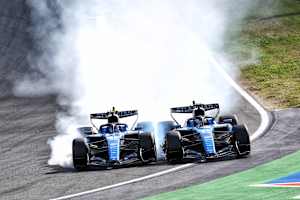
Ferrari came away empty-handed at the Dutch Grand Prix: Lewis Hamilton finished fourth, Charles Leclerc fifth. Afterwards, both drivers were angry, and team principal Fred Vasseur found himself having to explain the situation.
The statement that development takes place 100 per cent in Italy does not, therefore, mean that Yamaha Europe operates completely independently. “It is not the case that everything is decided 100 per cent on our own in Italy. Of course, there is collaboration with Japan,” clarified Tisci.
Intensified collaboration between Europe and Japan
The division of responsibilities within Yamaha’s racing programme is interesting. Whilst the R1 is developed for the World Superbike Championship in Europe, the machine for the prestigious 8 Hours of Suzuka race is built in Japan. Yamaha thus pursues a significantly more decentralised structure than, for example, Ducati.
This makes the exchange of knowledge all the more important. This now also applies between Yamaha’s Superbike and MotoGP projects. According to Tisci, collaboration has intensified considerably in recent years. “The collaboration has grown ever stronger, particularly in recent years,” reported the Yamaha project manager. “The link is now very close.”
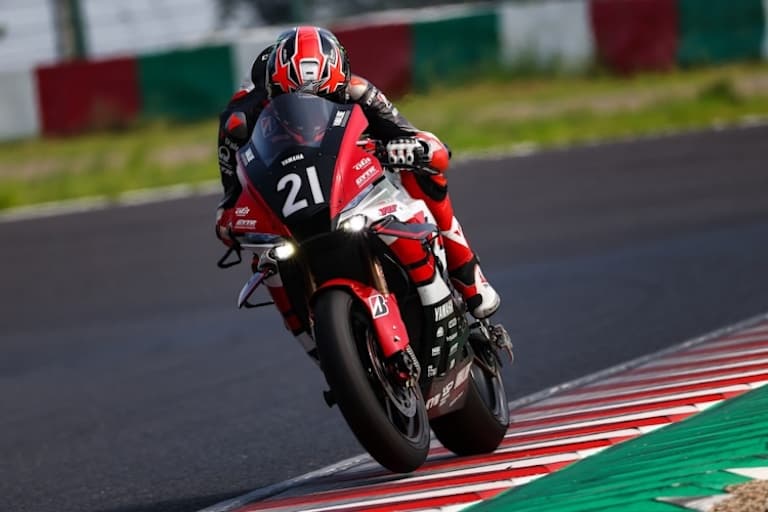
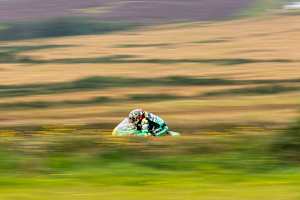
Jack Miller beim Test für die 8 Stunden von Suzuka
Foto: Yamaha
Jack Miller beim Test für die 8 Stunden von Suzuka
© Yamaha
This does not necessarily involve transferring individual technical solutions from one motorbike to another. The conditions differ considerably: in MotoGP, prototypes are used, whilst the R1 in the Superbike World Championship is based on a production motorbike. The tyres – and thus some key development parameters – are also different.
Nevertheless, the Superbike department can benefit from the MotoGP project. According to Tisci, it is the working methods that are particularly crucial. “Essentially, it’s about the way we work, the processes and specific know-how. Even with different tyres and motorbikes – and therefore completely different variables – we can learn from them how they understand certain things.”
Why theory is so important in development
For Tisci, it is precisely this understanding that forms the basis of any successful motorbike development. “You can learn how to test and then understand what is happening. You can then automatically apply this understanding to development,” he explained.
The Italian sums up his philosophy in a simple formula: “The most important goal in development is, first and foremost, understanding. If you don’t understand something, you can’t develop it. Of course, you can still develop something – but then it’s wrong.”
Accordingly, Yamaha has also expanded its use of calculations and simulations in the development of the Superbike R1. “We now have a strong calculations department and a dedicated team with reliable models,” reported Tisci.
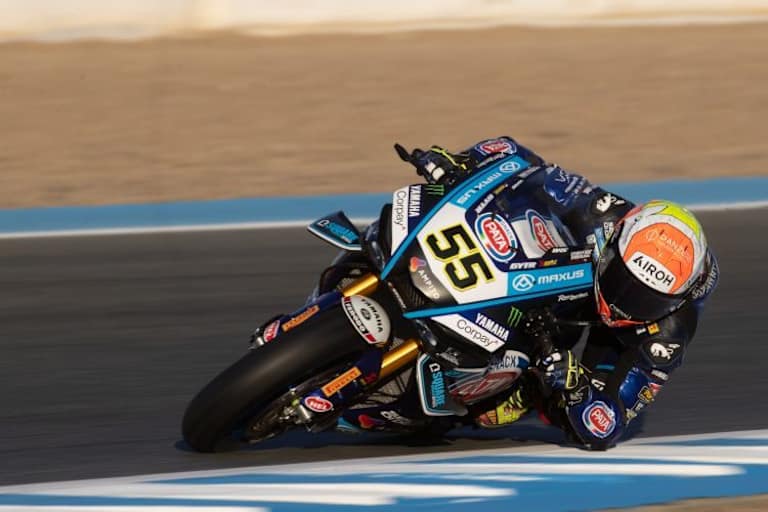
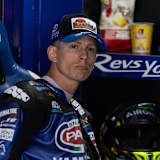
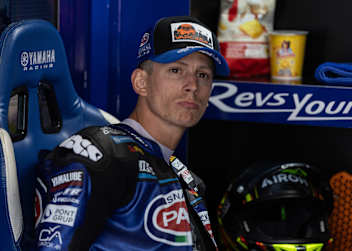
Andrea Locatelli
Foto: Gold & Goose
Andrea Locatelli
© Gold & Goose
This has also changed the development process. New components are no longer to be tested directly on the racetrack without first having been examined virtually. “Every time we develop something, we first have to carry out calculations and simulations and only then take it out onto the track,” explained Tisci. “We can no longer afford to skip the simulation phase.”
Yamaha is thus seeking to create more synergies despite its geographically separate racing programmes. Whilst Ducati benefits from short lines of communication and concentrated expertise in Borgo Panigale, Yamaha has to organise the transfer of knowledge between Europe, Japan and the MotoGP department differently.
The fact that, according to Tisci, the link to MotoGP is now closer than ever could prove particularly important for the Superbike department. For whilst Yamaha is undergoing a technical fresh start in the premier class, the R1 project also faces the task of closing the gap to the Superbike leaders, which has recently widened.
Seen already?
Don't miss out on any highlights: The Speedweek newsletter, sent out twice a week, delivers the latest news, exclusive commentary and all the important dates from the world of motorsports - directly into your inbox
Championship Standings
Full standings2026
2026
2025
2024
2023
Pos
Driver
Team
Points
1


491
2

358
3


211
4


182
5


177
6

153
7


145
8


110
9

107
10


106
Highlight videos
ServusTV media libraryIrre Aufholjagd & Dominanz pur!
12. Juli | 1:32 Min
12. Juli | 4:50 Min
12. Juli | 1:24 Min
11. Juli | 1:31 Min
Drama kurz vor der Zielflagge!
14. Juni | 1:32 Min
14. Juni | 1:30 Min
13. Juni | 1:32 Min
31. Mai | 1:31 Min
Events
All WorldSBK eventsPast Misano/Italien
 12.–14.06.2026
Past Donington Park/Großbritannien
 10.–12.07.2026
Next up Magny-Cours/Frankreich
 04.–06.09.2026
Cremona/Italien
Estoril/Portugal
 09.–11.10.2026
Past Misano/Italien
Past Donington Park/Großbritannien
Next up Magny-Cours/Frankreich
Cremona/Italien
Estoril/Portugal
WorldSBK News
All news
Newest articles
All articlesNew New New New New