
Our new puzzle: Racing Rarities – An example of poor timing
The new quiz features a car whose team showed poor timing in Formula 1. Who can be seen here? Where and when was this photo taken? Why not have a go yourself!
This article is an automatically generated English version. The



EinvergeblicherVersuch
Foto: Grand Prix Photo
EinvergeblicherVersuch
© Grand Prix Photo
Mostly drawn from the archives of our photo partners XPB and Grand Prix Photo, every week from Tuesday we present a little piece of motorsport history. Tell us who you can recognise (Example: Jo Siffert, Monza, 1970) and join in the guessing game for the honour of it – there’s nothing to be won. Send your answer to: mathias.brunner@speedweek.com. The closing date for entries is midnight on Sunday of the current week.
Entry is free of charge. The competition is open to anyone aged 18 or over. Employees of the participating companies are excluded. The decision is final.
Any data submitted as part of the quiz will be used solely for the purposes of running the competition and will not be passed on to third parties. Further information can be found in our privacy policy.
Here’s a hint for the new puzzle: an example of bad timing.
Our clue for the last task was: In Formula 1, red does not always automatically mean Ferrari. Pictured is the Alfa Romeo Formula 1 car during test drives at Zolder in Belgium in 1979, with Bruno Giacomelli at the wheel.
Topic of the week
Spanish Grand Prix at the new Madring: track – hit or miss?
The people of Madrid had set their sights high for their city’s first Formula 1 World Championship race since 1981. But have the high expectations for the new Madring mixed-circuit track really been met?
TV Program

Bruno Giacomelli mit dem Alfa Romeo in Zolder 1979
Foto: Grand Prix Photo
Bruno Giacomelli mit dem Alfa Romeo in Zolder 1979
© Grand Prix Photo
Alfa Romeo was one of the very first brands in Formula 1: The first two world champions – Giuseppe Farina and Juan Manuel Fangio – drove the timelessly elegant Alfa Romeo 158 and 159 in 1950 and 1951, which were affectionately known as the ‘Alfetta’, meaning ‘little Alfa’.
The Alfetta became one of the most successful Grand Prix racers – it won 47 out of 54 Grands Prix, starting as early as 1938, with the run interrupted by the Second World War.
Alfa’s comeback in 1979 was a disgrace; the car was as ugly as it was slow. It took several years before the cars were competitive. There were no victories. The curtain fell at the end of 1985.
Alfa Romeo competed in 112 Grands Prix in the Formula 1 World Championship and won 10 of them. Its second stint – in 1985 as ‘Benetton Alfa Romeo’ with Eddie Cheever and Riccardo Patrese – ended with a season in which the team failed to score any points.
It is an open secret that Sergio Marchionne, the group CEO who died in 2018, had a soft spot for the Alfa Romeo brand, which belongs to the Fiat Chrysler Group.
Speaking at the Ferrari press conference in Maranello back in December 2015, the Italian-Canadian said: “I find it amazing what a place the Alfa Romeo brand still holds in people’s hearts. We are considering how we might bring Alfa Romeo back into Formula 1.”
The groundwork for a further return was laid in 2015: the Alfa emblem, rather than the Fiat logo, was displayed on the engine cover of the Ferrari Formula 1 car.
This has brought things full circle: in the late 1920s, the famous little horse of Enzo Ferrari – then an Alfa Romeo works driver – appeared on Alfa Romeo’s Grand Prix cars; a few years later, Ferrari took over Alfa Romeo’s racing programme. In 2015, the situation was reversed, so to speak: the Alfa Romeo emblem could be seen on the engine cover of Sebastian Vettel and Kimi Räikkönen’s Grand Prix car.
A little history at this point: Since 1910, ‘Alfa’ has stood as an abbreviation for ‘Società Anonima Lombarda Fabbrica Automobili’ (i.e. Lombard Automobile Factory Limited); ‘Romeo’ was added in December 1915, when Nicola Romeo’s armaments company took control of the fledgling firm.
The logo has remained unchanged for over a hundred years: on the left, a red cross on a white background (the colours of the city of Milan); on the right, a green snake with a dragon’s head and a crown on a blue background, which is also part of Milan’s coat of arms. The serpent with a child in its mouth dates back to a legend from the Crusades, when a member of the Visconti family of Milan killed a Saracen prince near Rome and took his coat of arms. The shield was said to have been painted with a serpent holding a child in its mouth.
But what was the Alfa Romeo logo doing on the Ferrari racing car?
For years, Ferrari’s Grand Prix cars bore the Fiat logo, representing Ferrari’s parent company. From 2015 onwards, Alfa Romeo was featured on the racing cars of Sebastian Vettel and Kimi Räikkönen because Fiat CEO Sergio Marchionne wanted to boost the Milan-based car brand.
From 2019 to 2023, the racing cars built by Sauber in Switzerland competed as Alfa Romeo, but of course this had nothing to do with the former works team; it was purely a marketing ploy.
British Formula 3 champion in 1976, Formula 2 champion in 1978 – Bruno Giacomelli could drive racing cars; there’s no question of that. But in Formula 1, the affable Bruno was underrated.
69 Grands Prix for McLaren (1977/1978), Alfa Romeo (1979–1982) and Toleman (1983), one pole position (Watkins Glen, USA, 1980), one podium finish (third in Las Vegas, 1981), but 42 retirements! His best result was 15th in the World Championship in 1981.
It’s hard to say why, in 1990, he put himself through the ordeal of driving the Life F190, with a W12 engine (i.e. three banks of four cylinders each) sputtering away in the rear.
Giacomelli’s prospects with that car were about as good as a Formula 3 car competing against Grand Prix race cars today.
Back then, there were so many cars in Formula 1 that there was a pre-qualifying session on Friday morning. The journalists stood around the Life, and whenever the temperamental engine came to life (nomen est omen), we offered a respectful round of applause.
Giacomelli took to the track. The top speed left a bit to be desired – whilst others whizzed past at 300, the Life groaned its way past at 220.
When Giacomelli was back, I asked him why he wasn’t driving any faster. Bruno, without batting an eyelid: ‘If I drive any faster, it’ll tear the old banger apart.’
The Honda engines back then produced around 700 PS. The engine designed by former Ferrari engineer Franco Rocchi managed 350.
Seen already?
Don't miss out on any highlights: The Speedweek newsletter, sent out twice a week, delivers the latest news, exclusive commentary and all the important dates from the world of motorsports - directly into your inbox
Highlight Videos
ServusTV Media Library„Der GRÖSSTE Bock von Hamilton"!
22. Sept. | 1:53 Min
50-Meter-Drama von WM-Maschine eiskalt ausgenutzt!
14. Sept. | 1:36 Min
Mercedes in Monza: Funk verrät Stimmung
7. Sept. | 1:15 Min

4. Sept. | 4:58 Min
Hat Hamilton Mercedes-Heimweh?
24. Aug. | 1:54 Min
Liam Lawson: Markantes Style-Detail!
23. Aug. | 7:14 Min
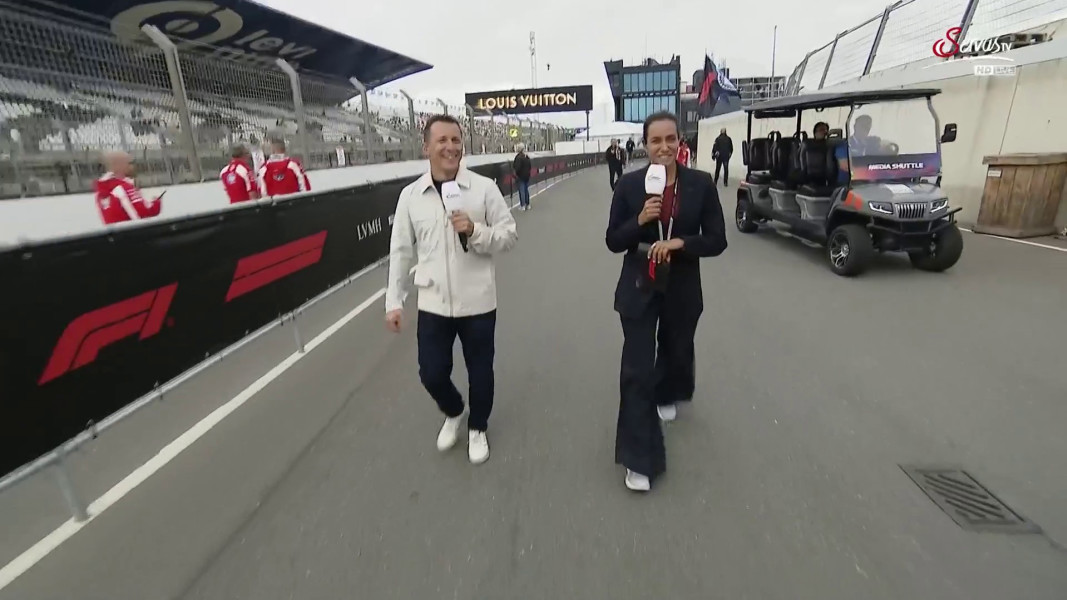
Paddock-Tour: Weite Wege in Zandvoort
22. Aug. | 7:08 Min
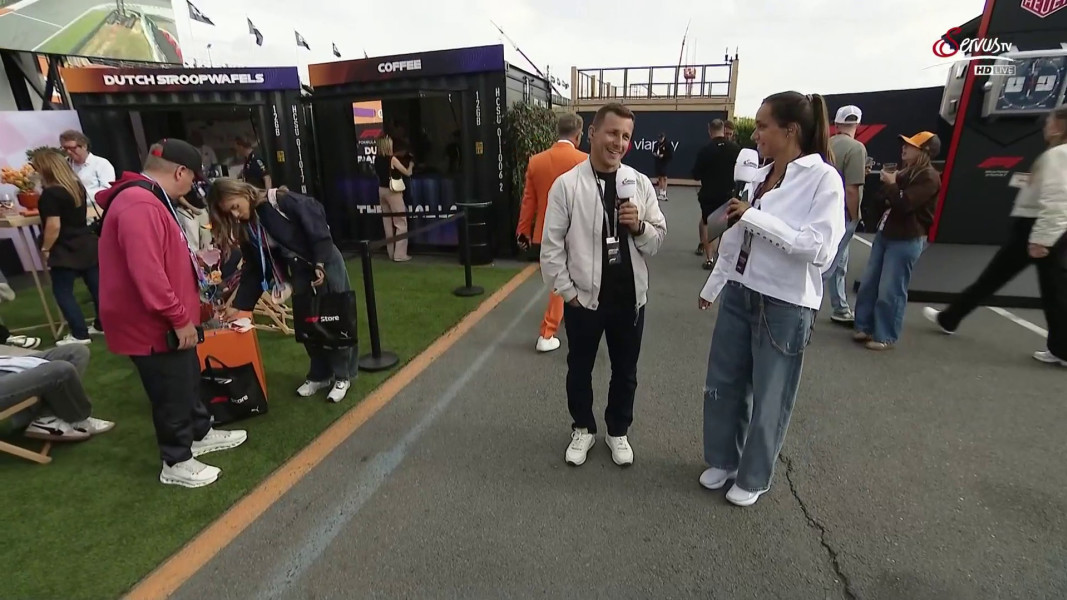
Keine Bitterballen für Andrea & Christian
21. Aug. | 6:00 Min
Formula Cars News
All News


Newest Articles
All ArticlesNew New New


