
Do you know your way round Silverstone? The legendary corners at the British Grand Prix
Silverstone, the great classic of Grand Prix racing, venue of the first Formula 1 World Championship race on 13 May 1950. But where do corner names such as Copse, Maggotts or Becketts come from?
This article is an automatically generated English version. The

Unvergleichliches Silverstone
Foto: XPB
Unvergleichliches Silverstone
© XPB


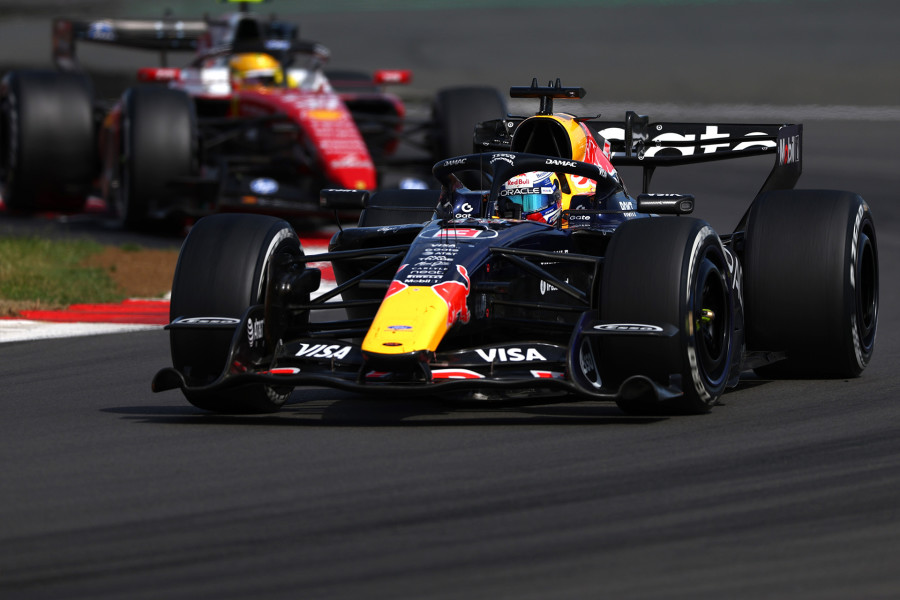
Most modern Formula 1 circuits, such as Jeddah (Saudi Arabia) or Las Vegas, stand out for their lack of imagination when it comes to naming their corners – they’re simply numbered in sequence; how boring!
Silverstone is quite different: on the very first of all Formula 1 World Championship circuits (GP debut on 13 May 1950), we stumble from one historic name to the next.
What’s astonishing is that, for 70 years, not a single section of the GP circuit was named after a great British racing driver! And yet there are more than enough of them – Stirling Moss, Jim Clark, Hill the Elder (Graham), John Surtees, Jackie Stewart, James Hunt, Hill the Younger (Damon), Jenson Button. And then, at last, this was rectified.
Recommendations
The start/finish straight on the very first of all Formula 1 World Championship circuits was christened the ‘Hamilton Straight’ in honour of seven-time world champion Lewis Hamilton.
The Hamilton Straight is the only section of the British Grand Prix circuit named after a racing driver, and only the second to be named after a person, alongside Becketts, named after Saint Thomas Becket (Archbishop of Canterbury). Part of Silverstone’s Club Circuit is also named after the Scot Innes Ireland, Lotus’s first Grand Prix winner.
Before the start of the season, critical voices dominated, but the World Championship rounds so far have shown that the rule changes are delivering exactly what was hoped for: excitement right up to the final lap.
TV program
So here’s a quick refresher on the names of the corners at Silverstone.
Silverstone – The circuit itself is named after the small village nearby (population 2,000); the word does not mean ‘silver stone’, but rather, based on Old English, ‘wooded area’.
Abbey – The name of the first corner after Hamilton Straight refers to the site of the former Luffield Abbey.
Farm – This gentle left-hand bend is so named because of the nearby farm.
Village – Refers to the village of Silverstone.
The Loop – This section is called ‘The Loop’ because of its shape.
Aintree – A reminder of the venue for the British Grand Prix in 1955, 1957, 1959, 1961 and 1962.
Wellington – This straight is one of the former starting straights. It is named after the Vickers Wellington fighter aircraft, which were primarily stationed here during the Second World War.
Brooklands – A tribute to one of the world’s oldest race circuits, which opened as early as 1907. The British Grand Prix was held at Brooklands in 1926 and 1927.
Luffield – Named after the village of Luffield, which used to stand here, right on the border between the two counties of Northamptonshire and Buckinghamshire.
Woodcote – Named after a clubhouse of the Royal Automobile Club (RAC) in Surrey, Woodcote Park.
Copse – Literally means ‘thicket’ or ‘scrub’, as there used to be a small area of undergrowth here.
Maggotts – Has nothing to do with a maggot (which is spelled with a ‘t’ in English), but with Maggotts Moor.
Becketts and Chapel – Both are named after the chapel of St Thomas Becket (Archbishop of Canterbury). The remains of the 13th-century chapel can still be seen today.
Hangar – During the war, there were two aircraft hangars on this straight stretch of track.
Stowe – Named after the school of the same name south of the racecourse.
Vale – So called because of the shape of the track – there is a gentle dip here.
Club – Named after the RAC clubhouse in London.
Seen already?
Don't miss out on any highlights: The Speedweek newsletter, sent out twice a week, delivers the latest news, exclusive commentary and all the important dates from the world of motorsports - directly into your inbox
Highlight videos
ServusTV media library
Überraschungs-Pole & Mercedes-Drama
25. Juli | 3:52 Min
„Da ist mir das Herz stehen geblieben!“
24. Juli | 2:26 Min
Verschweigt Ferrari Hamilton absichtlich Strafen?
20. Juli | 1:54 Min
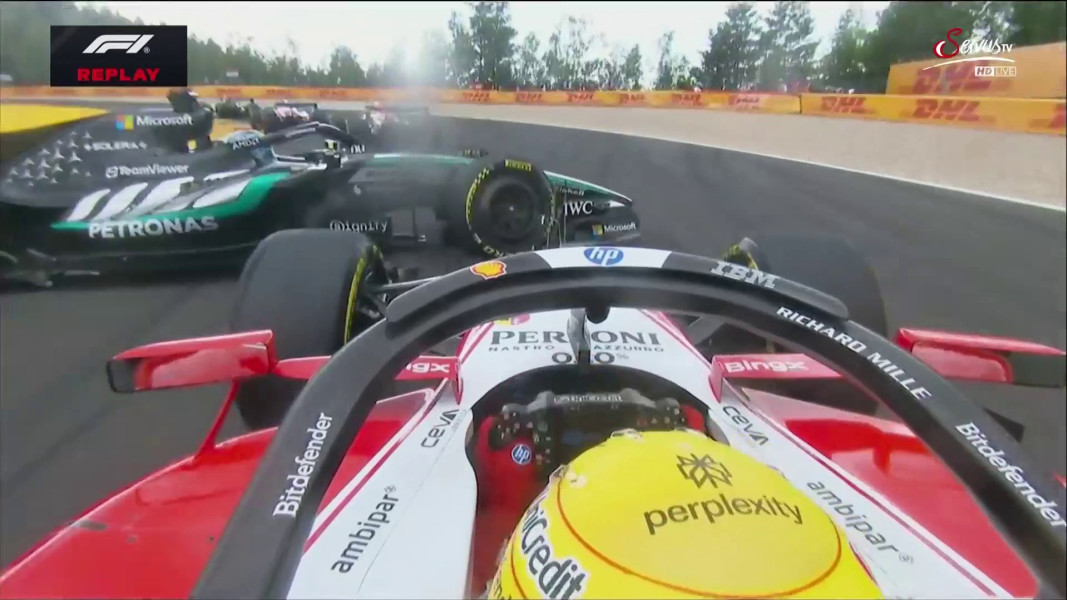
Kollision zwischen Russell und Hamilton!
19. Juli | 1:07 Min
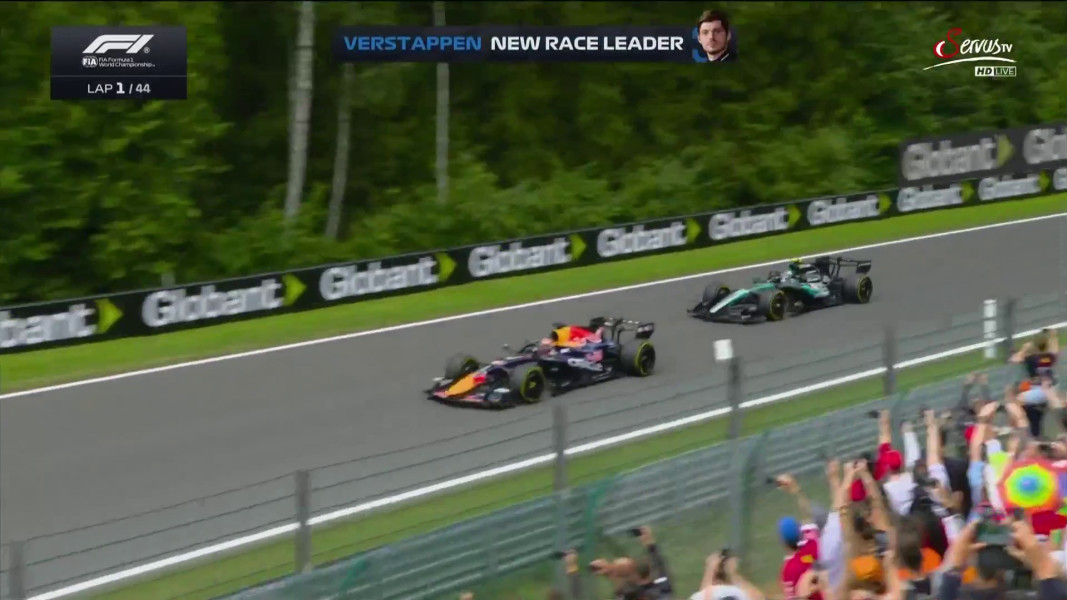
Spa: Führungswechsel nach dem Start!
19. Juli | 1:03 Min
Spa-Francorchamps: Das ging alles schief!
19. Juli | 1:21 Min
Spa-Francorchamps: Die Analyse des Rennens
19. Juli | 69:59 Min
F1-Geschichtsstunde mit Andi Gröbl
19. Juli | 7:53 Min
Events
All Formula 1 eventsPast British Grand Prix
Silverstone Circuit, Great Britain 03.–05.07.2026Past Belgian Grand Prix
Circuit de Spa-Francorchamps, Belgien 17.–19.07.2026Live
Hungarian Grand Prix
Hungaroring, Ungarn 24.–26.07.2026Dutch Grand Prix
Circuit Zandvoort, Niederlande 21.–23.08.2026Italian Grand Prix
Autodromo Nazionale Monza, Italien 04.–06.09.2026

Past British Grand Prix
Silverstone Circuit, Great Britain 03.–05.07.2026Past Belgian Grand Prix
Circuit de Spa-Francorchamps, Belgien 17.–19.07.2026Live
Hungarian Grand Prix
Hungaroring, Ungarn 24.–26.07.2026Dutch Grand Prix
Circuit Zandvoort, Niederlande 21.–23.08.2026Italian Grand Prix
Autodromo Nazionale Monza, Italien 04.–06.09.2026
Formula racing News
All news


Newest articles
All articlesNew New New New New New New New New


