Fernando Alonso is 45: A thoroughbred racer in search of the future
One of the most intriguing questions looking ahead to 2027 is: what will Fernando Alonso do? Will he retire? Will he take on a different role at Aston Martin? Will he fight his way back through? Today, the Spaniard turns 45.
This article is an automatically generated English version. The
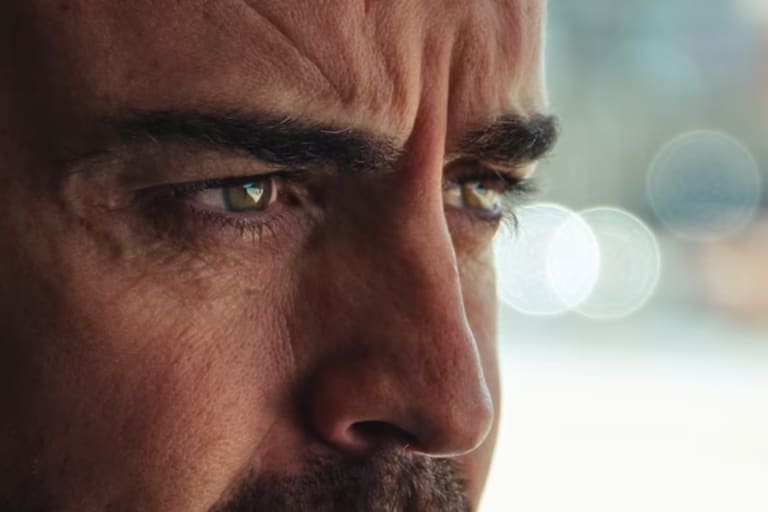
Fernando Alonso
Foto: Aston Martin
Fernando Alonso
© Aston Martin


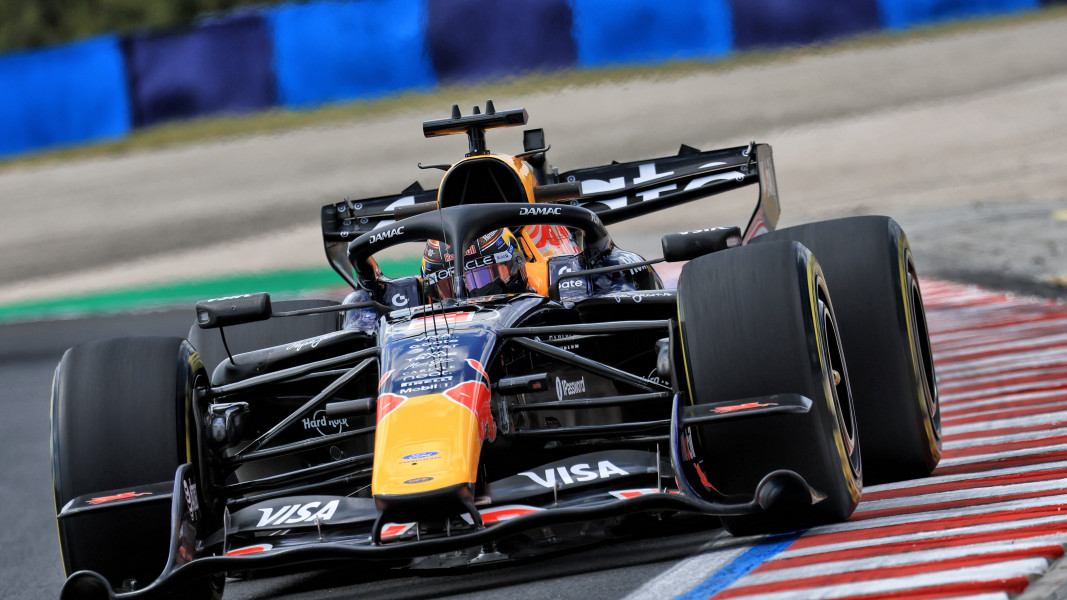
29 July 2026: Fernando Alonso celebrates his 45th birthday – ¡Que cumplas muchos más! The Aston Martin star has said that he intends to use the Formula 1 summer break to decide what his next steps will be.
“I have absolutely no doubt that Adrian Newey will one day build the best Formula 1 car on the grid for Aston Martin. I also know that it’s only a matter of time before Honda has sorted out its problems.”
“My decision has nothing to do with how this season has gone. I’d rather understand what the team has planned. I feel fresh, motivated and fast. But I also need to enjoy my work, and – quite honestly – driving at Silverstone and Spa wasn’t any fun.”
Recommendations
Mentioned in this article
“We should always be striving to make our sport better, but for me behind the wheel – and for many spectators too – this is a Formula 1 that isn’t enjoyable. Lately, I haven’t felt the same adrenaline behind the wheel as I used to.”
However, speaking during the Hungarian Grand Prix, Alonso also said: “I have a contract; I’m not going anywhere else.”
Topic of the week
Spanish Grand Prix at the new Madring: track – hit or miss?
The people of Madrid had set their sights high for their city’s first Formula 1 World Championship race since 1981. But have the high expectations for the new Madring mixed-circuit track really been met?
TV Program
That doesn’t necessarily mean, however, that Fernando will actually be behind the wheel. Ever since he signed with Aston Martin, there has been talk that his contract could extend beyond his time as a driver to include management roles.
Formula 1 without Fernando Alonso
Fernando Alonso no longer in Formula 1? For many of us, that would make the premier class a poorer place. Max Verstappen agrees: “It would be a real shame if we were to lose a driver of his calibre.”
Even today, I still feel a sense of regret that I was too young to see exceptional talents like Jim Clark, Jackie Stewart, Jochen Rindt or Ronnie Peterson on the racetrack.
Many years later, I had to smile a little when a younger fellow journalist said to me, somewhat sheepishly: “What, you saw Ayrton Senna and Michael Schumacher in a Ferrari?”
I thought to myself: OK, nobody can take that away from him. But does the lad actually realise what fabulous racers he can watch today? Drivers like Lewis Hamilton, Max Verstappen and Fernando Alonso are just as much a feast for the eyes. We should appreciate that much more.
And the fact that Fernando Alonso, that seemingly eternally youthful thoroughbred racer, is still driving in Formula 1 at 45 – it’s unbelievable.
“Remember that name!”
I first heard the name Fernando Alonso from Marc Surer. “There’s this lad who’s tearing everything to shreds in karting,” said the Basel native, who has always remained closely connected to karting and now lives in Spain. “He’ll be a world champion, you’ll see.”
And then there was this Alonso in Formula 1, driving for Minardi. He arrived at the paddock of Melbourne’s Albert Park Circuit in 2001, wide-eyed and with an even bigger rucksack, all on his own and looking a bit lost. He made short work of his Minardi team-mates right from the start.
Basically, there was only one person on the same team who could stand up to him in every respect – Lewis Hamilton.
The shrewd F1 team boss and driver manager Flavio Briatore had snapped up this rough diamond whilst he was still dreaming of Formula 1, and secured him a contract with the Italian Minardi team. The Minardi cars were the tail-enders of Formula 1, so Alonso did the only right thing – he shone.
His team-mates, Tarso Marques from Brazil and Alex Yoong from Malaysia, didn’t stand a chance. For 2002, Briatore secured a place for the talented Spaniard as a test driver at Renault, where the Italian entrepreneur was working as team principal. Alonso was to spend a year learning the ropes in peace at a top team.
Rise with Renault
In 2003, Alonso was a regular driver for Renault. He made an immediate impression. At the Hungarian Grand Prix, he won in commanding fashion and even managed to lap Michael Schumacher.
At the time, Fernando Alonso was the youngest Formula 1 Grand Prix winner, having beaten Bruce McLaren’s record set in 1959. The New Zealander was 22 years and 104 days old at Sebring; Alonso won his first Grand Prix at the age of 22 years and 26 days.
The season yielded several more excellent results, resulting in a sixth-place finish in the drivers’ championship.
2004 was also a promising year. Although he was unable to secure a race win, twelve points-scoring finishes (including three podium finishes) meant he finished fourth in the World Championship. Alonso calmly acquired the skills needed to become World Champion.
Comparison with Senna and Schumacher
Long-serving Formula 1 engineer Pat Symonds: “I’ve worked with Ayrton Senna and Michael Schumacher before. Fernando had a different temperament, though with similar characteristics. Even back at Renault, he was deeply convinced that he was the best. And he really was.”
“As racers, Michael Schumacher and Fernando Alonso were quite similar. Both were capable of always producing something special, always finding that little bit extra within themselves when it really mattered. We were in the era of sprint races between pit stops, and when Ross Brawn came on the radio and told Michael what he needed from him, we knew that Michael would do exactly that, lap after lap after lap. Fernando can do that too.”
“Both are also outstanding at ‘reading’ a race, so to speak. They can mentally switch off from the actual driving and have the mental reserves to think about how the race is unfolding. I can remember a race in Canada when Fernando was talking on the radio for almost a whole lap – and that was his fastest lap of the race! Well, when I’m in the car and get a call, the first thing I do is definitely slow down. That didn’t seem to bother him in the slightest. That extra mental capacity sets them apart from their rivals. They also remembered everything.”
It was precisely this Schumacher that Alonso now wanted to beat. And everyone else on top of that.
In 2005, Alonso started the new season with a third-place finish, before going on to win three races in a row, clearly establishing himself as one of the favourites for the World Championship title. His fiercest rival was Kimi Räikkönen in the McLaren-Mercedes; Ferrari had a mediocre year. However, the Finn was frequently let down by his car, meaning that on 25 September 2005 at Interlagos in Brazil, Alonso won the World Championship title for the first time – as the youngest driver to do so at that point.
The 2006 season got off to a promising start with a victory in Bahrain. His toughest rival that season was Michael Schumacher in a Ferrari. The two engaged in a thrilling neck-and-neck battle, which Fernando Alonso ultimately emerged victorious from. He successfully defended his title, fittingly once again in Brazil.
McLaren, Part 1: Title thrown away
Even before the end of the 2006 season, the Spaniard announced his move to McLaren-Mercedes for 2007 and his split from manager Briatore. The timing seemed right. The winter test sessions suggested that Alonso had a good chance of successfully defending his title once again.
However, his new team-mate, Formula 1 rookie and super-talent Lewis Hamilton, made life difficult for the Spaniard and was not content with the role of number two. After just a few races, it was clear that the two would likely be fighting it out for the world championship title between themselves and could, at most, get in each other’s way. The only serious rivals were the Ferrari drivers Kimi Räikkönen and Felipe Massa.
The world championship battle between the two McLaren frontrunners became increasingly intense. In the end, Kimi Räikkönen managed to close the points gap on the McLaren drivers and even overtake them in a dramatic World Championship finale in Brazil. Alonso finished only third in the drivers’ standings, behind his team-mate and World Champion Räikkönen.
Fernando Alonso has never forgiven McLaren team principal Ron Dennis.
Renault, Part 2: Scandal in Singapore
In early November 2007, McLaren announced that Alonso was leaving the team after just one of the three years originally agreed in his contract. In 2008 and 2009, Alonso drove for the Renault team once again. After a disappointing 2008 season in an uncompetitive car, he went on to win the Singapore Grand Prix and the subsequent race in Japan, finishing fifth overall.
However, it was the Singapore scandal that made the biggest headlines: Team principal Flavio Briatore was forced to step down after it emerged that he had instructed Nelson Piquet to crash into a wall, whilst Alonso used the safety car period to make a perfectly timed pit stop and won the inaugural night race in the city-state.
Alonso has denied any knowledge of the deception to this day.
His former team-mate Lewis Hamilton became World Champion with McLaren in 2008, taking the title of youngest Formula 1 World Champion away from him. A few top-ten finishes and a pole position in Hungary were the highlights of the 2009 season; Alonso finished a mere ninth in the World Championship. Speculation about the Asturian’s move to Ferrari proved correct when the Scuderia announced that Alonso – as he had done at McLaren in 2007 – would replace Kimi Räikkönen and race for Ferrari alongside Felipe Massa in 2010.
Mission Impossible: Ferrari
In his very first race for Ferrari in Bahrain, Fernando Alonso secured his first victory; the Spaniard thus became the fifth driver – after Juan Manuel Fangio, Mario Andretti, Nigel Mansell and Kimi Räikkönen – to win his maiden race for Ferrari.
At his home race in Spain, he finished second to secure his second podium finish of the season; he came third in Canada, followed by another victory in Germany. However, he benefited from the fact that his team-mate Felipe Massa had let him past on the team’s orders. The race stewards deemed the overtaking manoeuvre to be an illegal team order and fined Ferrari US$100,000.
Following a second-place finish in Hungary and a retirement in Belgium, he secured his third victory of the season at Ferrari’s home race in Monza. With a start-to-finish victory, pole position and the fastest lap of the race, Alonso delivered a perfect performance at the next race in Singapore. Ahead of the final Grand Prix of the year in Abu Dhabi, Fernando Alonso finished third on the podium in Japan, won in South Korea and, after finishing third in Brazil, went into the season-ending race in Abu Dhabi as the championship leader – the title with Ferrari was within his grasp. This time, the standings were Alonso 246, Mark Webber 238 and Sebastian Vettel 231.
What could possibly go wrong?
Everything.
However, due to a strategic misjudgement by chief engineer Chris Dyer (he based Alonso’s race strategy on Webber rather than Vettel), Fernando finished only seventh, and as Sebastian Vettel won, the Red Bull Racing driver sensationally became world champion for the first time, whilst Alonso finished runner-up in the World Championship, four points behind.
In 2011, Fernando Alonso managed to stand on the top step of the podium just once, at the British Grand Prix. With a total of ten podium finishes and 257 championship points, he finished fourth in the drivers’ standings. In May, he extended his contract with Ferrari until the end of the 2016 season.
In 2012, the Ferrari struggled somewhat at the start of the season, but in Malaysia, Alonso capitalised on the changing weather conditions to secure his first win of the season.
After finishing second in Spain and third in Monaco, he headed to Canada as the championship leader. In Montreal, however, he finished only fifth, and Sebastian Vettel overtook him in the standings once again. In Valencia, Alonso started only eleventh. However, thanks to a flawless strategy, a safety car period, Sebastian Vettel’s retirement and a perfect drive, the Spaniard celebrated his second victory of the season at the European Grand Prix and retook the lead in the World Championship. After finishing second in Great Britain, he secured his 30th Grand Prix victory in Germany. By the time the final race in Brazil came around, Alonso had finished on the podium four times in third place and twice in second, and was 13 points behind Sebastian Vettel.
But it wasn’t enough: although Alonso finished second at Interlagos, he ended the season as runner-up in the World Championship, three points behind Vettel.
In 2013, Fernando Alonso won his 31st Grand Prix in China on his 200th Formula 1 start. In Barcelona, he celebrated his second victory at his home race since 2006. In the remaining races of the season, the Spaniard failed to secure another victory, but still managed five second-place finishes and one third place. Behind the dominant Sebastian Vettel, Alonso once again finished runner-up in the World Championship.
When it became clear early in the 2014 season that a World Championship title with Ferrari was once again out of reach, when team principal Stefano Domenicali was forced to step down and, to make matters worse, Ferrari president Luca Montezemolo’s friend and Santander chief Emilio Botín passed away, it was clear to Alonso that his time at Ferrari was over. He resigned and signed for McLaren-Honda, thereby terminating his contract with the Maranello-based team early.
McLaren-Honda: The Disillusionment
At McLaren-Honda, Alonso went from bad to worse. Instead of securing the long-awaited third title (equalling the tally of his idol Ayrton Senna), McLaren-Honda became the disappointment of the season and finished the World Championship second from bottom.
Fernando Alonso repeatedly criticised the underperforming Honda engine in public; in front of the Japanese team’s entire board, he described the V6 turbo at the Suzuka Grand Prix as a ‘GP2 engine’.
Season highlight: 5th place in Hungary. But it was only in Britain that Alonso managed to score points again, finishing 10th, meaning he ended up 17th in the World Championship – Alonso hadn’t been that far down the standings since his Minardi days.
In 2016, McLaren-Honda showed signs of improvement during winter testing. But Alonso was only able to benefit from this later on: following a horrific crash in Australia, the Spaniard had to sit out the race in Bahrain. Later, having made a full recovery, fans saw an Alonso driving as strongly as ever. But the McLaren-Honda was so uncompetitive that it was as if Alonso had to compete in the downhill event with just one ski. Alonso finished tenth in the World Championship, with two fifth-place finishes in Monaco and Texas as the highlights.
McLaren built a good chassis for 2017, but due to the underpowered and unreliable Honda engines, Alonso could not finish higher than 15th in the World Championship. The Spaniard managed to finish in the points only five times, with sixth place in Hungary being the highlight.
The Indy 500 adventure
Alonso’s performance at the Indy 500 was nothing short of spectacular.
When Fernando Alonso climbed out of his smoking car 21 laps before the end of the Indy 500, the 300,000 spectators at the oval rose to their feet and gave the Spaniard a round of applause. The 35-year-old had fought hard to earn the support and affection of the crowd. And with a performance that was as spirited as it was impressive, he truly deserved it.
Of course, there was a certain tragedy to what happened to Alonso on his debut at the 101st Indy 500. If it weren’t so sad, you could almost laugh about it. After all, Alonso made the detour to this classic race in the US because he’s been fed up with the underpowered Honda engine in Formula 1 for almost three years now.
The two-time world champion wanted to experience racing again at last. To feel what it’s like to sit in a competitive car. To do so, he even skipped the premier-class classic in Monaco. And then, of all things, the Honda engine in his Andretti-McLaren gave up the ghost in Indianapolis!
Alonso wanted to perfect his skills as a racer – through endurance racing and the Dakar Rally.
In January 2018, Alonso practised at Daytona; he then got behind the wheel of a works Toyota, won at Spa-Francorchamps straight away and went on to claim victory in the world’s biggest endurance race alongside Sébastien Buemi and Kazuki Nakajima.
Fernando: “I’ve tried out a whole range of different racing cars. Each one requires a very specific driving style. They’ve all been great fun. I found it refreshing to learn more about driving techniques from the specialists in each of these series. It’s all a massive challenge, and that’s what I live for as a racer.”
Mission Impossible II: Aston Martin
But the chapter on the premier class was not yet over for Fernando Alonso: A return to Formula 1 with Alpine, a podium finish in Qatar in 2021, a sensational move to Aston Martin to take Sebastian Vettel’s seat, then a first half of the 2023 World Championship season that astonished fans and experts alike – eight podium finishes, fourth in the World Championship standings.
In 2025, the brilliant Adrian Newey joined Aston Martin, and everyone expected the ‘Greens’ to be among the frontrunners for 2026. But then the supposed top team made a complete fool of itself, finishing second-last in the World Championship – with only newcomer Cadillac faring worse.
At the Hungarian Grand Prix, improvements were finally made to the car, and in practice Alonso occasionally featured in the top ten.
Fernando Alonso is as fired up as ever.
Seen already?
Don't miss out on any highlights: The Speedweek newsletter, sent out twice a week, delivers the latest news, exclusive commentary and all the important dates from the world of motorsports - directly into your inbox
Championship Standings
Full Standingsorg-location for [2026] 2026
2026
2025
2024
2023
Pos
Driver
Team
Points
1


292
2

211
3


191
4


186
5

167
6


145
7

120
8

71
9


59
10


41
Highlight Videos
ServusTV Media Library
50-Meter-Drama von WM-Maschine eiskalt ausgenutzt!
14. Sept. | 1:36 Min
13. Sept. | 3:13 Min
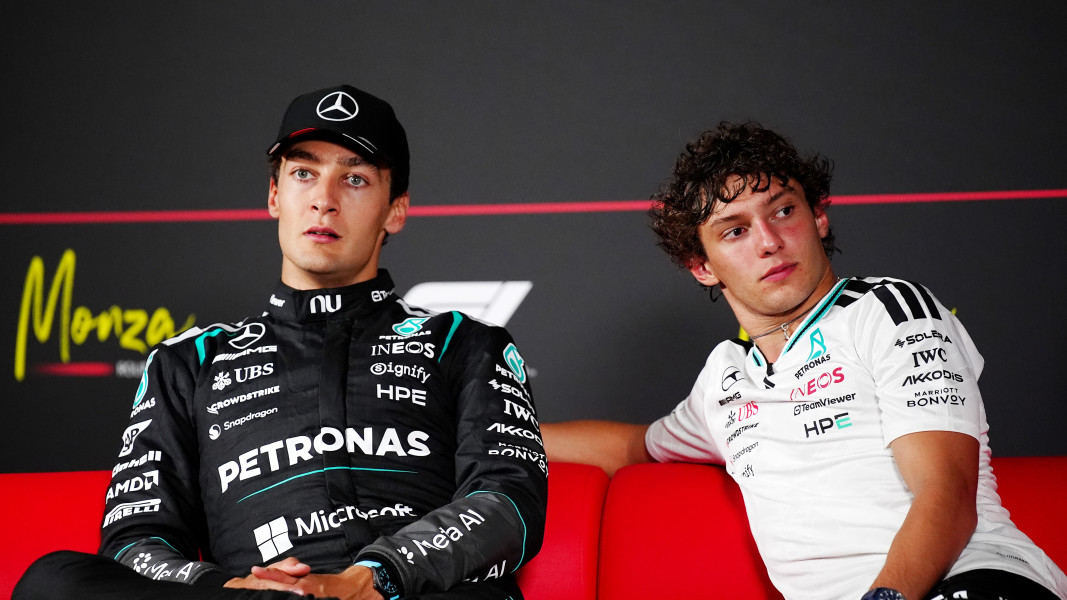
Mercedes in Monza: Funk verrät Stimmung
7. Sept. | 1:15 Min

4. Sept. | 4:58 Min
Hat Hamilton Mercedes-Heimweh?
24. Aug. | 1:54 Min
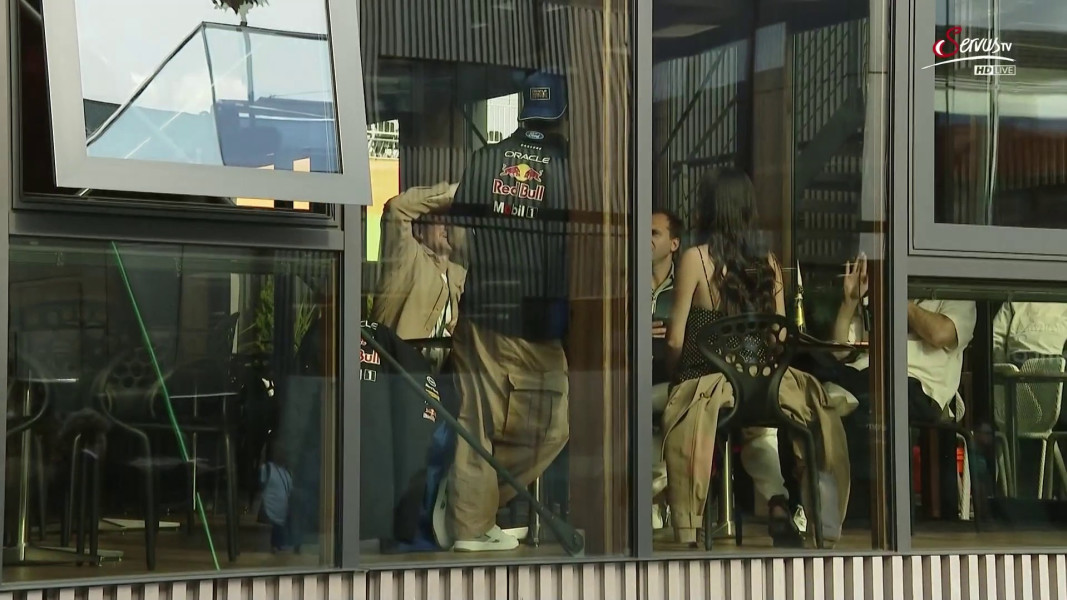
Liam Lawson: Markantes Style-Detail!
23. Aug. | 7:14 Min
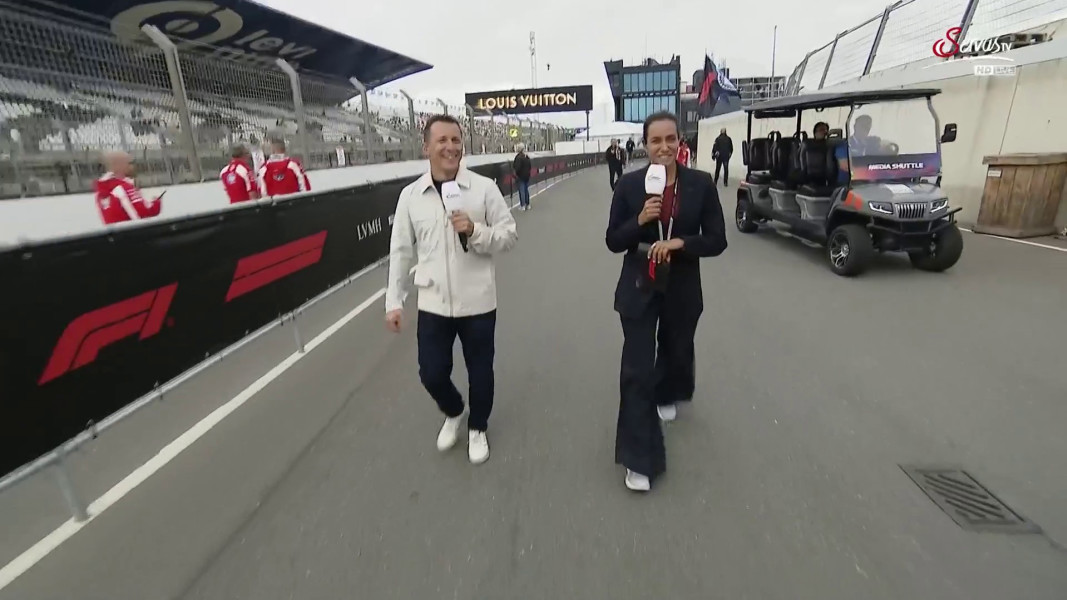
Paddock-Tour: Weite Wege in Zandvoort
22. Aug. | 7:08 Min
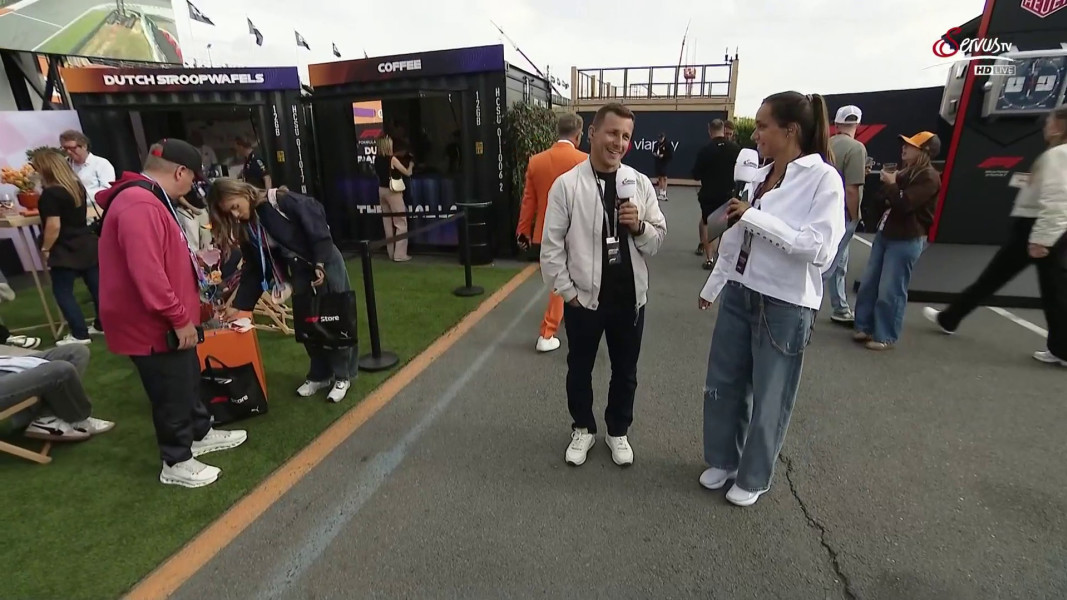
Keine Bitterballen für Andrea & Christian
21. Aug. | 6:00 Min
Events
All Formula 1 EventsPast Italian Grand Prix
 04.–06.09.2026
Past Spanish Grand Prix
 11.–13.09.2026
Next up Azerbaijan Grand Prix
 24.–26.09.2026
Next up Bahrain Grand Prix
 02.–04.10.2026
Singapore Grand Prix
 09.–11.10.2026
Past Italian Grand Prix
Past Spanish Grand Prix
Next up Azerbaijan Grand Prix
Next up Bahrain Grand Prix
Singapore Grand Prix
Formula Cars News
All News

Newest Articles
All ArticlesNew New New New New New New New New New