
MotoGP stars in karts: Does this show have to take place before the Grand Prix?
A karting race ahead of the Japanese Grand Prix was intended to entertain MotoGP fans. Marc Márquez refused to take part. This raises a question: how much extra entertainment can a race weekend cope with?
This article is an automatically generated English version. The

Marc Marquez' Double wurde ausgeschlossen, der Spanier bekam einen Rüffel
Foto: Gold & Goose
Marc Marquez' Double wurde ausgeschlossen, der Spanier bekam einen Rüffel
© Gold & Goose


Marc Márquez sent a lookalike instead of getting into the kart himself. That sounds like an entertaining side story from the MotoGP weekend at Motegi. In fact, it highlights a debate that the promoter should take seriously: how much extra strain can be placed on the riders – and when should their preparation for the actual race take priority?
On Sunday, following the warm-up, the MotoGP riders were due to compete in a kart race on the Grand Prix circuit. Honda reserve rider Somkiat Chantra won by the narrowest of margins ahead of KTM works rider Pedro Acosta. Live audio from the helmets was also broadcast for some riders. The banter between Pramac riders Jack Miller and Toprak Razgatlioglu added to the entertainment value of the event. Spectators were able to listen in directly – possibly a foretaste of a feature in future MotoGP broadcasts, should the radio system become established.
The idea was good, but the execution wasn’t
Seeing the stars in unfamiliar surroundings, capturing spontaneous reactions and producing content for social media: the thinking behind the event is understandable. The close finish also provided the kind of footage that the organisers hope to see from such a competition.
Liberty Media’s efforts to market MotoGP more effectively and increase its reach also deserve support in principle. The series needs new spectators and must give its riders space to show their personalities. People who get to know the individuals beneath the helmets are more likely to develop a connection to the sport. In the long term, this also benefits teams, sponsors and riders.

Fotofinish: Chantra siegte knapp vor Acosta
Foto: Gold & Goose
Fotofinish: Chantra siegte knapp vor Acosta
© Gold & Goose
Topic of the week
A stuttering start to the Bahrain Grand Prix: the FIA narrowly avoids a fiasco like the one in Indianapolis in 2005
Fans could hardly believe their eyes at what they witnessed at the Bahrain Grand Prix: cars crawling along, racing cars that simply came to a standstill. The FIA narrowly avoided a fiasco like the one at Indy in 2005.
TV Program
However, the timing at Motegi was poorly chosen. Between the warm-up and the Grand Prix, the final preparations are underway. Data is analysed, decisions are made, and physical ailments are treated. The riders need to eat, drink and concentrate. These hours are an important part of their working day.
After the warm-up, Márquez had to ice his injured right shoulder. It is understandable that, in this situation, he had little interest in taking part in an additional competition. He did not want to take any avoidable risks ahead of the Grand Prix. His explanation summed up his priorities: “I’m here to fight for the World Championship, not for fun or to do a few laps in a kart.”
Rivals show understanding for Marquez’s absence
Sending his lookalike was certainly not a particularly diplomatic solution. An open discussion with the organisers would have been the better approach. Nevertheless, the promoter should look into the reason behind this move. If a title contender would rather organise such a deception than take part in a supposedly low-stakes event, something is clearly amiss.
It is noteworthy that even World Championship rival Jorge Martin showed understanding. He, too, had concerns that a collision in the kart could have consequences for the Grand Prix, and therefore stayed out of the fray. So two riders battling for the title saw the move as an unnecessary risk.

Jorge Martin erkannte schnell, dass er nicht Marc Marquez vor sich hatte
Foto: Gold & Goose
Jorge Martin erkannte schnell, dass er nicht Marc Marquez vor sich hatte
© Gold & Goose
A kart is, of course, not a MotoGP bike. Yet even there, hard contact can occur. And anyone who sends ambitious racers out onto a track together should not rely on them all simply doing a leisurely lap of honour. Competition is part of their very nature. Chantra’s close duel with Acosta showed that even in a show like this, riders are fighting for victory.
Added to this is the sheer volume of commitments. Practice sessions, qualifying, the sprint race and the Grand Prix already make for a packed sporting programme. On top of that come media sessions, sponsor engagements and fan events. After Motegi, it’s straight on to Mandalika. For riders who are carrying knocks, even the recovery period between two race weekends becomes a challenge. Additional commitments therefore require a sense of proportion.
MotoGP races need to offer more action
The irony of this weekend in Japan: on the actual race track, the entertainment at the front was rather limited. Both the Sprint and the Grand Prix were dull for long stretches. Marquez won both races in controlled fashion; there was a lack of prolonged, direct battles for victory.
A kart race on Sunday morning can hardly make up for the lack of spectacle. Live audio from the helmets may create a greater sense of closeness, but it is no substitute for thrilling duels. Such ideas can enrich a broadcast. They should be developed in consultation with the riders and take their sporting preparation into account.

Willkommen zum Rennen in Motegi
Foto: Gold & Goose

Pedro Acosta
Foto: Gold & Goose

Fans
Foto: Gold & Goose

Pecco Bagnaia
Foto: Gold & Goose

Jorge Martin
Foto: Gold & Goose

Start des Rennens
Foto: Gold & Goose

Jorge Martin
Foto: Gold & Goose

Ai Ogura
Foto: Gold & Goose

Fermin Aldeguer
Foto: Gold & Goose

Marco Bezzecchi
Foto: Gold & Goose

Pedro Acosta
Foto: Gold & Goose

Jorge Martin und Marc Márquez
Foto: Gold & Goose

Raúl Fernández
Foto: Gold & Goose

Enea Bastianini
Foto: Gold & Goose

Ogura und Fernández
Foto: Gold & Goose

Luca Marini
Foto: Gold & Goose

Marc Márquez gewinnt das Rennen
Foto: Gold & Goose

Sieger Marc Márquez
Foto: Gold & Goose

Jorge Martin, Marc Márquez, Marco Bezzecchi
Foto: Gold & Goose

Sieger Marc Márquez
Foto: Gold & Goose
Willkommen zum Rennen in Motegi
© Gold & Goose
MotoGP should make its stars more accessible to fans and try out new formats. This requires suitable time slots, the consent of those involved and the option to take a break for health reasons.
A rider who needs to undergo treatment immediately before the Grand Prix should not have to justify their decision. The best publicity for MotoGP remains an exciting race featuring riders who can perform to their full potential.
Seen already?
Don't miss out on any highlights: The Speedweek newsletter, sent out twice a week, delivers the latest news, exclusive commentary and all the important dates from the world of motorsports - directly into your inbox
Highlight Videos
ServusTV Media Library
Ein Manöver entscheidet! WM-Kampf spitzt sich zu
4. Okt. | 4:18 Min
„Hat nicht gereicht, um Marc zu besiegen“
4. Okt. | 2:39 Min
4. Okt. | 15:04 Min
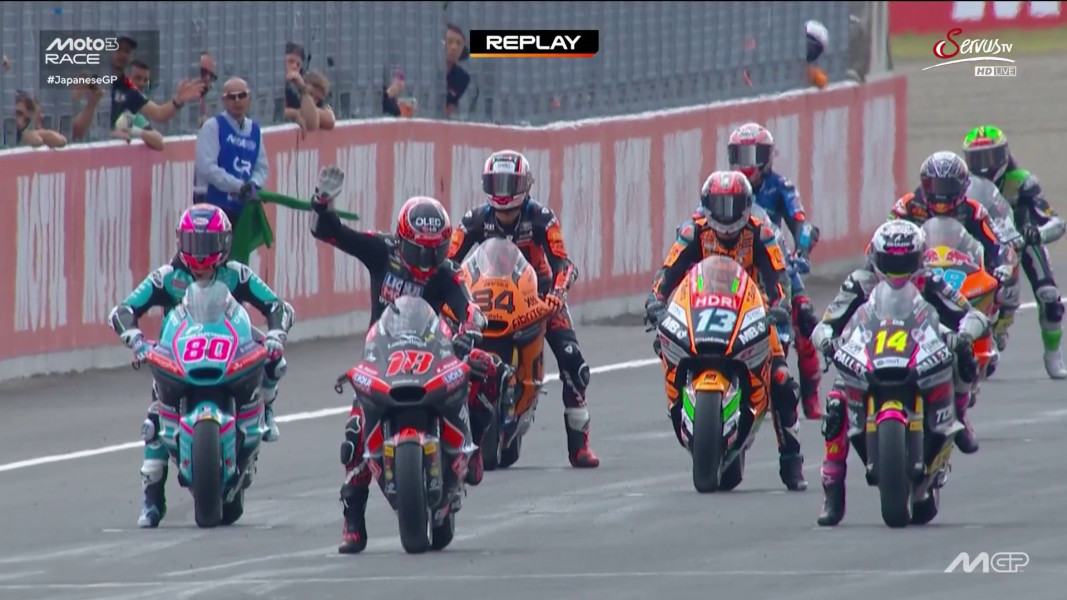
Moto2: Mega-Patzer von WM-Leader
4. Okt. | 1:29 Min
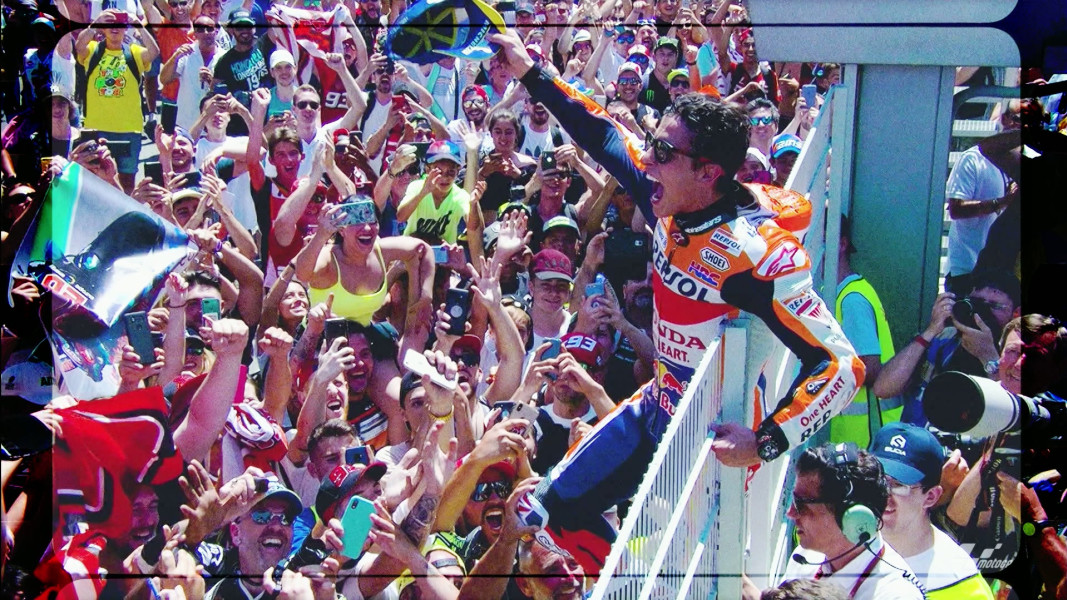
Finden Honda und Yamaha zurück zu alter Stärke?
4. Okt. | 3:46 Min
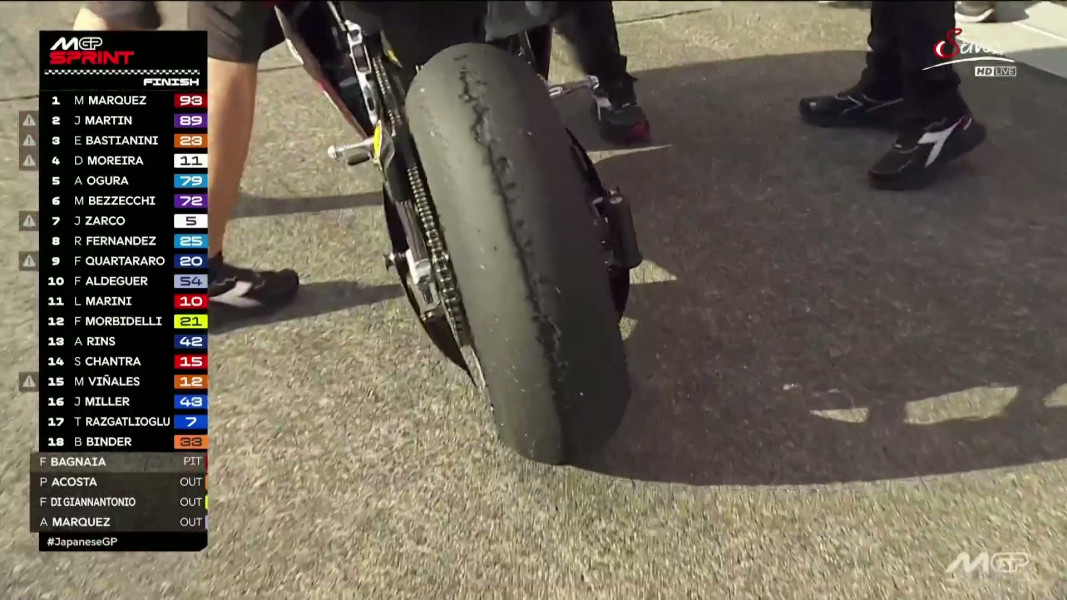
Hinterreifen löst sich förmlich auf!
3. Okt. | 1:35 Min
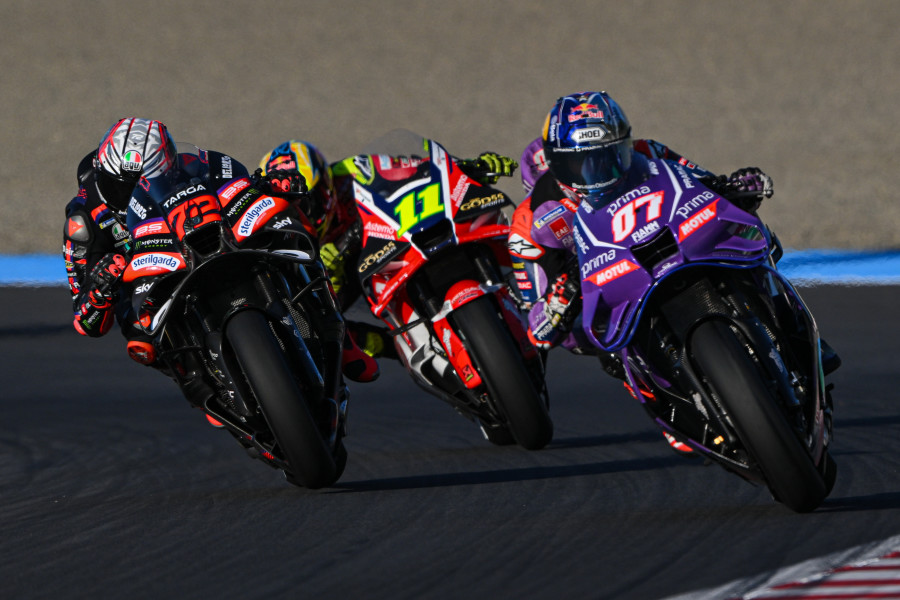
Track-Limits-Drama kurz vor Schluss!
3. Okt. | 5:15 Min
3. Okt. | 11:14 Min
MotoGP News
All News


Newest Articles
All ArticlesNew New New New New


