Is the FIA being unfair? David Coulthard: Does athletics only involve one leg?
The way in which the FIA, the world motorsport governing body, assesses the performance of F1 engines is causing a stir. This is because adjustments are only made to the combustion engine side of the power unit, not to the electric system. David Coulthard is flabbergasted.
This article is an automatically generated English version. The

David Coulthard
Foto: XPB
David Coulthard
© XPB


Ahead of the traditional Grand Prix weekend, one thing is clear to the rule-makers at the FIA, the world motorsport governing body: Red Bull-Ford has the most powerful internal combustion engine. For this reason, their rivals – namely Ferrari, Mercedes, Honda and Audi – are permitted to develop their internal combustion engines, whilst Red Bull-Ford are not, all within the framework of the so-called ADUO.
ADUO stands for ‘Additional Development and Upgrade Opportunities’. The aim of ADUO is to ensure that engine manufacturers who are lagging behind are given a chance to make up the deficit during the season. Manufacturers are granted development leeway if they are at least two per cent behind in terms of internal combustion engine performance.
The FIA has published the results for the second ADUO phase (covering the World Championship races from the season opener in Australia up to and including Hungary before the summer break). It concludes that Mercedes is between 2 and 4 per cent behind the class leader in terms of performance; Ferrari, Audi and Honda are more than 4 per cent behind.
Recommendations
Mentioned in this article
FIA Head of Formula Sport Nikolas Tombazis: “The FIA has carried out a thorough and comprehensive analysis as part of our ADUO review process. With the publication of the results of the second phase, we are confident that the analysis is extremely well-founded due to the quality of the data, which gives us a high degree of confidence in our findings.”
Red Bull Racing team principal Laurent Mekies has quite rightly criticised the fact that ADUO only takes into account the performance of the internal combustion engine (approx. 530 PS). The contribution of the electric system is disregarded. It is widely accepted within the industry that Mercedes has the most powerful overall package.
Ferrari came away empty-handed at the Dutch Grand Prix: Lewis Hamilton finished fourth, Charles Leclerc fifth. Afterwards, both drivers were angry, and team principal Fred Vasseur found himself having to explain the situation.
TV program
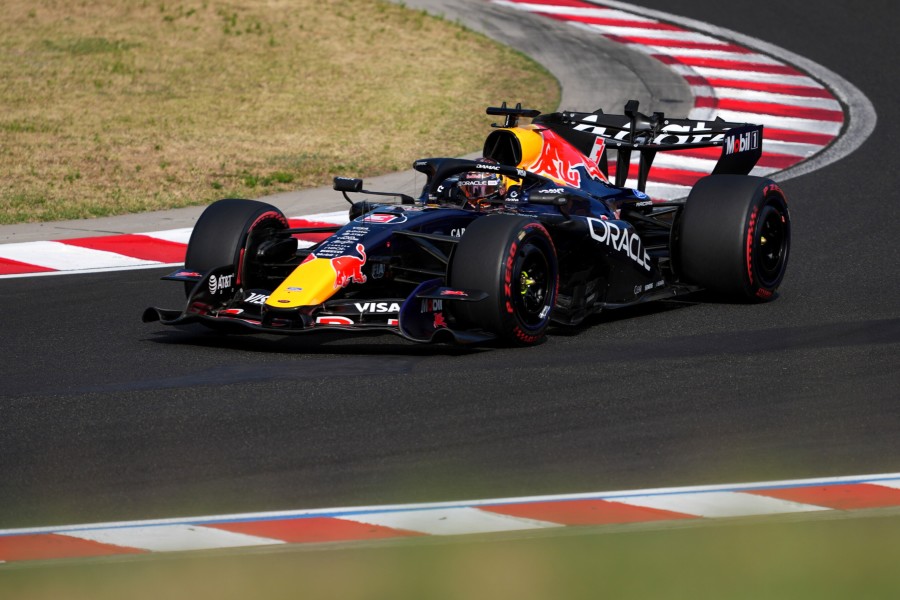
Long-serving Formula 1 driver David Coulthard has echoed this sentiment in his podcast ‘Up to Speed’. The 13-time Grand Prix winner and 2001 World Championship runner-up strongly disagrees with the FIA’s approach here.
The driver, who has competed in 246 Grand Prix races, explains: “In Formula 1, there’s an old saying that aerodynamics is king, and that’s always been something of a mantra. We tend to talk more about aerodynamics than engine power, and there have been various examples of teams winning world championships without having the most powerful engine.”
“But I feel that a real opportunity has been missed here with ADUO. The FIA says it was the teams’ wish to have a correction mechanism that was as simple as possible, which ultimately led to only the internal combustion engine being taken into account as part of the power unit.”
“To me, that’s simply not fair. You inevitably ask yourself: why is this being done? It’s as if, in athletics for example, we were to introduce some sort of limit on a specific part of the body. Then people would also say: ‘Why is this only about one leg?’ Because in competition, the whole body is used, after all.”
“Applied to Formula 1: the power unit as a whole isn’t just about the internal combustion engine. It’s also about the electric side. Sorry, but I don’t think that’s the fairest mechanism for monitoring engine performance.”
“We must bear in mind just how enormously complex these power units are. Here’s an example: we know from McLaren that they were frustrated at the start of the year because, although they have the same power unit as the Mercedes works team, they only received all the relevant information a week before the race. That simply wasn’t enough time for McLaren to carry out simulations and determine the optimal energy distribution.”
“The bottom line is that we find ourselves in a classic situation where we all have to sit back and acknowledge: this isn’t the best solution.”
Seen already?
Don't miss out on any highlights: The Speedweek newsletter, sent out twice a week, delivers the latest news, exclusive commentary and all the important dates from the world of motorsports - directly into your inbox
Results
Full standingsPos
Driver
Driver
Team
Start No.
Rounds
Time
Fastest Lap
Points
01

McLaren Formula 1 Team
1
72
2:04:44,859
1:14,321
31
02

Mercedes-AMG Petronas Formula One Team
12
72
+11,536
1:14,571
23
03

Mercedes-AMG Petronas Formula One Team
63
72
+15,906
1:15,393
23
04

Scuderia Ferrari HP
44
72
+16,755
1:14,566
14
05

Scuderia Ferrari HP
16
72
+17,258
1:14,230
17
06

McLaren Formula 1 Team
81
72
+32,332
1:14,303
12
07

Oracle Red Bull Racing
30
72
+1:19,915
1:15,435
6
08

Audi Revolut F1 Team
27
71
+1 round
1:16,048
4
09

Aston Martin Aramco Formula One Team
14
71
+1 round
1:16,946
2
10

BWT Alpine Formula One Team
10
71
+1 round
1:16,220
2
Highlight videos
ServusTV media library
„Das hätte ihm das Leben gekostet!“
2. Sept. | 2:12 Min
Hat Hamilton Mercedes-Heimweh?
24. Aug. | 1:54 Min

Markantes Lawson-Style-Detail!
23. Aug. | 7:14 Min
Paddock-Tour: Weite Wege in Zandvoort
22. Aug. | 7:08 Min
Keine Bitterballen für Andrea & Christian
21. Aug. | 6:00 Min
21. Aug. | 4:44 Min
Übt Norris Weltmeister-Druck auf McLaren aus?
27. Juli | 1:16 Min

F1-Geschichtsstunde mit Andi Gröbl
19. Juli | 7:53 Min
Events
All Formula 1 eventsPast Hungarian Grand Prix
 24.–26.07.2026
Past Dutch Grand Prix
 21.–23.08.2026
Next up Italian Grand Prix
 04.–06.09.2026
Next up Spanish Grand Prix
 11.–13.09.2026
Azerbaijan Grand Prix
 24.–26.09.2026
Past Hungarian Grand Prix
Past Dutch Grand Prix
Next up Italian Grand Prix
Next up Spanish Grand Prix
Azerbaijan Grand Prix
Formula Cars News
All news



Newest articles
All articlesNew New New