
Marking Soichiro Honda’s 120th birthday: a name that made history
Honda is undoubtedly one of the most evocative names in the world of motorsport. The company’s founder, the gifted engineer and visionary Soichiro Honda, was born 120 years ago.
This article is an automatically generated English version. The

Soichiro Honda hat seinen Teil zum Erfolg von Ayrton Senna beigetragen
Foto: Photo4 / XPB Images
Soichiro Honda hat seinen Teil zum Erfolg von Ayrton Senna beigetragen
© Photo4 / XPB Images


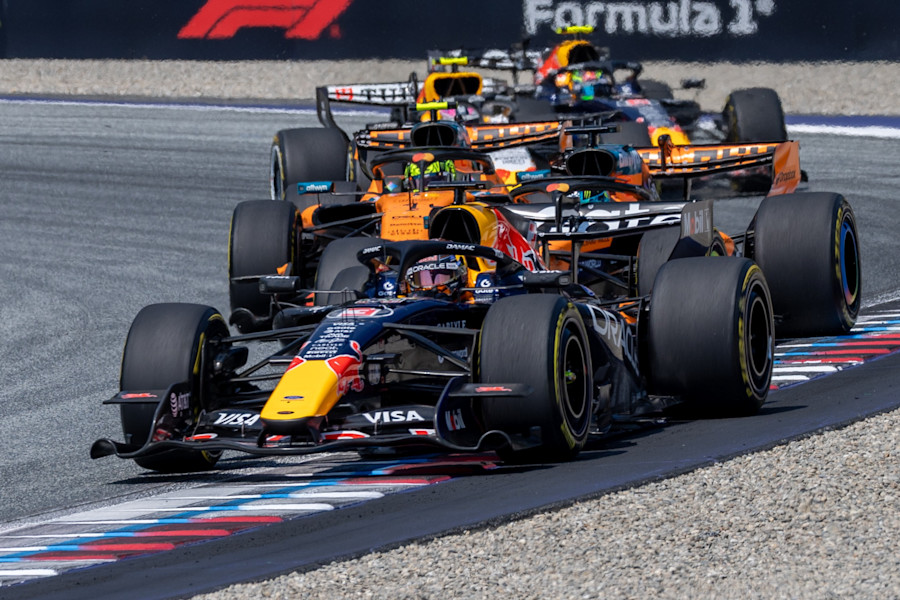
Soichiro Honda was born on 17 November in Hamamatsu, in Shizuoka Prefecture on Honshu, Japan’s main island, some 200 kilometres south-west of Tokyo, the eldest of five children.
He had little interest in his schoolwork, but was far more fascinated by technology and mechanics. He therefore deliberately took up an apprenticeship in Tokyo at a repair workshop for bicycles and motorbikes, and later for cars as well.
With the support of his boss there, Art Shokai, he returned to his home town of Hamamatsu in 1928 to set up a branch there and run it as director. At the same time, after work, he worked as a racing mechanic for his boss, who was also a racing driver.
Recommendations
In 1931, Soichiro Honda filed his first patent, which aimed to replace the wooden rims that had been standard up to that point with metal rims.
A brief career as a racing driver
In July 1936, he competed in his first car race at the ‘All Japan Speed Rally’, driving himself with one of his brothers as co-driver. This ended in his first of several serious accidents. During the oval race at the Tama River circuit near Tokyo that same year, he was already well in the lead having set a new lap record when, whilst lapping a slower car, he collided with it and was thrown from the car. It took him two years to recover from his serious injuries (including a broken shoulder and wrist, and facial injuries).
Topic of the week
Crazy MotoGP hero? Jorge Martin as 2026 World Champion in Psychology
Many shook their heads – whether out of bewilderment, admiration or disapproval – when a badly injured Jorge Martin opened the throttle at Sepang and Losail. Martin’s message has got through.
TV Program
Eventually, he came to realise that he should confine himself to design work and, in 1937, founded his first company, ‘Tokai Seiki Heavy Industry’. Through this company, he manufactured pistons and piston rings. He did this not primarily for profit, but because he wanted to tackle the persistent thermal problems of internal combustion engines in general – and of these components in particular – which had been an issue up to that point. He carried out countless unorthodox experiments with various materials and metal alloys, and in the process realised that his level of education was insufficient. Consequently, at the age of 31, he began studying at a technical university.
In November 1937, Soichiro Honda ‘invented’ the ‘super piston ring’, made from a mixture of silicon and metal. This made him the market leader and Toyota’s main supplier.
During the Second World War, ‘Tokai Seiki Heavy Industry’ also produced goods for the Japanese army. Mass production required large numbers of less-skilled workers, a challenge which Soichiro Honda addressed by switching to fully automated and robot-assisted manufacturing.
Sale of Tokai Seiki Heavy Industry to Toyota
As a result of wartime destruction and a devastating earthquake, Soichiro Honda’s factory was badly damaged by the end of the war; yet it remained so attractive that he was able to sell it to Toyota for what was then a fortune. Afterwards, his mind was a blank, but following a year’s ‘break’ and a period of self-discovery, he founded the ‘Honda Technical Research Institute’ in Hamamatsu in October 1946 and began producing mopeds with auxiliary engines. These proved to be a huge sales success, particularly amongst the impoverished population.
On 24 September 1948, he then founded the ‘Honda Motor Company’, his final and greatest empire. Initially, the company manufactured 50cc and 98cc engines, which were fitted to a business partner’s bicycles and sold as mopeds. As the bicycle manufacturer could not keep up with the volume of orders, Honda decided to build complete vehicles himself.
Honda’s first complete motorcycle of its own was the model known as the Dream Type D, featuring an air-cooled 98-cc two-stroke engine. However, Soichiro Honda did not consider this technology to be viable for the future, so from 1951 onwards he switched to the simpler four-stroke technology with the Honda Dream Type E, featuring a 146-cc four-stroke engine, and remained on this path for civilian use.
An unparalleled history of motorsport success
Driven by the philosophy of boosting global motorbike sales through success in motor racing, he visited the Isle of Man in 1954. It was not until 1959, however, that Honda made its debut on the world stage, following extensive testing and national races in Japan.
The first milestones – Teisuke Tanaka’s third-place finish at the 1960 German Grand Prix at Solitude near Stuttgart, marking Honda’s first motorbike Grand Prix podium; the first GP victory in 1961 by the Australian Tom Phillis on the Montjuïccircuit in Barcelona in the 125cc class, and the first World Championship titles in the same year won by Tom Phillis (125cc) and Mike Hailwood (250cc), an unprecedented success story ensued. With a total of 62 titles to date, Honda stands unchallenged at the top of the list of motorcycle world championship titles won.
Yet Soichiro Honda was not merely a motorcycle enthusiast but a vehicle fanatic in every sense of the word. This led to the creation of his first racing car as early as the 1950s. At that time, he was also involved in the car trade and, more for his own enjoyment, built a car with a homemade chassis and a massive American V8 aircraft engine.
Entry into Formula 1 and the opening of a race track
When draft legislation was introduced in early 1962 – because the Japanese government, following the US model, wanted to limit the number of major Japanese car manufacturers to three – time was of the essence. Within a very short space of time, Honda developed two cars – the T360 compact car and the S360 sports convertible – and unveiled them to the public as early as October of the same year at the Tokyo Motor Show. This had pre-empted the government’s move, as such a law had now been rendered absurd.
Of course, it was not to end with these two hastily produced models, as Honda quickly established itself as one of the leading manufacturers in the four-wheel sector as well. Once again, motor racing was to pave the way and rapidly boost the company’s profile. To this end, the company set its sights on entering Formula 1, acquired a Cooper-Climax through Jack Brabham, and began developing its own chassis based on it. For the power unit, they chose a completely in-house development: a V-12 engine.
As Honda had also opened its own racecourse in Suzuka in 1964, the team was able to carry out extensive testing and finally take part in a Formula 1 race for the first time at the Nürburgring from 31 July to 2 August. The American Ronnie Bucknum was chosen as the driver. However, with a retirement due to a broken steering system, the debut proved just as sobering as the two further races in 1964 at Monza in Italy and Watkins Glen in the USA, where the team also failed to see the chequered flag.
The year 1965 was also marked by setbacks, until, at the season finale in Mexico City, Ronnie Bucknum’s compatriot Richie Ginther managed to secure his first – and Honda’s first – Formula 1 victory.
Temporary withdrawal from Formula 1 following a fatal accident
Following the fatal accident involving the French driver Jo Schlesser in a Honda at the French Grand Prix on 7 July 1968 in Rouen, Soichiro Honda decided to withdraw his team from Formula 1 at the end of the year.
In 1977, the group’s senior management decided to return to Formula 1. However, the team limited itself to the usual role of supplying engines to otherwise independent teams. To this end, they allowed themselves a six-year lead-up period to assemble a suitable team of technicians and engineers. After just one year of learning the ropes in the pinnacle of motorsport, Keke Rosberg won the 1984 United States Grand Prix in Dallas at the wheel of a Williams-Honda.
In 1987, whilst continuing as engine supplier to Williams and with the Brazilian Nelson Piquet at the wheel, the team celebrated its first Formula 1 World Championship title. This was followed by a winning streak comprising four further consecutive World Championship titles (1988 to 1991) with McLaren and the drivers Ayrton Senna and Alain Prost.
Soichiro Honda was unable to celebrate the final World Championship title. He passed away on 5 August 1991 at the age of 84, following a busy but fulfilling life.
More recently, the successes of Red Bull Racing and Max Verstappen have been powered by Honda engines. He celebrated his first title whilst still with Honda. From 2022 to 2024, the Dutchman became Drivers’ World Champion in an RBPT-powered Red Bull. RBPT stands for Red Bull Powertrains and is a brand formerly owned by Honda, now under Red Bull’s ownership, based in Milton Keynes.
Seen already?
Don't miss out on any highlights: The Speedweek newsletter, sent out twice a week, delivers the latest news, exclusive commentary and all the important dates from the world of motorsports - directly into your inbox
Highlight Videos
ServusTV Media Library
16. Nov. | 1:26 Min
Verstappen gegen alle Widerstände!
10. Nov. | 4:00 Min
„Es muss klare Ansagen bei Ferrari geben“
7. Nov. | 16:41 Min
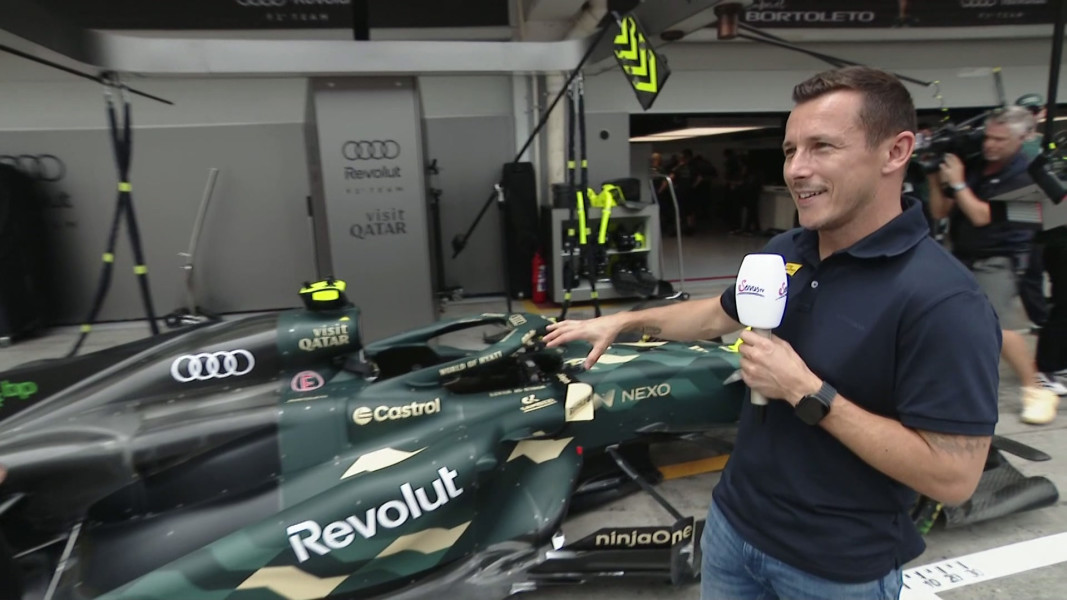
Klien erklärt: Audis Sao-Paulo-Design
6. Nov. | 4:41 Min
2. Nov. | 4:52 Min
27. Okt. | 3:15 Min
„Schallende Ohrfeige für gestandene Hersteller“
24. Okt. | 16:15 Min
Klien erklärt: Cadillacs cooles Texas-Design
23. Okt. | 4:24 Min
Formula Cars News
All News


Newest Articles
All ArticlesNew New New New New


