World Championship leader Maximo Quiles: “Even when I’m training, I have to race!”
He caused a sensation even in his rookie year – in 2026, Maximo Quiles has Moto3 firmly under control. The World Championship dominator from the ‘School of Murcia’ in a major SPEEDWEEK.com interview – Part 1.
This article is an automatically generated English version. The
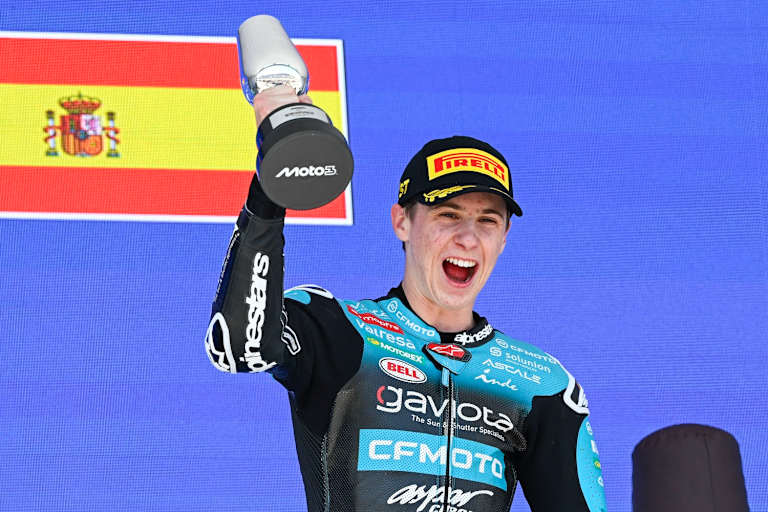
Maximo Quiles holte 2026 bereits sechs Moto3-Siege
Foto: Gold and Goose
Maximo Quiles holte 2026 bereits sechs Moto3-Siege
© Gold and Goose


At just 17 years of age, Máximo Quiles has not only become one of the best-known names in Moto3; his speed has also caught the attention of the entire paddock. But behind the young racer, who has already stood on the top step of the podium six times in 2026, lies a lad who still lives with his family in Murcia, enjoys giving interviews and openly admits that he has a passion: racing. Whether it’s a Grand Prix or a practice session: as soon as he puts on his helmet, he wants to be the fastest.
When talking to the young man, his ease is immediately striking. Máximo Quiles comes across as fresh and natural, and his answers are the opposite of rehearsed.
There’s one detail here that I find particularly interesting. Máximo talks about training, about improving, about competition. He doesn’t use the usual cliché, ‘I’ve had to give up a lot’. That makes the interview come across as very natural. And there’s another thought I really like: he doesn’t try to project a certain image. When asked about his friends, he replies quite naturally: “Off the track we get on well; on the track we want to win.” Maximo, you’ve long had a diary full of commitments to the press. How do you cope with so many interviews? Maximo Quiles: “To be honest, I cope with it quite well. I enjoy talking and I enjoy interviews. I realise that the demands in MotoGP are much higher and you have to constantly answer questions from the media, but at the moment I’m taking it all in my stride and enjoying it.”
Recommendations
Mentioned in this article
There’s one question you’ll be asked time and time again...
Yes, there’s one that comes up time and time again. Most often I’m asked about Marc Márquez – what it’s like to work with him or what it means to be alongside him. That question comes up practically every time.
In football, they say you play the way you train. Does that apply to motorbike racing too? I mean, because of the intensity with which you ride.
If only I could. The problem is that the rules don’t allow us to train on the Moto3 bike from the World Championship, so we have to look for alternatives. We try to make everything as close to a race as possible, but it’s never exactly the same.
Topic of the week
Spanish Grand Prix at the new Madring: track – hit or miss?
The people of Madrid had set their sights high for their city’s first Formula 1 World Championship race since 1981. But have the high expectations for the new Madring mixed-circuit track really been met?
TV Program
But when you’re training, do you push yourself to the limit?
Always. Whether I’m at the gym, cycling or training on the motorbike, I try to give it one hundred per cent.
People say that as soon as you hit the track, you’re thinking of just one thing: the lap record.
That’s right. The other day at the Aspar Circuit, that was exactly what I had in mind when I lined up at the start. I wanted to ride as fast as possible and ended up setting a brilliant time. I don’t know if it was the record, but I was very close. I was really pleased, because I love pushing myself to my limits.
So you’re one of those who fight for victory even in practice?
A definite yes. I’m very ambitious.
In Moto3, the riders practically grow up together by racing side by side every weekend. Who do you have the most memories of?
I’ve definitely raced with and against Brian Uriarte the most since I was little. We’ve known each other since the 110cc mini-bike class. I actually started even earlier with Alvaro Carpe, when we were training at the age of four or five, but as he was always in the class above, we didn’t come up against each other as often in races.
After so many years, do you already know how each opponent will react?
More or less, yes. Every rider has their own personality and a different riding style. They can always surprise you, but when you’ve been racing together for so many years, you eventually know where each rider’s strengths lie and how they usually tackle the final lap.
Does this knowledge also play a part in your race preparation?
To a certain extent. I try to focus primarily on my own performance, because there are many things you can’t control. You can start the race with a very clear plan in mind, and after just two corners, the race can change completely.
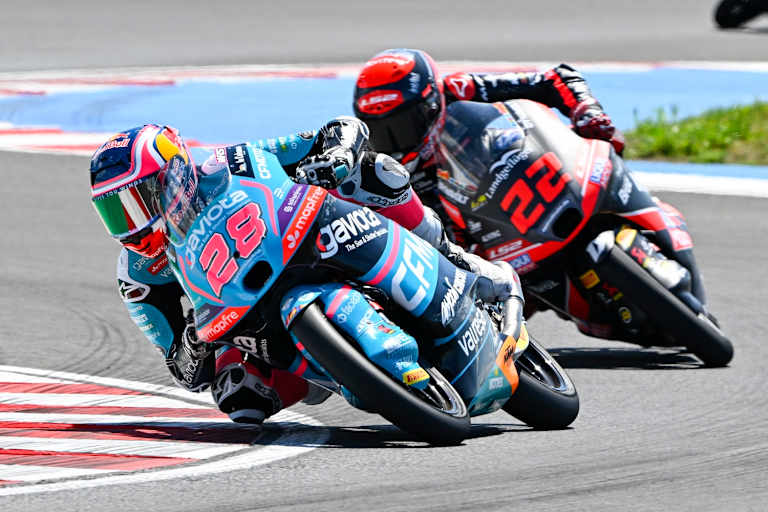
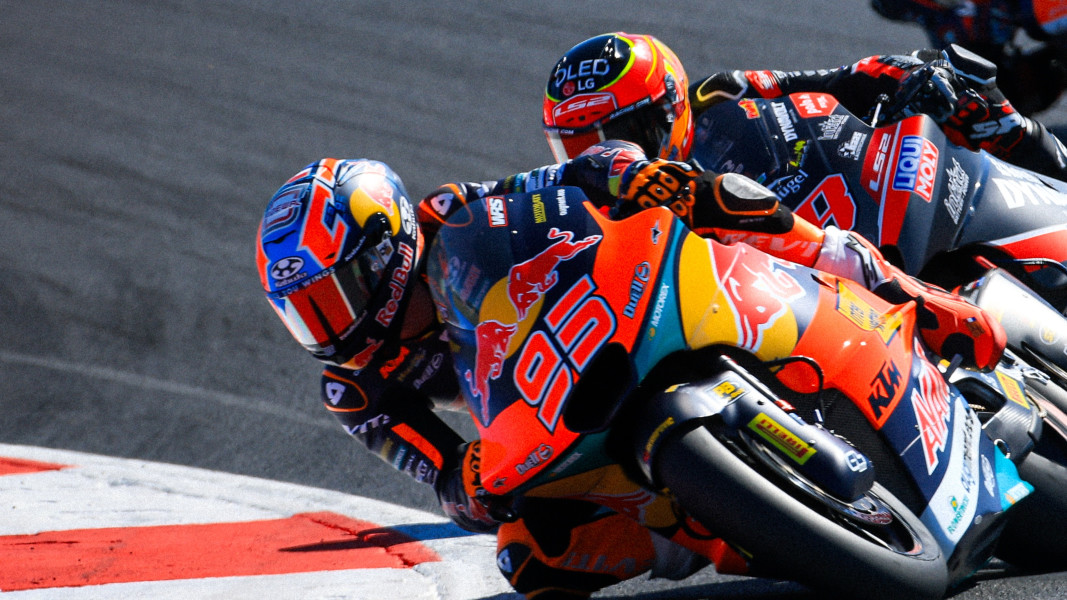
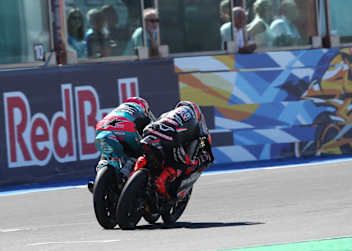
Quiles vor Intact-GP-Pilot David Almansa
Foto: Gold and Goose
Quiles vor Intact-GP-Pilot David Almansa
© Gold and Goose
Do you still prepare for different race scenarios, though?
Yes. We discuss the various options – what might happen if the group breaks apart or if the race gets very close towards the end. But you shouldn’t worry too much about it either, because then reality always turns out differently.
Who do you work with on this?
MainlywithDani and Álvaro, the team’s engineers. The mechanics are involved too, because ultimately everyone contributes something, and together we try to go into Sunday’s race with the best possible plan.
You still live in Murcia. Have you never thought about moving away?
No. I feel very much at home there and have no desiretomove away. I have everything I need to train and prepare for the races.
In recent years, many riders have emerged from this area. Is there actually a ‘Murcia school’?
Yes, in one way or another, we’ve all crossed paths. When we were little, we used to train together in Cartagena. That was our meeting place, so to speak.
What were these training sessions like?
At the start, we did loads of technical exercises with cones and small obstacle courses, because we were still very young children and had to learn the basics first. Lots of riders who later made it to the World Championships used to meet up there.
Did you have any idea back then who might go far?
It was impossible to know. Over time, everyone went their own way, changed teams and altered their training methods. Little by little, our paths diverged, but those years were very important for all of us.
What do your training sessions look like these days?
It depends. I often train on my own, and sometimes I bump into Marc, David (Alonso) or Dani (Holgado) when we’re riding at the Aspar Circuit. It’s not as though we arrange to train together; we just bump into each other by chance because we all use the same facilities.
Do you enjoy training on your own?
Yes. That way I can concentrate fully on my work. When you share the track with other riders, you can always use them as a benchmark, but my priority remains improving myself.
After several races in a row, are you grateful for a weekend off?
Very much so. I love racing, but I need to switch off every now and then. When I get home, I try to slow the pace down a bit and recharge my batteries.
Does ‘switch off’ mean you stop training?
Not quite. The gym, cycling and fitness training are still part of my daily routine, but I try to treat myself to a day off completely to clear my head.
Do you still live with your family?
Yes, it helps me. At the end of the day, you come home and everything’s back to normal. That feels really good.
But when the lights go out…
Then we’re rivals. Everyone wants to win. But that doesn’t mean we can’t chat, laugh or get on well with each other off the track.
Can you have real friends in a world like the Moto3 World Championship?
Yes, definitely. It’s one thing to compete against each other, and quite another when it comes to personal relationships. I get on very well with Alvaro Carpe, Brian Uriarte and other riders because we’ve known each other for many years.
Question: Is there a rider with whom you have a particularly close relationship?
My relationship with Fermin Aldeguer is exceptionally good. I really like his manner; he’s always in a good mood and very entertaining.
Seen already?
Don't miss out on any highlights: The Speedweek newsletter, sent out twice a week, delivers the latest news, exclusive commentary and all the important dates from the world of motorsports - directly into your inbox
Results
Full StandingsPos
Driver
Driver
Team
Start No.
Rounds
Time
Fastest Lap
Points
01

Red Bull KTM Ajo
51
23
33:02,694
1:25,836
25
02

CFMOTO Aspar Team
28
23
+0,063
1:25,227
20
03

LEVELUP-MTA
18
23
+5,053
1:25,512
16
04

CFMOTO Aspar Team
97
23
+5,060
1:25,405
13
05

Red Bull KTM Tech3
27
23
+5,139
1:25,401
11
06

Leopard Racing
31
23
+8,626
1:25,678
10
07

Rivacold Snipers Team
54
23
+11,418
1:25,605
9
08

Honda Team Asia
9
23
+15,657
1:25,985
8
09

FRINSA - MT Helmets - MSI
6
23
+15,774
1:25,977
7
10

GRYD Racing
GRYD Racing
8
23
+15,789
1:26,101
6
Highlight Videos
ServusTV Media Library
„Haben gezittert bis zur letzten Kurve"
20. Sept. | 4:01 Min
20. Sept. | 41:28 Min
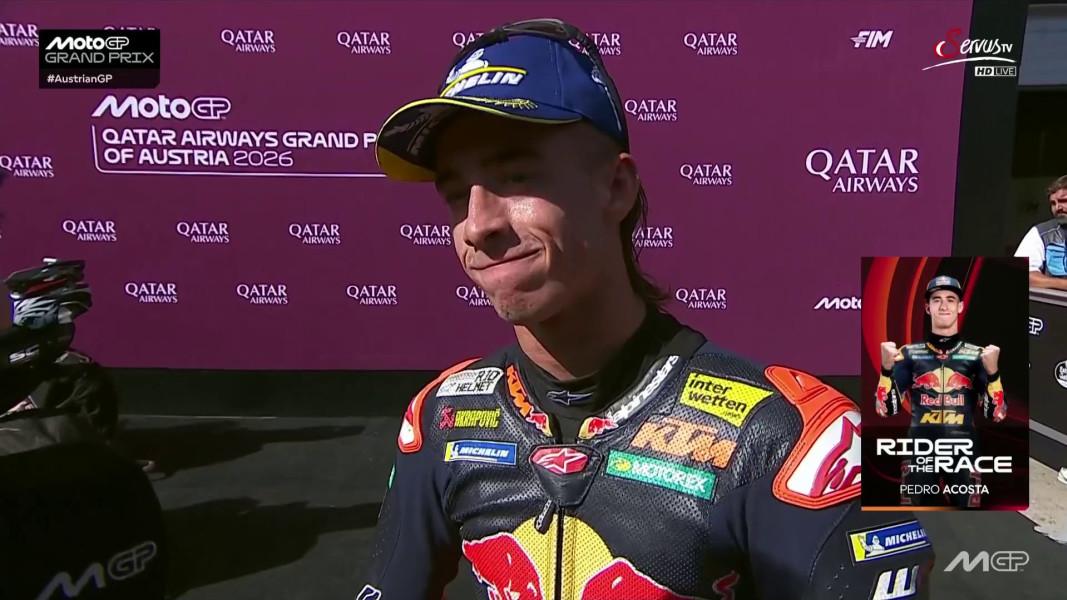
Pedro Acosta: „Danke an alle Fans“
20. Sept. | 5:36 Min
20. Sept. | 3:52 Min
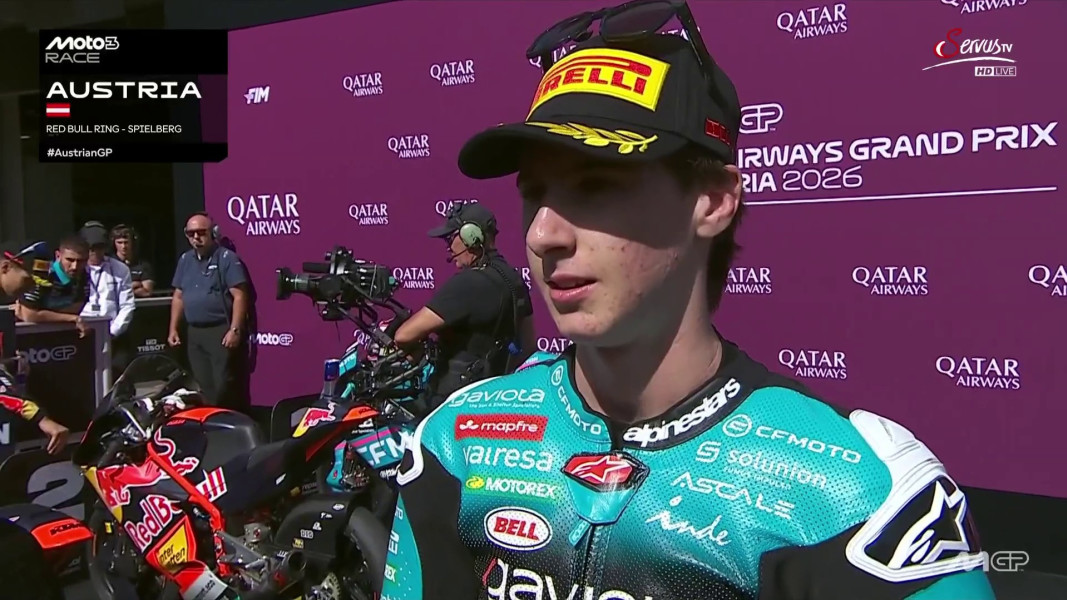
Quiles: „Es war toll, in Österreich zu fahren“
20. Sept. | 3:15 Min
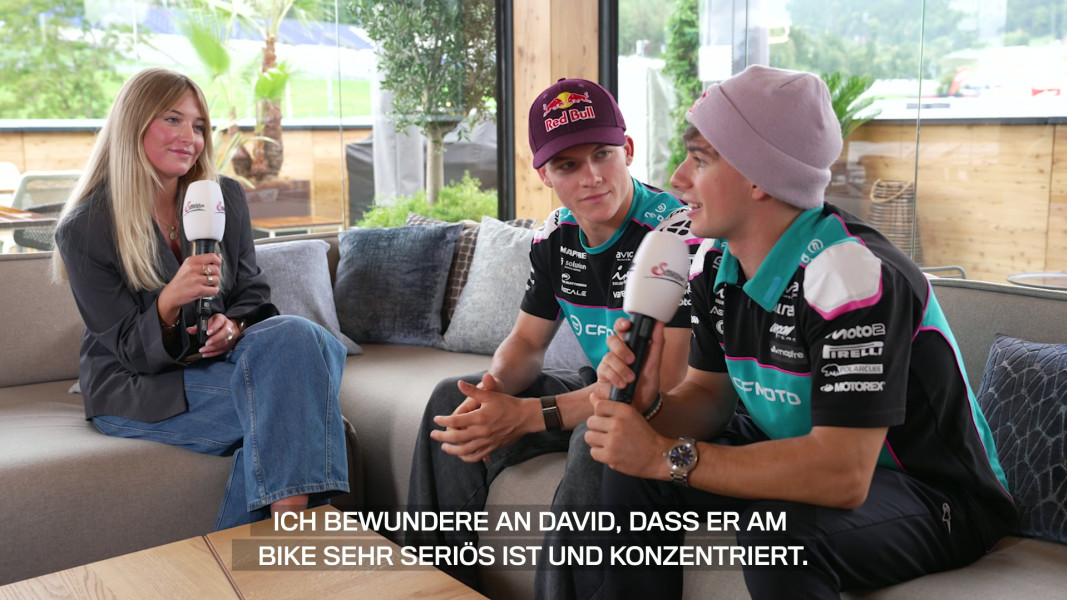
Holgado & Alonso beantworten eure Fragen!
20. Sept. | 4:01 Min
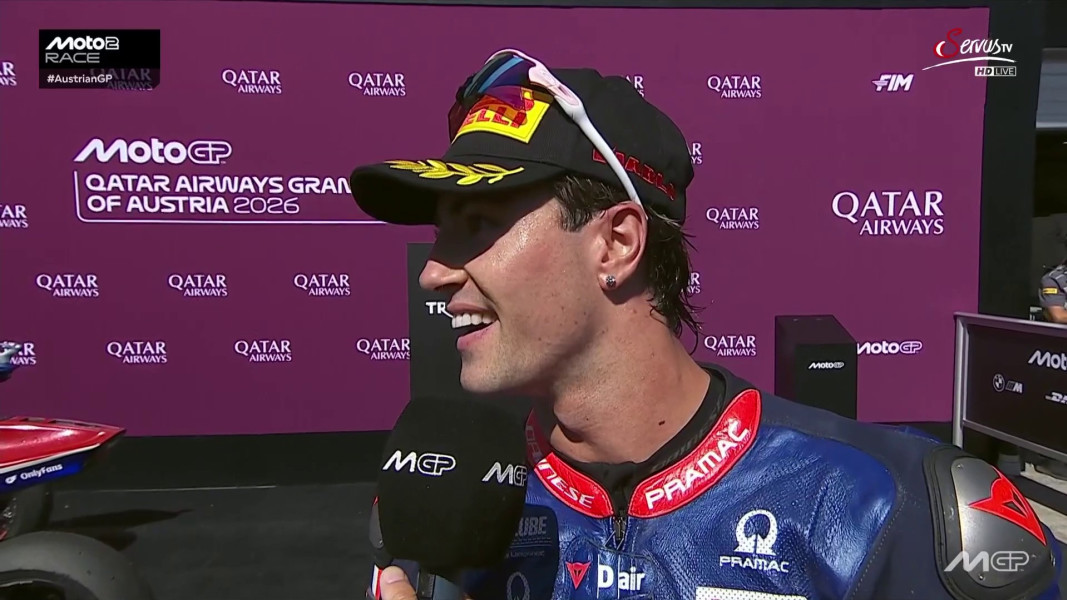
Izan Guevara: „Wir müssen den Moment genießen“
20. Sept. | 4:26 Min
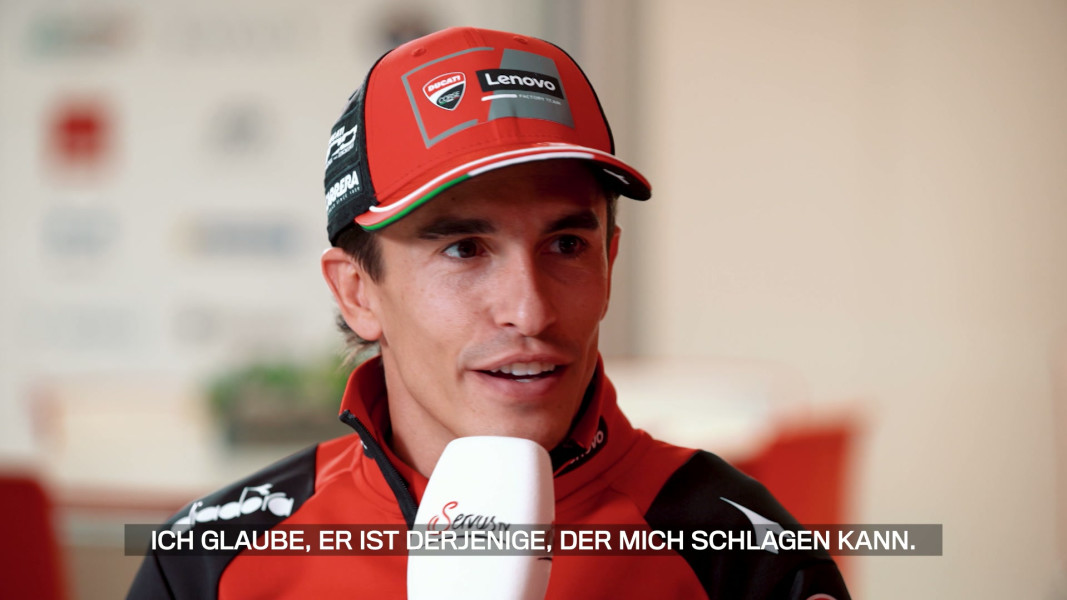
Marc Marquez 1on1: Der MotoGP-Weltmeister exklusiv
20. Sept. | 5:16 Min
Events
All Moto3 EventsPast San Marino Grand Prix
 11.–13.09.2026
Past Motorrad Grand Prix von Österreich
 18.–20.09.2026
Next up Japanese Grand Prix
 02.–04.10.2026
Indonesia Grand Prix
 09.–11.10.2026
Australian Grand Prix
 23.–25.10.2026
Past San Marino Grand Prix
Past Motorrad Grand Prix von Österreich
Next up Japanese Grand Prix
Indonesia Grand Prix
Australian Grand Prix
MotoGP News
All News
Newest Articles
All ArticlesNew New New New New