
MV Agusta faces another change of ownership: traditional manufacturer in crisis
MV Agusta has received a takeover bid from an investment firm. The Italian brand urgently needs capital to carry on. A new chapter in the company’s history, which has been full of twists and turns.
This article is an automatically generated English version. The

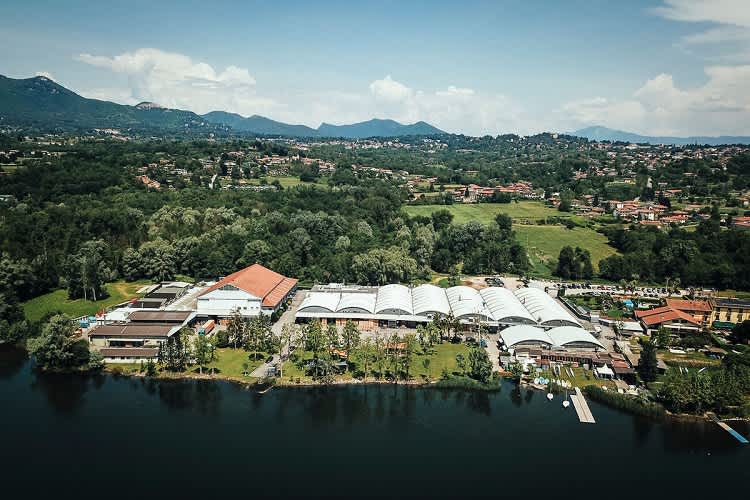
Am MV Agusta-Stammsitz am Lago di Varese herrscht seit Monaten Kurzarbeit
Foto: MV Agusta
Am MV Agusta-Stammsitz am Lago di Varese herrscht seit Monaten Kurzarbeit
© MV Agusta


“MV Agusta is independent once again.” Less than two years have passed since the motorbike manufacturer published this announcement on its website. The group led by Timur Sardarov, who had already been at the helm of the Varese-based brand from 2017 to 2022, has regained control in Varese. There was talk of ‘enhanced financial stability under new management’, but the reality for the long-established brand looks very different today: Since the spring, production lines at the headquarters in Schiranna have largely come to a standstill, with factory workers officially on short-time working. A urgently needed capital increase of 35 million euros is said to have fallen through in the spring, whilst CFMoto’s planned investment failed in the summer.
As a result, the Chairman of the Board of Directors, Hubert Trunkenpolz, stepped down. For months, there was no word from MV Agusta itself on the matter, and even regarding delivery problems with spare parts, CEO Luca Martin merely commented with a terse “We’re working on it” via social media. Then, in September, MV Agusta entered into an out-of-court restructuring procedure known as a ‘Composizione Negoziata della Crisi’, in which an independently appointed expert is tasked with overseeing negotiations with creditors, suppliers and banks whilst simultaneously seeking new sources of funding for the company.
As part of this process, according to an official statement from MV Agusta, an initial offer was received on 17 November. MV Agusta and the appointed restructuring expert are hoping for a bidding war: the statement refers to “a competitive process” to which they are “inviting” interested parties. Under this process, the prospective buyer would initially have to lease MV Agusta’s headquarters in Varese and the trademark rights to the long-established manufacturer, and then purchase them by July 2027 at the latest.
The company now known as Bajaj Mobility had only sold MV Agusta back to ‘Art of Mobility’, owned by former CEO Timur Sardarov, in mid-2025 for a ‘mid-double-digit million sum’. The investment firm ‘Sports Bank Capital Partners LLC’, founded as recently as 2024 and which, according to its own statements, specialises in investments in sports, leisure and entertainment brands, is currently offering 28 million euros for the entire package. However, this does not constitute a binding offer to purchase.
Next Wednesday, 25 November, as part of the crisis proceedings, the court is due to examine the form in which the crisis mechanism will continue and to what extent this also includes the possibility of it continuing as insolvency proceedings. Time is running out, as the short-time working scheme – known in Italy as the ‘solidarity contract’ – is due to run until the end of the year. Only until then will the Italian state continue to cover a large proportion of the wages of MV Agusta’s assembly line workers. This affects 184 employees, who are said to have been working on the production line for only a few days a month recently.
It is yet another chapter in the eventful history of the long-established manufacturer from Lake Varese, in whose recent history changes of ownership have been as regular as ambitious plans: MV Agusta was founded in 1945 and built its reputation in the 1960s and 1970s through successes in motor racing. Production ceased in 1980. Twelve years later, the Cagiva Group, led by Claudio Castiglioni, acquired the rights to the Italian brand and rebuilt the manufacturer. In 2008, MV Agusta was first sold to Harley-Davidson and, shortly afterwards, returned to the Castiglioni family, before Mercedes-Benz acquired a stake in the Italian company via its AMG sub-brand in 2014. Shortly before that, automotive giant and Daimler rival Volkswagen had acquired MV’s rival, Ducati. Meanwhile, Giovanni Castiglioni, the son of the iconic Claudio Castiglioni, was at the helm in Varese and planned to increase sales to up to 20,000 motorbikes and later enter MotoGP.
However, sales figures never rose above 9,000 units, and the move into the premier class remained a pipe dream. The period under the subsequent leadership of Russian investor Timur Sardarov marked the northern Italian company’s most stable phase, until he announced a ‘strategic partnership’ with Pierer Mobility – then KTM’s parent company – at the end of 2022. Just months later, this culminated in the acquisition of more than half of the company’s shares held by the Sardow family and Stefan Pierer.
KTM then ran into financial difficulties, became insolvent at the end of 2024 and had to undergo restructuring. As part of this restructuring, Sardow bought MV Agusta back. According to Italian media reports, KTM is now said to be MV Agusta’s largest creditor. The Austrians had supported MV Agusta in procurement and sales, and the current CEO, Luca Martin, also came to Varese from the Austrian firm.
Luca Martin remained in his post even after KTM’s withdrawal and was tasked with ensuring that MV Agusta ‘could continue on its growth trajectory’, as was stated as recently as 2025. The year before, MV Agusta had sold around 4,000 motorbikes. Once again, an entry into MotoGP was publicly discussed in interviews; a technically sophisticated, modular five-cylinder engine concept was presented at an early stage of development; and the prices of MV’s mainstream models were significantly reduced.

Steht weitgehend still: Produktion der MV Agusta Superveloce in Schiranna
Foto: MV Agusta
Steht weitgehend still: Produktion der MV Agusta Superveloce in Schiranna
© MV Agusta
The Schiranna-based brand planned to become less reliant on the luxury segment; speaking to the British publication *Motorcycle News*, Martin stated that he did not believe that “luxury exists in motorbikes” and saw himself competing with brands that sell ten to forty times as many motorbikes each year. In the first half of 2026, 2,166 new MV Agustas were registered, representing a slight increase. These registrations cover all motorbikes taking to the road for the first time and thus also include sales from stock.
The failure to secure a capital increase and the collapsed sale to CFMoto ultimately led to the company entering crisis proceedings, during which the manufacturer admitted that the transition phase following the split from KTM had been ‘significant’ for MV Agusta and that it had had only attempted to restore the “prerequisites for business operations” “gradually”. “Possible developments regarding MV Agusta’s shareholding structure” had also been initiated and examined, although some had been “deemed unfeasible”. It remains to be seen how the restructuring proceedings will continue on Wednesday, 25 November. Time is running out for MV Agusta.
Seen already?
Don't miss out on any highlights: The Speedweek newsletter, sent out twice a week, delivers the latest news, exclusive commentary and all the important dates from the world of motorsports - directly into your inbox
Products News
All News


Newest Articles
All ArticlesNew New New New New New New


