The future of MotoGP: The question is not ‘if’, but ‘when’ China will be on the grid
The example of CFMOTO and its special connection to team owner Jorge ‘Aspar’ Martinez shows just how seriously China is taking MotoGP. Not even the hurdle of Moto3 will stop them.
This article is an automatically generated English version. The
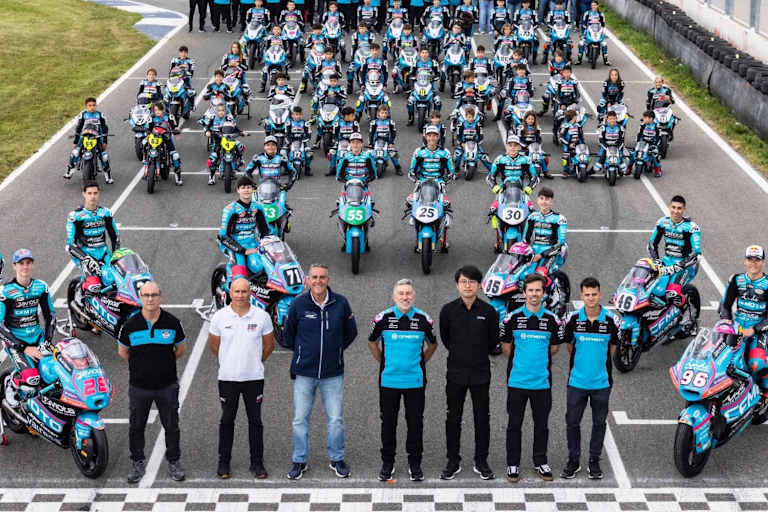
Noch Fragen? Das Projekt «CFMOTO-Aspar» steht auf einer breiten Basis
Foto: Circuit Aspar
Noch Fragen? Das Projekt «CFMOTO-Aspar» steht auf einer breiten Basis
© Circuit Aspar


It all happened very quickly. The request for an interview with GP team owner Jorge ‘Aspar’ Martinez was swiftly and politely approved by the press office with a thumbs-up. Amidst the hustle and bustle of Saturday at the German Grand Prix, the door to the team headquarters swung open. The scheduled 15 minutes turned into 25 – valuable time for a chat with Martinez, who is nothing less than a cornerstone of the vast paddock.
Martinez, who as a rider also lived through and helped shape the era when terms such as ‘globalisation’, ‘commercialisation’ or ‘social media’ were still a long way from reaching the scene – worked his way
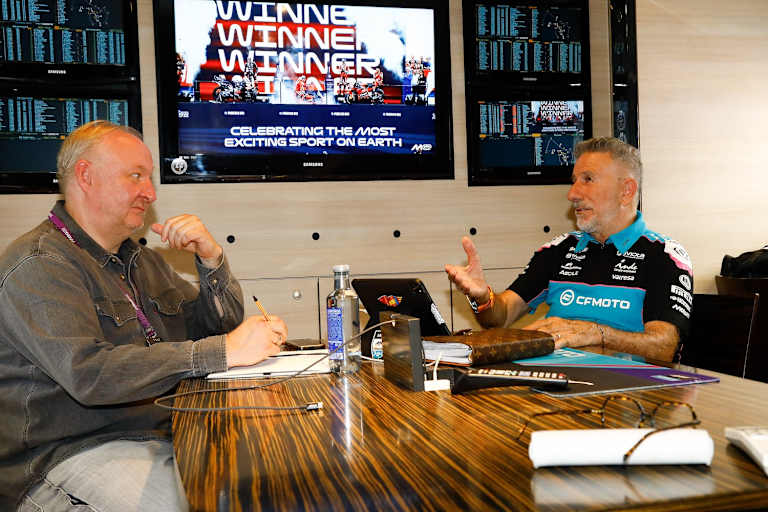
Jorge «Aspar» Martinez im Gespräch mit SPEEDWEEK.com
Foto: Gerhard Schiel
Jorge «Aspar» Martinez im Gespräch mit SPEEDWEEK.com
© Gerhard Schiel
The lavish trucks of the Moto2 and Moto3 teams and the hospitality arrangements at MotoGP events are just the tip of the iceberg. The company’s real powerhouse is based near Valencia and is constantly erupting with new initiatives to promote young talent in motorcycling.
From the pram to a fully-fledged GP hero
Jorge Martinez’s world begins at the very bottom. Parents can practically drop their children off in their prams in the paddock at the ‘Aspar Circuit’ and pick them up again as world champions with a MotoGP training certificate. The key point is that Martinez does not view his commitment as merely local support – the circuit’s academy is cosmopolitan and, given its most important partner, unsurprisingly fully focused on China’s future role in MotoGP. Martinez’s team is already training Chinese children across a wide range of age groups.
Topic of the week
Spanish Grand Prix at the new Madring: track – hit or miss?
The people of Madrid had set their sights high for their city’s first Formula 1 World Championship race since 1981. But have the high expectations for the new Madring mixed-circuit track really been met?
TV Program
And the day will come – of this both CFMOTO and Jorge Martinez are convinced – when the project, which is currently contractually agreed until 2031, will produce China’s own GP rider. It is clear to everyone involved that 2031 will not be enough to turn the paddock on its head. After all, money alone is not enough to compete successfully in the MotoGP that has emerged. A prime example is that the two Japanese manufacturers have been lagging behind – and not just since 2026 – despite formally having the best conditions.
At CFMOTO, they are taking the time that will be needed. In this context, the development of the new Moto3 formula from 2028 onwards is also more than just interesting. As is well known, the entry for the entry-level World Championship class was put out to tender amongst all manufacturers in 2025. CFMOTO also made its intentions known and submitted proposals for a 450cc racer with a twin-cylinder engine. This was partly because these broad guidelines had initially been agreed upon within the manufacturers’ association, the MSMA.
Strategic repercussions for the Moto3 project
The fact that
It was certainly not an easy decision for the International Motorcycling Federation (FIM) and the MotoGP Group. They had to weigh up whether to build up a new manufacturer – or to back a major player that is already fully established. A missed opportunity from MotoGP’s perspective with a view to the future – but at the same time a safe bet when it comes to managing the important marketing component that is Moto3.
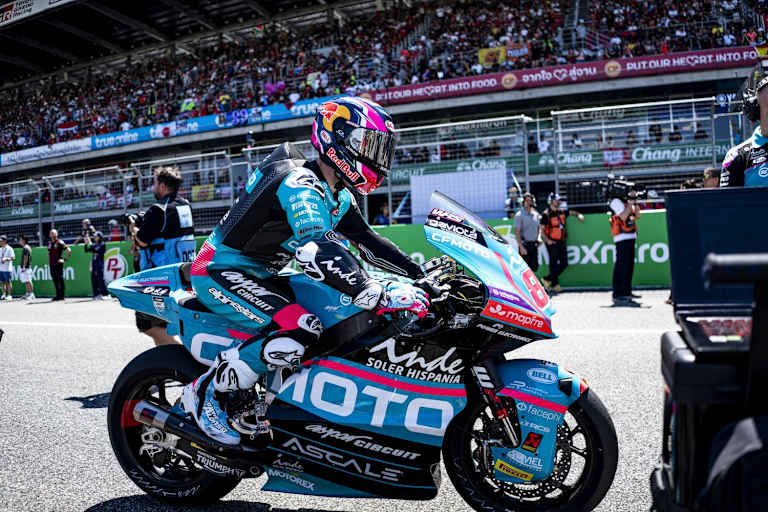
CFMOTO: Viel mehr als nur Werbepartner
Foto: Team Aspar
CFMOTO: Viel mehr als nur Werbepartner
© Team Aspar
CFMOTO will, however, recover quickly from this strategic setback. As is well known, one learns far more from setbacks than from smooth sailing. Without wishing to stir up controversy regarding the crises raging globally: China, initially represented by CFMOTO as the most active project (with Kove, QJMotor, Zontes and Voge, other major Chinese companies are also gearing up), decided years ago to capitalise on the MotoGP business model as well.
This vision has been backed up by action. Anyone who thinks CFMOTO is simply handing out stickers in the paddock and promoting Spanish Moto3 riders is, to put it mildly, completely off the mark. CFMOTO is building up all its capabilities step by step, revolution by revolution. Product planning, research and development, sales and marketing – and the still-compact sports division – are all running at full speed.
The knowledge puzzle is coming together
Design and testing facilities are now in place in Europe. Added to this is the crucial connection provided by Jorge Martinez – not least because it is clear that MotoGP can only be conquered via a Spanish gateway. Team structure, network, rider development – all ticked off. On top of that is the long-term partnership with Kalex Engineering. As is widely assumed, no MotoGP chassis are being built in Bavaria as yet, but information is flowing – and as things stand today, this is more important than a hastily milled prototype bearing a CFMOTO nameplate.
The Moto3 hurdle serves as additional motivation. It will take time – a long time – but the MotoGP of the future will involve China; that is not a question, but a statement of fact. Jorge Martinez’s composed demeanour spoke volumes more than his actual words. The enormous investment in the company’s own infrastructure – for which it even shut down its own MotoGP team at the end of the last decade – appears to have been money well spent.
Seen already?
Don't miss out on any highlights: The Speedweek newsletter, sent out twice a week, delivers the latest news, exclusive commentary and all the important dates from the world of motorsports - directly into your inbox
Championship Standings
Full Standingsorg-location for [2026] 2026
2026
2025
2024
2023
Pos
Driver
Team
Points
1


274
2


274
3

241
4


223
5


209
6


203
7

199
8


153
9

143
10

105
Highlight Videos
ServusTV Media Library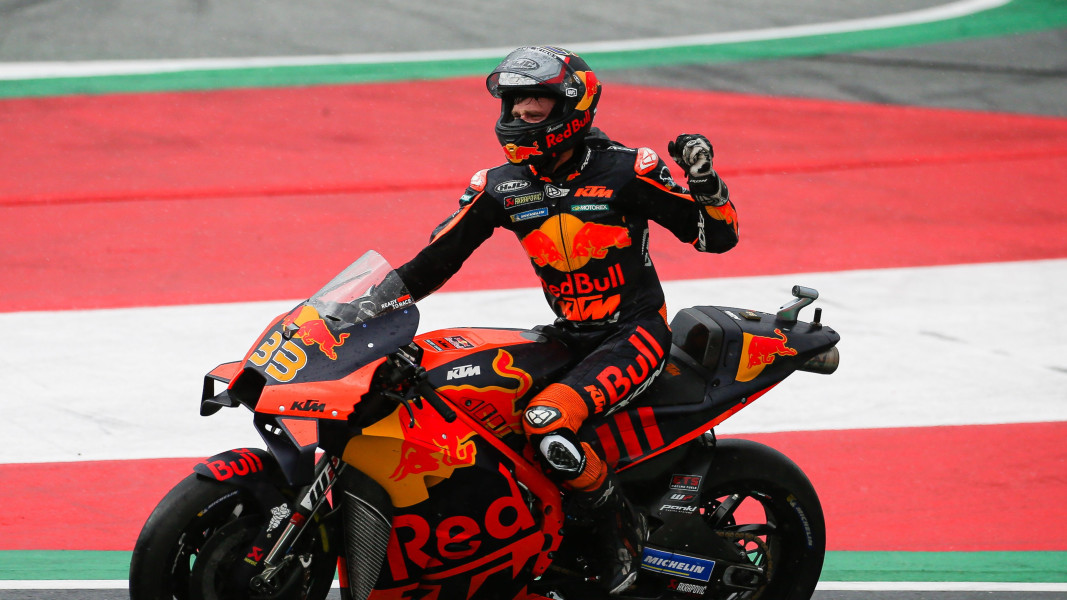
Red Bull Ring 2021: „Big Balls“ Binder!
16. Sept. | 1:38 Min
Misano: Die Tops & Flops des Wochenendes
13. Sept. | 6:15 Min
13. Sept. | 4:26 Min
13. Sept. | 31:59 Min
13. Sept. | 3:43 Min
Short Profile: So tickt Izan Guevara
13. Sept. | 3:07 Min
MotoGP-Titelkampf spitzt sich zu
13. Sept. | 4:22 Min
13. Sept. | 1:15 Min
Events
All MotoGP EventsPast Gran Premio de Aragón
 28.–30.08.2026
Past Gran Premio di San Marino
 11.–13.09.2026
Next up Motorrad Grand Prix von Österreich
 18.–20.09.2026
Grand Prix of Japan
 02.–04.10.2026
Pertamina Grand Prix of Indonesia
 09.–11.10.2026
Past Gran Premio de Aragón
Past Gran Premio di San Marino
Next up Motorrad Grand Prix von Österreich
Grand Prix of Japan
Pertamina Grand Prix of Indonesia
MotoGP News
All News