
It’s getting ever more congested: restrictive speed limits on Swiss mountain passes
Motorcyclists want to enjoy the feeling of freedom in the wind, whilst residents living along mountain passes want their peace and quiet. A conflict that will remain unsolvable for years to come.
This article is an automatically generated English version. The

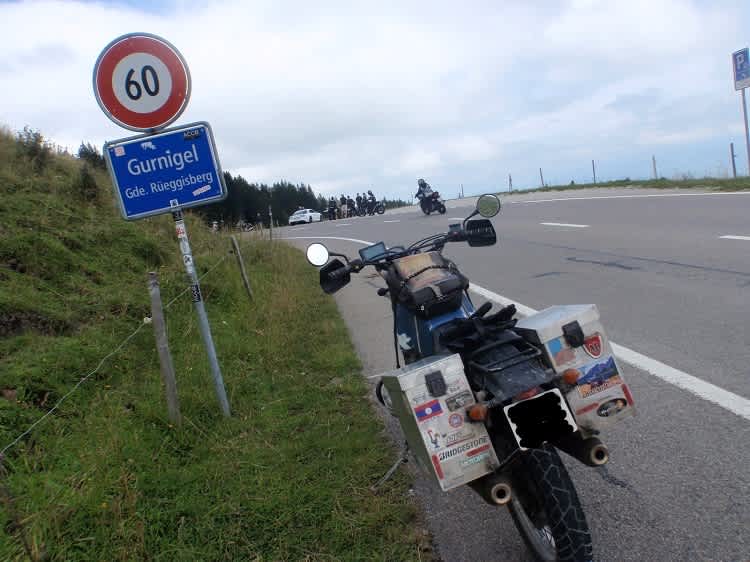
Gurnigelpass: Kanton Bern prüft Tempo 60 km/h über eine Strecke von 22 km
Foto: Rolf Lüthi
Gurnigelpass: Kanton Bern prüft Tempo 60 km/h über eine Strecke von 22 km
© Rolf Lüthi


In 2023, a ‘trial speed limit of 60 km/h’ was introduced on the Albis Pass in the canton of Zurich. To anyone familiar with transport policy, it was clear that the results of this trial would, of course, be ‘positive’ and that the speed limit would be made permanent. This is exactly what happened a year later. It was also clear that it would not stop at the Albis Pass. The most recent example: the Gurnigel.
The Gurnigel is a route popular with motorcyclists in the canton of Bern. Under pressure from local residents complaining about noise pollution and accidents, four municipalities have now applied to the cantonal civil engineering office to reduce the speed limit to 60 km/h over a 22-kilometre stretch. Currently, the standard Swiss speed limit of 80 km/h applies outside built-up areas.
The planned speed reduction has triggered a flood of objections. Swiss Moto, the Swiss National Motorcycle Federation, has also lodged an objection. Among those objecting are, alongside Swiss Moto and the Bern branch of the Swiss Automobile Club, numerous local residents who have no interest in an artificial extension of their journeys, such as their daily commute to work.
The Transport Directorate of the Canton of Bern is expected to make a decision before the end of December this year. Regardless of this decision, Swiss Moto President Walter Wobmann fears a knock-on effect: “We have nothing against selective speed limits at hazardous spots, but 60 km/h over a stretch of 22 km is disproportionate. Initially, the impression was given that the entire population living along the Gurnigel was in favour of a 60 km/h limit, but that is not the case. Many local residents have realised that they too would be severely restricted and have lodged objections.”

Swiss Moto-Präsident Walter Wobmann befürchtet eine Kettenreaktion
Foto: Archiv Lüthi
Swiss Moto-Präsident Walter Wobmann befürchtet eine Kettenreaktion
© Archiv Lüthi
If the entire Gurnigel Pass road were indeed to be restricted to 60 km/h, motorcyclists would likely switch to alternative routes. Similarly, this example might then encourage residents living along other mountain passes to demand the same restrictions from the relevant cantonal authorities.
The controversy provides a good opportunity to compile a few figures. The expansion of the Swiss Alpine road network was completed with the opening of the Nufenen Pass in 1969; since then, perhaps a few minor routes and the Gotthard Road Tunnel have been added, though the latter is irrelevant in this context. In 1969, 6.2 million people lived in Switzerland, who together owned 1.3 million cars and 145,000 motorbikes.
Today, 9.1 million people live in Switzerland, who together own 4.8 million cars and 821,000 motorbikes. On the same Alpine road network as in 1969, there are now almost four times as many cars and five times as many motorbikes (not counting foreign car and motorbike tourists), whilst at the same time the population density has risen from 150 to 220 people per square kilometre.
Seen already?
Don't miss out on any highlights: The Speedweek newsletter, sent out twice a week, delivers the latest news, exclusive commentary and all the important dates from the world of motorsports - directly into your inbox
Products News
All News


Newest Articles
All ArticlesNew New New New New New New


