Read for you: John Woolfe, the man who bought a Porsche 917
For many motorsport fans, the Porsche 917 is THE racing car of all racing cars. For the Briton John Woolfe, it became a deadly trap. A book traces the story of how this came to pass.
This article is an automatically generated English version. The
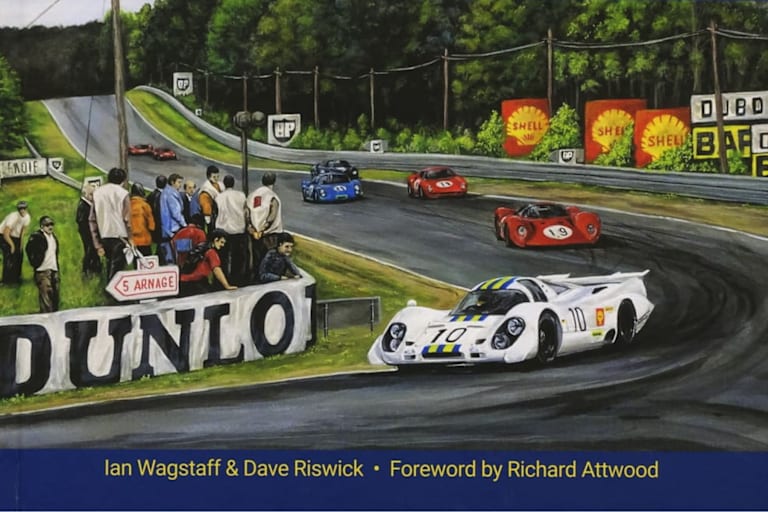
Vom Mann, der einen Porsche 917 kaufte
Foto: BHP Publishing
Vom Mann, der einen Porsche 917 kaufte
© BHP Publishing


50 motorsport experts can’t be wrong: in 1997, a panel of experts, commissioned by our colleagues at ‘Motor Sport’ magazine, selected the greatest racing car in history. Their choice fell on the Porsche 917. This groundbreaking car was unveiled on 12 March 1969 at the Geneva Motor Show.
When the FIA raised the engine capacity limit for the Sports Car Championship to five litres in 1968, Porsche sensed a unique opportunity: Within a year, designer Hans Mezger had created the most breathtaking racing car the world of motorsport had ever seen: the Porsche 917.
The 917 achieved its goal of overall victory at the 24 Hours of Le Mans in 1970 and 1971. Later, the constantly refined car left the competition in the dust in the Can-Am series, with 1,100 turbo PS. Fifty years after its debut, the Porsche Museum is dedicating a fabulous exhibition to the 917 model, and thousands of motorsport fans were keen not to miss it.
Looking back, Ferdinand Piech, then head of development, described the 917 as ‘the riskiest car of my life’. Overall, Porsche also had to take on various financial risks in developing the 917.
Part of the plan was to sell numerous 917s to customers in order to offset the enormous development costs. At the Geneva Motor Show, Porsche quoted a price of 140,000 Deutschmarks for a 917 (around 35,000 US dollars at the time). This by no means covered the development and manufacturing costs, which were in the region of 30 million Deutschmarks!
Topic of the week
MotoGP Champion Marc Marquez: How he managed to defeat Aprilia
Marc Marquez made up a 102-point deficit in the 2026 MotoGP season. Aprilia had all the cards in its hand this year with Bezzecchi and Martin – and lost the title battle.
And that brings us to John Woolfe. For this gentleman racer, now almost forgotten, was the first Porsche customer to buy a 917 – with a tragic ending.
The two authors, Ian Wagstaff and Dave Riswick, have investigated questions such as: Who was this John Woolfe? How was this reliable racing driver – though scarcely known beyond the borders of Great Britain – able to simply purchase the Porsche 917, which was notoriously difficult to handle at the time? And what circumstances led to the serious accident immediately after the start of the 24 Hours of Le Mans, and consequently to John Woolfe’s death?
The answers to these questions are provided in a well-researched and multifaceted manner in ‘Ian Wagstaff & Dave Riswick: John Woolfe – The Man who bought a Porsche 917’.
The authors recount the early life of Woolfe, born in March 1932, and his early interest in motor racing. Like so many racers on the island, he began with club races and worked his way up the racing ladder, with the cars getting faster and faster.
After five years (1958–1962), he disappeared from the motorsport scene for a while to attend to business interests. It was not until 1967 that he returned, having purchased two Shelby Cobras – one for the road, one for the racetrack. Business had evidently gone well.
This was followed by racing cars such as the Chevron B12, Lola T70, Ford GT40 and McLaren M6B. John Woolfe began competing internationally, and his solid results underlined that he had long since moved beyond club level.
Strangely enough, it was a homologation hurdle that paved the way for the Porsche 917. Woolfe wanted to compete in the 24 Hours of Le Mans with a McLaren M6GT, but following a rule change, this car was no longer eligible to race. John Woolfe turned to Porsche, and fate took its course.
Unimaginable today: The purchase of a brand-new Porsche 917 was finalised two weeks before the legendary Le Mans race, at a time when the Porsche works drivers had refused to drive the new 917 at the Nürburgring because the car’s handling was unpredictable.
There were no test drives; John Woolfe did not see his new acquisition until the practice sessions for the Le Mans classic. Ignition problems limited the practice opportunities, and Woolfe never drove a single metre in the 917 with a full tank.
The white Porsche 917, featuring the blue and yellow stripes typical of Woolfe’s cars, started from the very back of the grid, surrounded by Porsche 911s. It is on record that experienced drivers such as Brian Redman and Vic Elford tried to persuade their compatriot to pull out of the race, given his lack of experience at the wheel of this car.
It would be unfair to describe Woolfe as a naïve novice, as the Lola, Ford and McLaren cars mentioned above required a fair amount of skill. Nevertheless, it was reckless to go into this race with so few kilometres under his belt.
The co-driver originally planned, Digby Martland, had spun out at high speed during practice and decided not to take part any further. Porsche paired works driver Herbert Linge with Woolfe, but Woolfe refused to let the German drive the first part of the race. Woolfe wanted his family to see him drive.
In 1969, the classic start took place at Le Mans for the last time: the drivers stood facing their cars; when the starting flag dropped, they sprinted across the track, jumped into their cars and set off. To save time – something unthinkable today – they fastened their seatbelts themselves during the first lap.
John Woolfe’s family never saw him alive again: in the fast Maison Blanche bend, the Briton lost control of the car; it crashed heavily into the crash barriers, rolled over and caught fire. Woolfe was thrown from the car and succumbed to his serious injuries in the rescue helicopter. John Woolfe was only 37 years old.
The company John Woolfe Racing is still active in England today, as an importer of car parts for US-imported vehicles.
In *John Woolfe – The Man Who Bought a Porsche 917*, Ian Wagstaff and Dave Riswick tell the story of a man who ultimately grossly overestimated his abilities, but who was not, as is often claimed, a complete novice. They tell this story with dignity and tact, a tale peppered with numerous anecdotes and free from sensationalism.
The superbly illustrated book *John Woolfe – The Man Who Bought a Porsche 917* provides a good insight into motor racing in the 1960s, with many astonishing connections that leave the reader speechless.
Key points at a glance
Ian Wagstaff & Dave Riswick: John Woolfe – The Man Who Bought a Porsche 917
Published by BHP Publishing (Fife, Scotland)
ISBN: 978-1-7385085-6-3
Format 25 x 21 cm
176 pages
Over 200 photographs
Text in English
Available for around 42 euros from specialist retailers or directly from www.bhp-publishing.co.uk
Seen already?
Don't miss out on any highlights: The Speedweek newsletter, sent out twice a week, delivers the latest news, exclusive commentary and all the important dates from the world of motorsports - directly into your inbox
Products News
All News

Newest Articles
All ArticlesNew New New New New New New New New