
On the anniversary of Andrea de Cesaris’s death: Unbridled, misunderstood and unforgettable
On 5 October 2026, it will be twelve years since the Italian Formula 1 driver Andrea de Cesaris lost his life. The Roman-born racing legend died in a motorbike accident in 2014.
This article is an automatically generated English version. The

Andrea de Cesaris in Montreal 1994: 200 Grands Prix erreicht
Foto: Grand Prix Photo
Andrea de Cesaris in Montreal 1994: 200 Grands Prix erreicht
© Grand Prix Photo


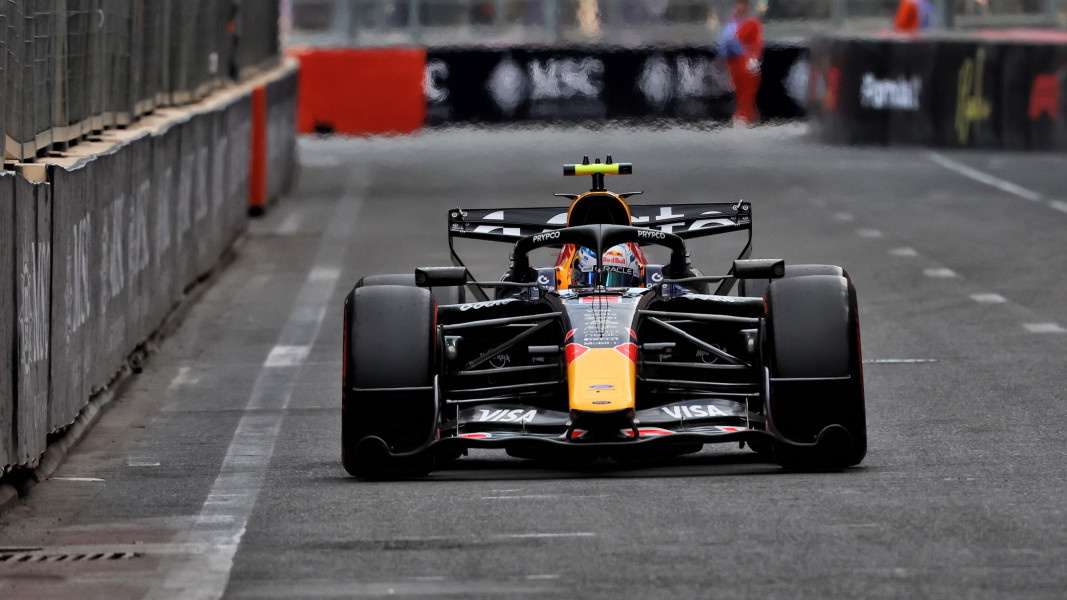
On 16 October 1994, Andrea de Cesaris lined up on the starting grid for the last time in a Formula 1 World Championship race, at the European Grand Prix in Jerez de la Frontera. The Roman was driving a Sauber-Mercedes. On lap 38, his race in Andalusia came to an end – due to a faulty throttle cable.
Just under twenty years later, on 5 October 2014, we lost Andrea de Cesaris at the age of just 55: the Roman was riding his Suzuki 600 near his home town when he apparently lost control of the motorbike and crashed into a crash barrier. The rider, who had competed in 208 Grand Prix races, died at the scene of the accident.
De Cesaris was a wanderer of Formula 1, having driven for ten different teams: Alfa Romeo, McLaren, Ligier, Minardi, Brabham, Rial, Dallara, Jordan, Tyrrell and Sauber.
His passion enabled him to endure even the most gruelling dry spells – such as when he was driving a Minardi M185B-Motori Moderni in 1986. The car was perhaps the most unreliable Formula 1 car ever. Out of 24 races contested by de Cesaris and his team-mate Alessandro Nannini, there were 23 retirements; only Nannini managed to cross the finish line once, in Mexico City – in 14th place.
During his Grand Prix career, Andrea de Cesaris set records that no racing driver would want to hold: the Roman fell victim to unreliable machinery or his own impatience on 148 occasions. In both 1986 and 1987, he was forced to retire in 14 out of 16 races.
Topic of the week
A stuttering start to the Bahrain Grand Prix: the FIA narrowly avoids a fiasco like the one in Indianapolis in 2005
Fans could hardly believe their eyes at what they witnessed at the Bahrain Grand Prix: cars crawling along, racing cars that simply came to a standstill. The FIA narrowly avoided a fiasco like the one at Indy in 2005.
TV Program
It was not until the spring of 2024 that his record for Grand Prix starts without a win was surpassed: the Italian competed 208 times without winning. Nico Hülkenberg now stands at 265 Grands Prix without a win. De Cesaris is still second in this statistic.
Andreas Ruf’s track record was far from flattering, but de Cesaris’s true worth as a Formula 1 driver only really became apparent during his time as a Jordan driver in 1991, his eleventh full GP season.
By the end of the 1980s, most people considered the Italian to be past his best. Anyone who fails to win a race for more than a decade and only occasionally finishes in the top three is generally written off.
De Cesaris had a reputation as an eccentric character – fast but unpredictable – with a career scarred by accidents and missed opportunities.
But team principal Eddie Jordan and his managing director Ian Phillips saw more in the Roman. They looked beyond the nickname ‘Andrea de Crasheris’, which the McLaren team had given him in 1981 during a run of 19 (nineteen!) crashes.
Instead, Eddie and Ian saw Andrea’s seemingly boundless enthusiasm, coupled with the experience of 140 races. So they chose him to take the leap into Grand Prix racing.
The plan seemed to go awry: De Cesaris made a mistake at the worst possible moment and failed to qualify for the 1991 Phoenix Grand Prix. Anyone who now thinks that this meant he’d already fallen out of favour with the British team could not be more wrong – the team suffered alongside de Cesaris as they saw how devastated Andrea was by his failure to qualify. And it was to remain his last mistake for a long time.
The Italian flourished in the timelessly elegant Jordan 191. In the races that followed, he consistently placed his car solidly in the midfield; he scored points in each of the next eight races whenever the car held up – and scoring points wasn’t so easy back then, as only the top six were awarded World Championship points.
De Cesaris always aroused a fair bit of suspicion amongst his colleagues. Didn’t the Roman roll his eyes so violently that often only the whites were visible? What if something like that happened in a wheel-to-wheel battle at 300?
De Cesaris’s usual response was that he’d passed every medical test there was, so there you go.
The bad reputation stuck with him, eye-rolling or not.
At McLaren in 1981, he was shown the door due to his numerous crashes; Marlboro then placed him at Alfa Romeo. At Long Beach, he started from pole position but, whilst running in second place, flew off the track during the race.
In Monaco, he should have won that bizarre race in which, by the end (due to accidents and a lack of fuel), six drivers had a chance of victory. In Belgium, he was comfortably in the lead when the Alfa engine blew.
So it’s certainly not the case that there was a lack of opportunities to win.
Ian Phillips picks up the thread: “Belgium 1991 – most people today only remember Michael Schumacher’s fabulous debut in the Jordan. Andrea couldn’t believe that Michael was seventh fastest, whilst he’d only managed 11th on the grid. I can clearly remember how, after practice, we drove back to the hotel in a hire car – Andrea was sitting in the back, making engine noises as he imagined himself driving through Eau Rouge!”
“Michael had spurred him on, and in the race de Cesaris drove like a demon. He was in second place and closing in on the leader, Ayrton Senna, when that damned engine ran out of oil. Unfortunately, Cosworth hadn’t alerted us to the excessive oil consumption. A disaster! It broke our hearts, especially after all the magnificent effort Andrea had put in.”
When Eddie Irvine was suspended for three races in 1994 (for causing a pile-up in Brazil), Jordan brought de Cesaris back as a stopgap – Andrea repaid them with a fourth-place finish in Monaco. He then stepped in for the injured Karl Wendlinger at Sauber, but was unable to build on his fine result in Monaco. Apart from a sixth-place finish in France, he suffered nothing but retirements.
Final words from Ian Phillips: “Andrea was a fantastic bloke. It was impossible not to get on with him. A true team player, perfect for us in our first season – or in any other, for that matter. His pace was beyond reproach.”
“I know he had a bad reputation, but he proved that wrong with us. A nasty crash at Silverstone was our fault: the rear suspension had broken. Typical of Andrea that he didn’t make a fuss about it.”
“He was a fine lad; there wasn’t a single person among us who would say a bad word about him, and that’s exactly how we remember him.”
Andrea de Cesaris in Formula 1
214 Grand Prix weekends (208 starts)
1 pole position (Long Beach 1982)
1 fastest lap in a race (Belgium 1983)
Best result: 2nd place in Germany and South Africa in 1983
5 podium finishes (in addition to the second-place finishes, also 3rd place in Monaco 1982, Belgium 1987 and Canada 1989)
59 World Championship points
33 laps led
39 crashes
Best World Championship finish: 8th in 1983
Formula 1 teams:
1980: Alfa Romeo
1981: McLaren
1982/1983: Alfa Romeo
1984/1985: Ligier
1986: Minardi
1987: Brabham-BMW
1988: Rial
1989/1990: BMS Scuderia Italia
1991: Jordan
1992/1993: Tyrrell
1994: Jordan, Sauber-Mercedes
Seen already?
Don't miss out on any highlights: The Speedweek newsletter, sent out twice a week, delivers the latest news, exclusive commentary and all the important dates from the world of motorsports - directly into your inbox
Highlight Videos
ServusTV Media Library
Peinlicher Software-Fehler & Schleich-Modus!
5. Okt. | 3:05 Min

Sepang backstage: Das ging alles schief!
4. Okt. | 1:20 Min
„Auto-Software hatte im Nassen einen Fehler"
4. Okt. | 2:03 Min
4. Okt. | 11:29 Min
Regen-Chaos und Software-Panne!
4. Okt. | 2:59 Min
Antonelli und Russell mit Raketen-Starts!
4. Okt. | 1:40 Min
Start-Abbruch! Software-Problem legt Autos lahm
4. Okt. | 1:14 Min
Sepang: Wer schnappt sich die Pole?
3. Okt. | 2:06 Min
Formula Cars News
All News


Newest Articles
All ArticlesNew New New New New


