Harley-Davidson World Cup • New
Strategy shift at Harley – greater focus on the Bagger World Cup
At the MotoGP event at Silverstone, there was nothing to be gained for Marc Marquez and Ducati – Aprilia was too dominant. Columnist Michael Scott offers an analysis and preview of the rest of the season.
This article is an automatically generated English version. The
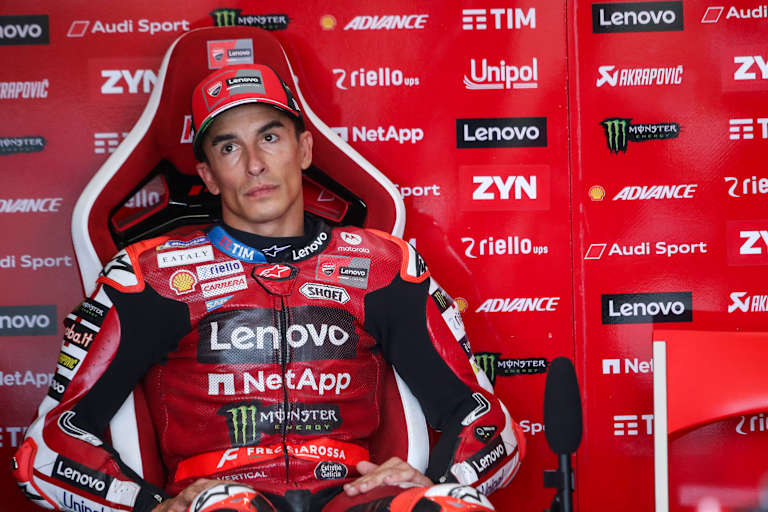
There are turning points time and again. Sometimes they are minor, often reversible. But sometimes even the minor ones are of enormous significance. It was impossible to watch Marc Márquez at the British Grand Prix at Silverstone without wondering whether we were witnessing a turning point.
To recap: the multiple world champion finished ninth in Saturday’s sprint race and seventh in Sunday’s main race. He wasn’t even the best Ducati rider on a circuit where the once-dominant Desmosedici struggled. He was outshone by both his brother Alex and Fabio Di Giannantonio, and on Saturday even by Franco Morbidelli, who was riding last year’s bike.
And this came after three wins in the last four races had put his title challenge – which had been interrupted by injury – back on track. Now, his deficit to the leader, Jorge Martin, has grown from 18 to 40 points in the space of a single weekend. All this happened shortly after he had extended his contract with the Ducati factory team for a further two years.
Harley-Davidson World Cup • New
Strategy shift at Harley – greater focus on the Bagger World Cup
Harley-Davidson World Cup
Strategy shift at Harley-Davidson – full focus on the Bagger World Cup

In the weeks leading up to this, Marc had repeatedly emphasised that his plans for the future were less about further adding to his tally of 102 Grand Prix victories (20 fewer than Agostini, 13 fewer than Rossi) and nine world championship titles, and more about “enjoying my sport”. Too many top athletes, he added, reached a point at the end of their careers where they came to hate what they were doing.
On Sunday evening at Silverstone, it actually looked as though that was exactly what was happening, when an unusually subdued and taciturn Marquez offered only this brief comment: “The bike worked well, the tyres were good. I just couldn’t find a way to go any faster.”
Topic of the week
The Italian Nicolo Bulega is the first rider to have won the world title in both the Supersport and Superbike classes; from 2027, he will be racing in MotoGP. His performances this season are second to none.
A statement I thought I’d never hear from him, and two disappointing races I thought I’d never witness. Was this the same rider who, after his operation at Mugello – not yet fully fit to race – fought hard with Acosta for sixth place, cheerfully remarking: “I knew he was faster, but I didn’t want to sell myself short.”
Back then, he admitted that he wasn’t in a position to compete at the front and was simply happy to enjoy the race for the sheer pleasure of it. There was no sign of that joy in Britain. But you have to see that in context. The Ducatis don’t perform at their best on the Silverstone Circuit, with its fast and complex sequences of corners. They prefer stop-and-go circuits with hard braking and acceleration manoeuvres. Nevertheless, Bagnaia won there in 2022 and Bastianini in 2024 – years in which the Desmo clearly dominated the competition.
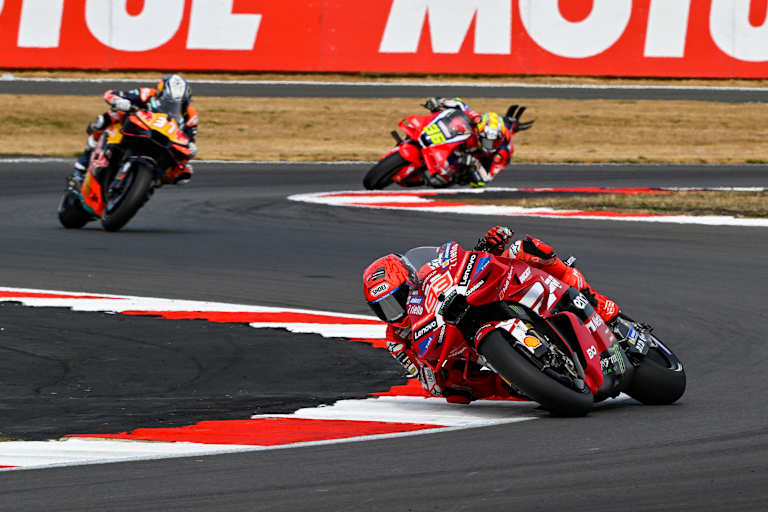
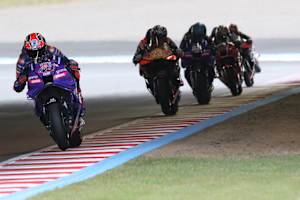
This year, however, Aprilia has challenged that dominance, and the easy-to-handle bike from Noale shone on the British circuit, the longest of the season. They took the top three places in qualifying and in both races. Their newfound superiority was clearer than ever.
One scene illustrated the shifting balance of power between the two Italian manufacturers. Aprilia unveiled new aerodynamic elements: a reshaped fuel tank and modified seat wings, but above all a large, square, vertical rear fin. Jorge Martin used this to win on Saturday, and Bezzecchi (third twice despite injuries) followed his example on Sunday.
And Ducati, the former pioneers of aerodynamics? Alex Márquez opted out of his latest seat aerodynamics and reverted to last year’s set-up. This seemed to help him – along with his calmer, more tyre-friendly riding style – as he was the best Ducati rider throughout the weekend. However, some observers noted that the old aerodynamics represented a step backwards compared to Aprilia’s progress.
Attention now turns to the immediate future. Can Marc’s turnaround at Silverstone be reversed? Probably, but he has yet to prove it. The next race weekend at the end of August offers him the best chance. It takes place at Aragon, just over 100 miles from his family home in Catalonia. More importantly, however, the circuit at MotorLand is run anti-clockwise. This is unusual and suits his preferred direction of travel perfectly. This has made a difference in the past. He has secured eight victories in the premier class there, whilst his main rivals in the title race, Martin and Bezzecchi, have not managed a single win in any class. Marc has won there in each of the last two years since switching to Ducati; the two previous races there were also won by Ducati riders (Bastianini and Bagnaia). Aprilia has yet to win a single Grand Prix at Aragon.
The season is still long, and Marc has plenty of time to get back on track – even if things have just got a bit more difficult. There are still ten race weekends to go (assuming the Grand Prix in Qatar takes place on 8 November), and Marc and/or Ducati have a track record of success at most of them – in Aragon, San Marino, Austria, Japan, Australia, Qatar and Malaysia. However, Aprilia dominated in Australia last year, and although Ducati won in Indonesia with Aldeguer, that circuit has so far been something of a nightmare for Marc, whilst Portugal was a playground for Aprilia last year.
Given the progress Aprilia has made this year, the balance of power could shift at several of the upcoming circuits. Perhaps Marc’s best chance lies in the four Aprilia riders taking points off each other. And in him regaining the confidence that was so clearly lacking at Silverstone.
Don't miss out on any highlights: The Speedweek newsletter, sent out twice a week, delivers the latest news, exclusive commentary and all the important dates from the world of motorsports - directly into your inbox
01

SuperFile Trackhouse MotoGP Team
SuperFile Trackhouse MotoGP Team
25
20
39:45,930
1:58,457
25
02

Aprilia Racing
89
20
+2,538
1:58,900
32
03

Aprilia Racing
72
20
+3,393
1:58,880
23
04

BK8 Gresini Racing MotoGP
73
20
+4,702
1:58,652
19
05

Red Bull KTM Factory Racing
37
20
+6,256
1:58,940
15
06

Pertamina Enduro VR46 Racing Team
49
20
+6,382
1:58,690
15
07

Ducati Lenovo Team
93
20
+9,550
1:59,152
10
08

Red Bull KTM Factory Racing
33
20
+22,288
1:59,497
8
09

Honda HRC Castrol
10
20
+23,845
1:59,591
7
10

LCR Honda
11
20
+25,411
1:59,644
6
26. Sept. | 12:31 Min
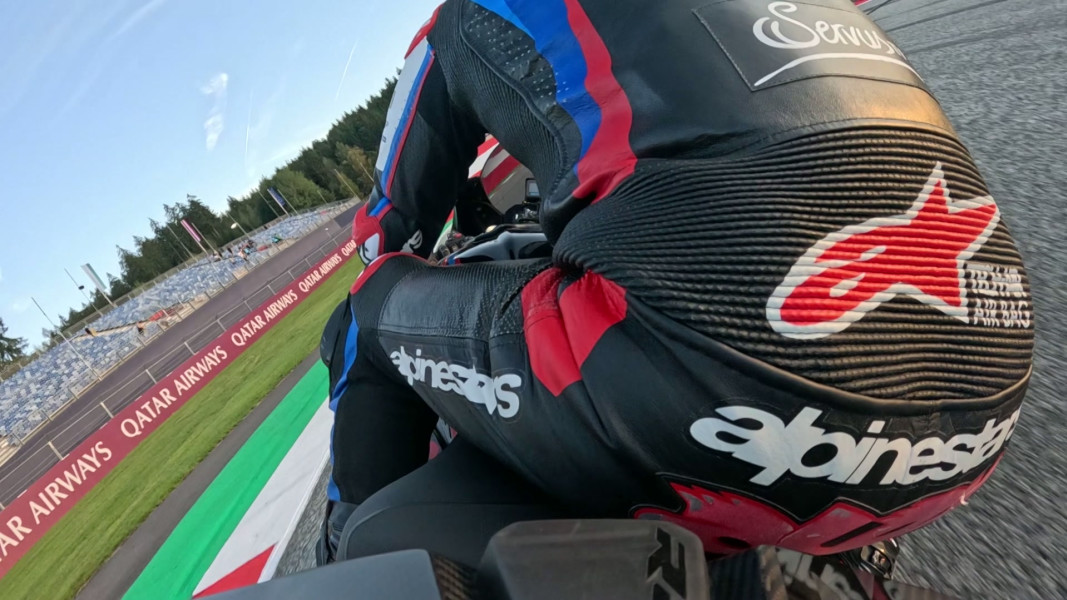
22. Sept. | 3:57 Min
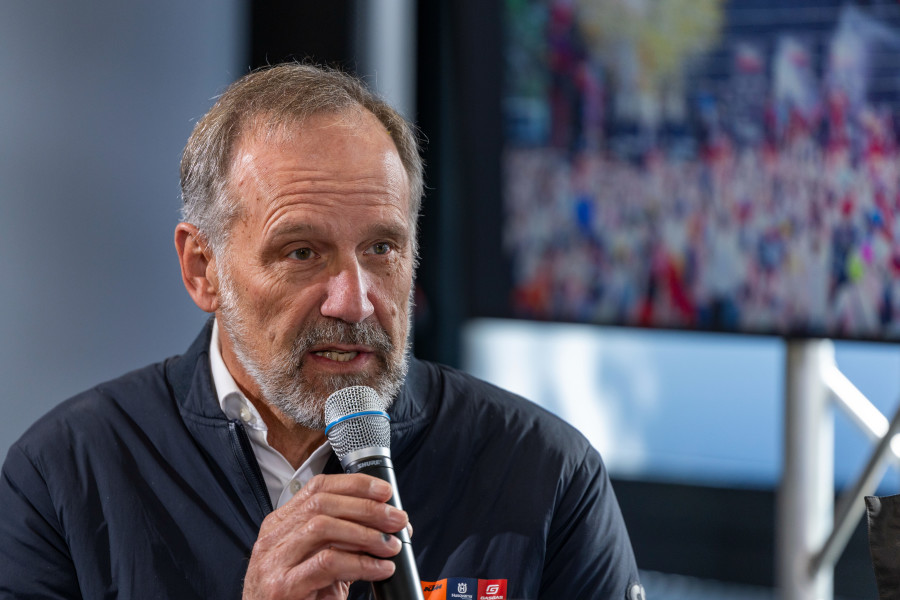
„Haben gezittert bis zur letzten Kurve"
20. Sept. | 4:01 Min
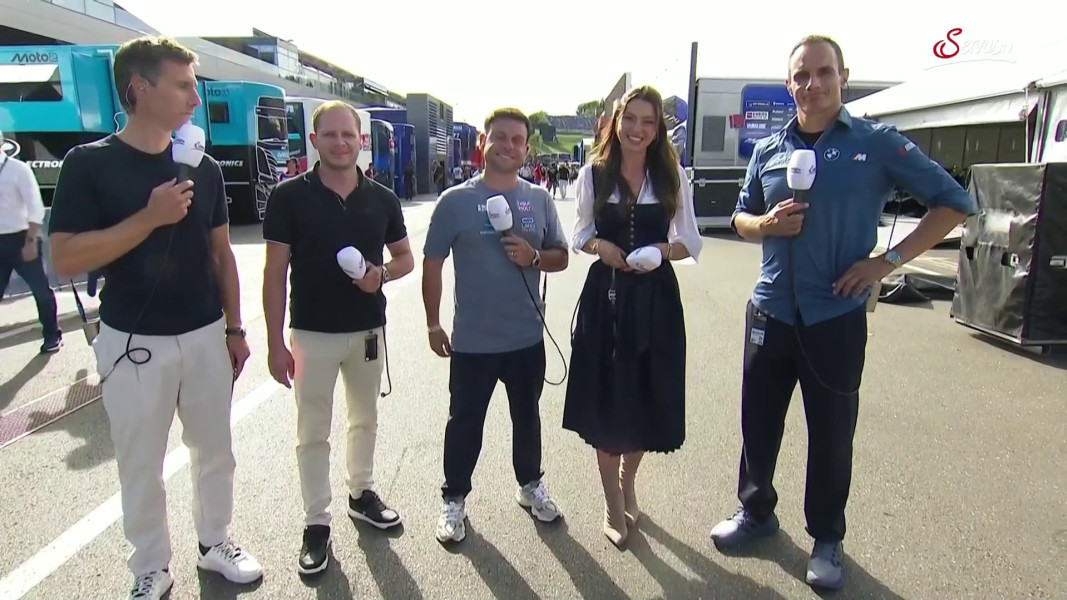
20. Sept. | 41:28 Min
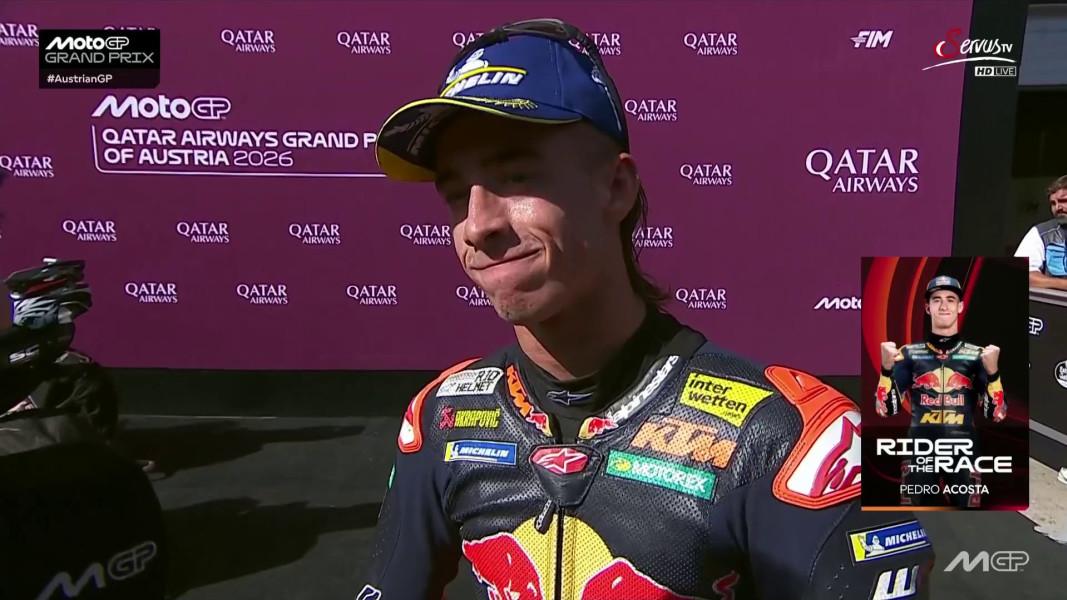
Pedro Acosta: „Danke an alle Fans“
20. Sept. | 5:36 Min
20. Sept. | 3:52 Min
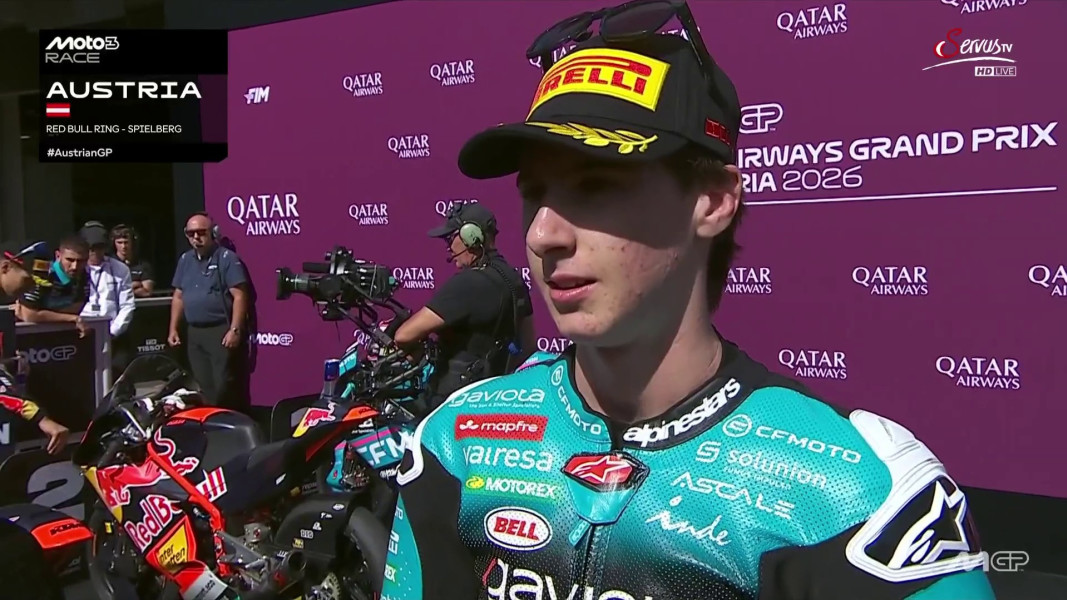
Quiles: „Es war toll, in Österreich zu fahren“
20. Sept. | 3:15 Min
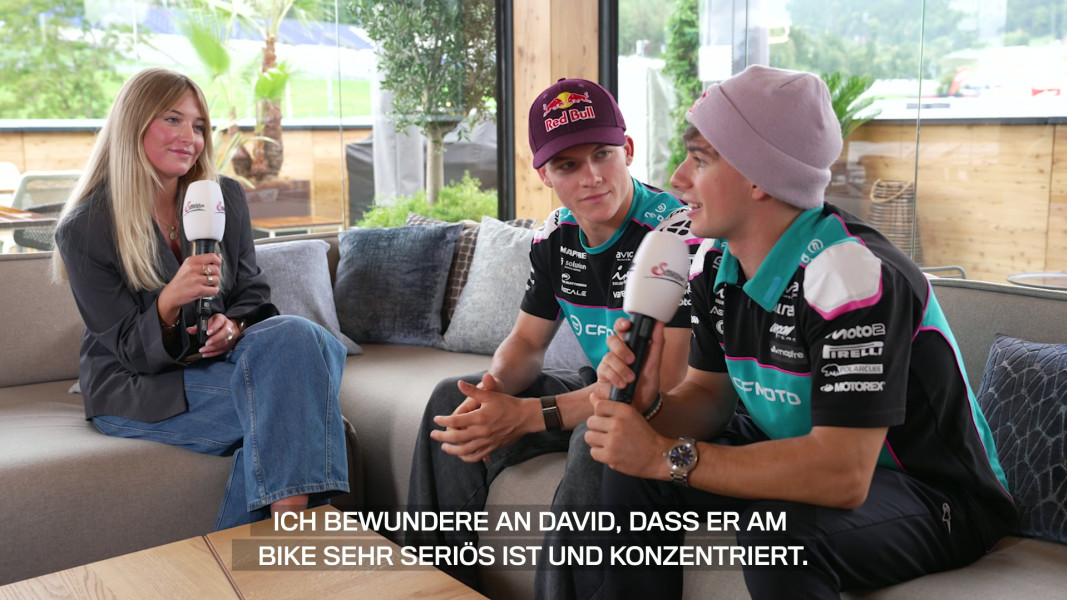
Holgado & Alonso beantworten eure Fragen!
20. Sept. | 4:01 Min

The latest news around the clock, analyzed and commented on by experts, with exclusive behind-the-scenes insights. Here, fans write for fans.