
Toprak Razgatlioglu’s MotoGP experiment: the truth won’t be known until 2027
After eleven race weekends, Toprak Razgatlioglu’s interim MotoGP assessment is sobering. Yet the biggest hurdles run deeper than the results suggest – and 2027 could change everything.
This article is an automatically generated English version. The

Vor dem Sachsenring-Wochenende war Topraks Laune gut, danach nicht mehr
Foto: Gold & Goose
Vor dem Sachsenring-Wochenende war Topraks Laune gut, danach nicht mehr
© Gold & Goose


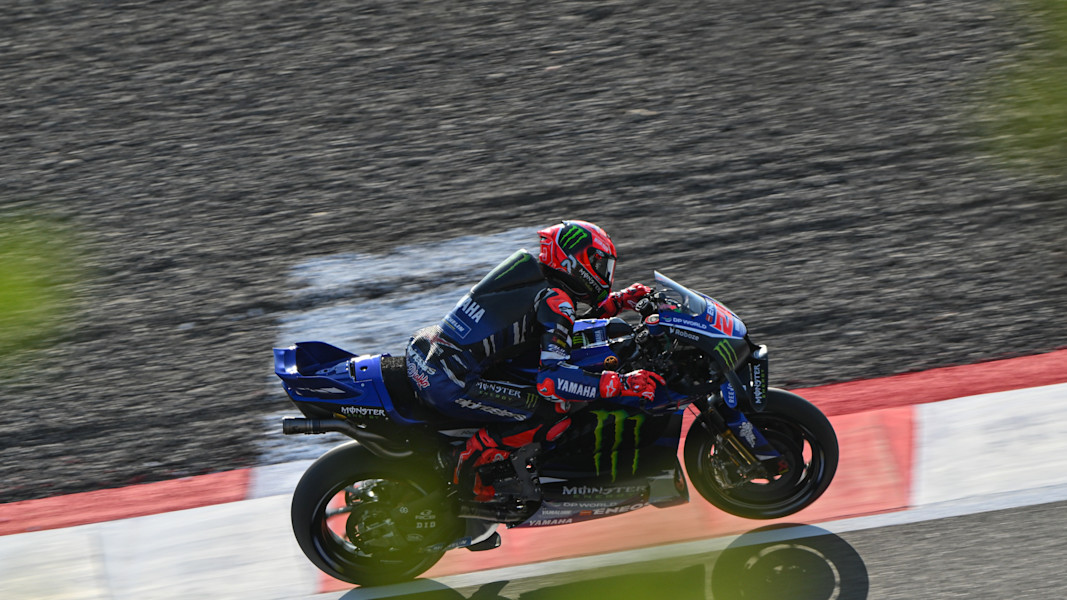
When Toprak Razgatlioglu announced his move to MotoGP, I was convinced that he would get the chance to dispel an old preconception. I’ve been following his career since his early days in the production-based classes and have witnessed his extraordinary achievements with Puccetti-Kawasaki, Yamaha and BMW. For me, therefore, there was never any question as to whether Razgatlioglu was fast enough for MotoGP.
Rather, I hoped that a top rider from the World Superbike Championship would finally establish a lasting foothold in the premier class once again. After all, in the MotoGP paddock, some people still view the level of the production-based world championship with a touch of condescension. Their attitude is something along the lines of: ‘If you’re really good, you ride in MotoGP.’
I consider this view to be fundamentally wrong. The best riders in the World Superbike Championship are exceptional racers. They simply ride a different machine. And that is precisely why Razgatlioglu’s MotoGP project is far more than the story of a single rider. It is also a litmus test for the reputation of the World Superbike Championship.
That’s precisely why Razgatlioglu’s move was so exciting for me.

Toprak Razgatlioglu
Foto: Gold & Goose
Toprak Razgatlioglu
© Gold & Goose
Topic of the week
Topic of the week: MotoGP’s new schedule proved highly controversial
In 2027, MotoGP will also enter the 850cc era with a new schedule. It was not so much the changes themselves as the way the decisions were reached that caused a stir. A prime example of: ‘Talking helps’.
TV Program
Many variables ahead of the move to MotoGP
Of course, there were a few legitimate question marks before the start of the season. Would he cope with the Michelin tyres? Could he adapt to the extremely stiff MotoGP prototypes? Would his legendary braking manoeuvres still work against the world’s best?
After eleven race weekends, my interim assessment is mixed.
The switch to Michelin tyres and the peculiarities of a MotoGP prototype were by no means easy. However, two other factors have been decisive so far: the new V4 Yamaha rarely gives Razgatlioglu the chance to shine. Under normal conditions, the M1 is too far off the pace of the Ducati, Aprilia, KTM and even Honda bikes.

Toprak Razgatlioglu
Foto: Gold & Goose
Toprak Razgatlioglu
© Gold & Goose
The second factor is the modern MotoGP riding style. Razgatlioglu thrives on imposing his own riding style on a motorbike. Yet that is precisely what modern MotoGP is making increasingly difficult. Aerodynamic elements, ride-height devices and the extremely stiff prototype chassis impose a very narrow operating range on the riders. If you want to be fast, you have to adapt to the bike – not the other way round.
If even arguably the greatest rider of his generation had to take this step, it’s hardly surprising that Razgatlioglu, too, has so far only been able to play to his well-known strengths to a limited extent.
A few isolated highlights, but many setbacks
Toprak’s record in the premier class so far makes for sobering reading. After eleven of 22 race weekends, he is 21st in the World Championship standings and thus last among the four Yamaha riders. He is still waiting for his first points in the sprint races, whilst on Sundays he has so far collected just twelve points.
At the third race of the season in Austin, he made it into the top 15 for the first time; his best result so far was 11th place at the turbulent Grand Prix at Balaton Park. Another positive highlight was his direct progression to Q2 in Brazil, where he fought his way into the top 10 during Friday’s chaotic qualifying session, thereby qualifying directly for Q2.
Nevertheless, I had the impression recently at the Sachsenring that the situation is increasingly weighing on his mind.
That is precisely why 2027 could prove to be a turning point.
Will he finally break through, or will Toprak’s MotoGP spell come to an end?
With the new regulations, the ride-height devices will disappear, Pirelli will take over as the sole tyre supplier, and the new 850cc machines could once again give the riders more opportunities to make a difference themselves. That is precisely what Razgatlioglu is likely hoping for.
However, there is one uncertainty that worries me: Yamaha’s machinery. In the paddock, there is currently little cause for optimism regarding the development status of the 850cc Yamaha. Of course, these are just rumours for now. Should they prove true and Yamaha find themselves playing catch-up once again, Razgatlioglu could quickly find himself at a sporting impasse. 2027 will therefore be a pivotal year.
In autumn 2027, Toprak will celebrate his 31st birthday. If the new generation of MotoGP bikes fails to deliver a breakthrough, his prospects in the premier class will be limited. There won’t be much time left for another fresh start. What’s more, a new generation of riders is pushing up from Moto2, who are far more appealing to MotoGP team managers than a former Superbike World Champion whose career peak may already be behind him.
The doors are open back home
The situation in the Superbike World Championship is quite different. I am convinced that virtually every manufacturer is interested in Razgatlioglu. It is therefore only logical that the decision-makers at BMW are making every effort to establish a direct line of communication with the exceptional Turkish rider and his management. Any manufacturer would welcome a rider of his calibre with open arms.

Toprak Razgatlioglu mit Landsmann, Mentor und Manager Kenan Sofuoglu
Foto: Gold and Goose
Toprak Razgatlioglu mit Landsmann, Mentor und Manager Kenan Sofuoglu
© Gold and Goose
But the Superbike World Championship is changing too. Ducati is currently setting the standard and appears almost unbeatable for long stretches. At the same time, with Michelin as the new standard tyre supplier from 2027, a new era is beginning there as well. No one can seriously predict today which manufacturers will benefit from this.
That’s why I hope for one thing above all else: that Razgatlioglu maintains the necessary patience. His move to MotoGP was a bold one. He has stepped out of his comfort zone and taken on what is perhaps the greatest challenge of his career. For that alone, he deserves respect.
However, having seen the first half of the season, my verdict is deliberately cautious. Toprak hasn’t written a success story so far, but neither has he provided any evidence that he has failed in MotoGP. For me, the real test won’t begin until 2027. Then we’ll see whether an exceptional talent from the World Superbike Championship can hold his own in MotoGP in the long term under different technical conditions – or whether the two worlds are in fact further apart than many of us had hoped.
Seen already?
Don't miss out on any highlights: The Speedweek newsletter, sent out twice a week, delivers the latest news, exclusive commentary and all the important dates from the world of motorsports - directly into your inbox
Highlight Videos
ServusTV Media Library
Keine Rennen auf Phillip Island!
25. Okt. | 9:27 Min
Phillip Island: Abschied ohne Happy End!
25. Okt. | 4:27 Min
Phillip Island: Analyse Sprint
24. Okt. | 14:42 Min
Phillip Island: Analyse Qualing
24. Okt. | 11:19 Min
Dieses Duell nimmt ein bitteres Ende
24. Okt. | 2:31 Min
Erst harter Fight, dann Schreckmoment!
24. Okt. | 7:54 Min
Letzter Tanz auf Phillip Island
24. Okt. | 3:39 Min
Senna Agius 1on1: So tickt der Moto2-Star
23. Okt. | 2:59 Min
Events
All MotoGP EventsPast Grand Prix of Japan Twin Ring Motegi, Japan 02.–04.10.2026Past Pertamina Grand Prix of Indonesia Mandalika International Street Circuit, Indonesien 09.–11.10.2026Live
Australian Motorcycle Grand Prix Phillip Island Grand Prix Circuit, Australien 23.–25.10.2026Next up Petronas Grand Prix of Malaysia Sepang International Circuit, Malaysia 30.10. – 01.11.2026Next up Grand Prix of Qatar Losail International Circuit, Katar 06.–08.11.2026

Past Grand Prix of Japan Twin Ring Motegi, Japan 02.–04.10.2026Past Pertamina Grand Prix of Indonesia Mandalika International Street Circuit, Indonesien 09.–11.10.2026Live
Australian Motorcycle Grand Prix Phillip Island Grand Prix Circuit, Australien 23.–25.10.2026Next up Petronas Grand Prix of Malaysia Sepang International Circuit, Malaysia 30.10. – 01.11.2026Next up Grand Prix of Qatar Losail International Circuit, Katar 06.–08.11.2026
MotoGP News
All News


Newest Articles
All ArticlesNew New


